
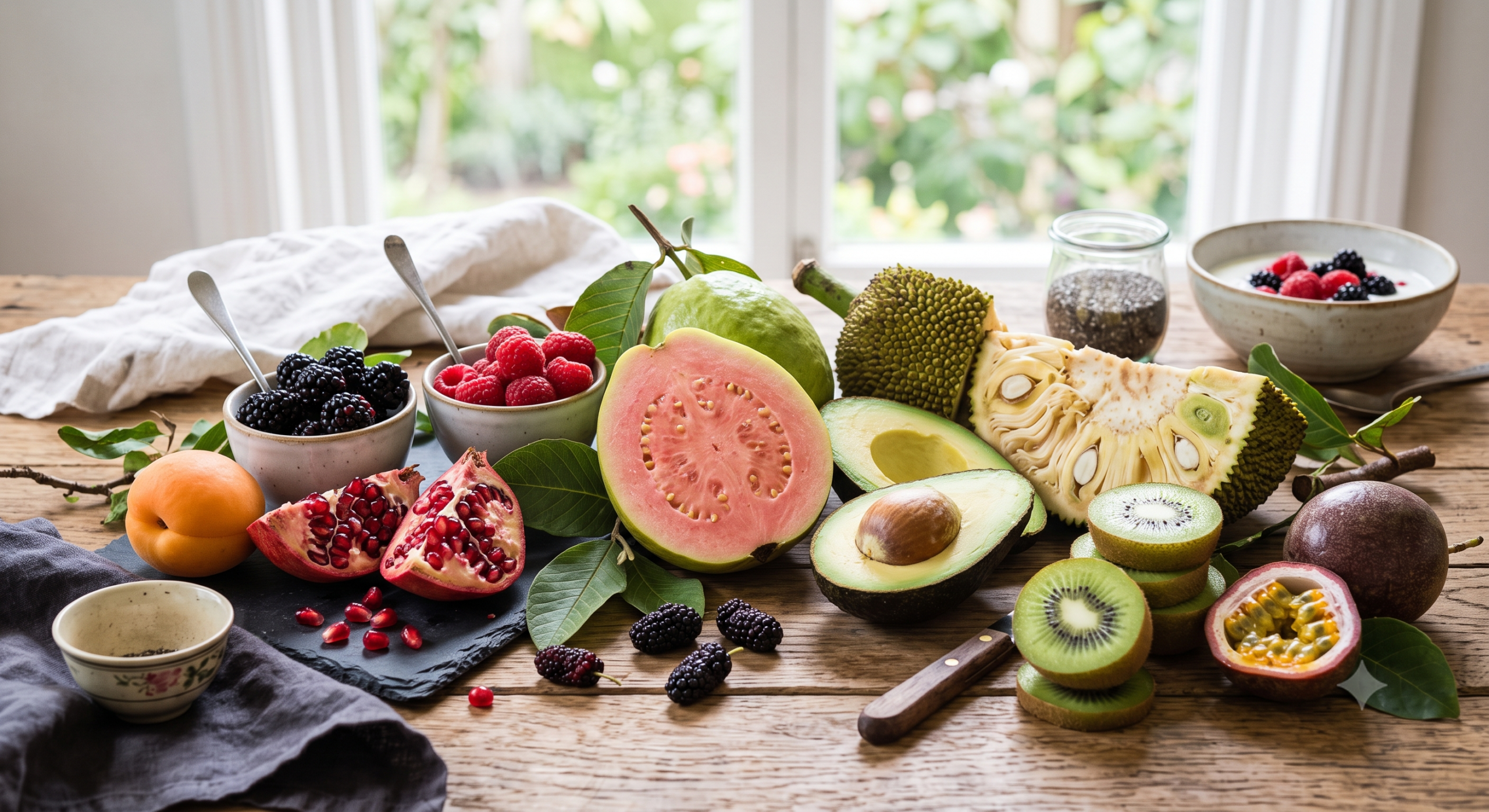
Most people do not look at a fruit bowl when they want to build muscle or hit daily macronutrient targets. We naturally look toward eggs, chicken breast, lentils, Greek yogurt, or protein shakes.
Fruits have an enduring reputation as sweet carbohydrates. While they do supply clean sugars, water, and micronutrients, dismissing them entirely for protein is an oversight.
A handful of fruits carry surprisingly useful amounts of protein. They will not replace a scoop of whey or a bowl of tempeh, but they change the math of daily nutrition. When you select high protein fruits for snacks and meals, the small grams accumulate into meaningful daily totals.
Table of Contents
The Truth About Protein in Fruits
Plants produce protein differently than animals. In fruits, amino acids support cellular repair, seed growth, and enzymatic activity rather than fibrous skeletal tissue.
Because fruit holds substantial water and natural fructose, its protein density remains modest per gram. You cannot rely on fruit as an exclusive protein source. However, incorporating fruits with most protein into an active lifestyle yields compounding benefits.
Animal sources often deliver protein alongside saturated fat and cholesterol. Protein-rich fruits provide their amino acids wrapped in dietary fiber, polyphenols, potassium, and vitamins.
Fiber slows digestion, preventing the rapid blood sugar spikes that refined carbohydrate snacks create. It also nurtures beneficial gut flora, which enhances overall nutrient absorption.
Adding four to five grams of protein from fresh whole produce during an afternoon snack bridges the gap between major meals. It satisfies sweet cravings while supporting daily tissue maintenance and metabolic health.
Understanding Complete vs. Incomplete Plant Proteins
Protein consists of twenty amino acids. Nine of these are essential, meaning your body cannot manufacture them on its own. You must obtain them through food.
Animal proteins generally provide all nine essential amino acids in optimal ratios. Nutrition science classifies these as complete proteins.
Most fruits provide incomplete proteins. They contain all essential amino acids, but one or two fall below optimal thresholds, often lysine or methionine.
Your liver maintains an amino acid pool throughout the twenty-four-hour cycle. You do not need every single amino acid in every mouthful of food. Eating varied whole foods across the day allows your body to assemble complete proteins efficiently.
Nutritional Breakdown of High-Protein Fruits
The table below contrasts standard serving sizes, typical protein counts, and the primary secondary nutrients of the ten fruits discussed in this guide.
| Fruit | Serving Size | Protein (g) | Key Macronutrient Context | Primary Micronutrients |
| Guava | 1 cup (165g) | 4.2g | 9g fiber, 112 kcal | Vitamin C (419% DV), Lycopene, Folate |
| Avocado | 1 cup, cubed (150g) | 3.0g | 10g fiber, healthy monounsaturated fats | Potassium, Vitamin E, Folate |
| Jackfruit | 1 cup (165g) | 2.8g | Low fat, complex starch | Vitamin B6, Potassium, Vitamin C |
| Blackberries | 1 cup (144g) | 2.0g | 8g fiber, low glycemic | Anthocyanins, Vitamin K, Manganese |
| Raspberries | 1 cup (123g) | 1.5g | 8g fiber, 5g net carbs | Ellagic acid, Vitamin C, Manganese |
| Apricots | 1 cup, sliced (165g) | 2.2g | Rich in beta-carotene | Vitamin A, Vitamin E, Potassium |
| Pomegranate | 1 cup arils (174g) | 2.9g | Polyphenol-dense, 7g fiber | Punicalagins, Vitamin K, Folate |
| Kiwi | 1 cup, sliced (180g) | 2.1g | Contains actinidin enzyme | Vitamin C (273% DV), Vitamin K, Fiber |
| Mulberries | 1 cup fresh (140g) | 2.0g | Exceptional iron for fruit | Iron (14% DV), Vitamin C, Resveratrol |
| Passion Fruit | 1 cup (236g) | 5.2g | 24.5g dietary fiber | Vitamin A, Vitamin C, Iron |
1. Guava (The Undisputed King)
Guava sits comfortably at the top of any protein rich fruits list. Native to tropical America, this aromatic fruit delivers an impressive nutritional yield per bite.
Macronutrient Profile
One single cup of fresh guava yields roughly 4.2 grams of protein alongside 112 calories. That translates to roughly 15 percent of its caloric value deriving directly from amino acids, an uncommon ratio for tree fruits.
The carbohydrate profile works in your favor as well. A cup contains roughly 24 grams of carbohydrates, but 9 of those grams are structural dietary fiber.
The net impact on blood glucose remains remarkably gentle, which makes guava popular among low-glycemic and diabetic communities.
1 Cup Fresh Guava (165g):
├── Calories: 112 kcal
├── Protein: 4.2 g  <--- Highest among common fruits
├── Dietary Fiber: 9.0 g
└── Vitamin C: ~376 mg (Over 400% daily value)
Essential Amino Acids and Micronutrients
Guava protein content features balanced amounts of glutamic acid, aspartic acid, and leucine. Leucine serves as the critical trigger for muscle protein synthesis in human tissue.
Beyond its amino acids, guava is a micronutrient powerhouse. A single serving delivers more than four times your daily recommended intake of vitamin C, outclassing oranges and lemons easily.
The pink and red varieties contain substantial reserves of lycopene, an antioxidant pigment associated with cardiovascular protection and cellular defense.
Kitchen Preparation and Practical Use
Guava skin is entirely edible and holds concentrated fiber and nutrients. Wash the exterior thoroughly, trim the stem end, and slice the fruit into rounds.
The small, hard seeds can be chewed or swallowed whole. If you prefer a smoother texture, blend the fruit and pass the puree through a medium-mesh sieve.
- Mix diced pink guava with chopped red onion, jalapeño, lime juice, and sea salt for a protein-rich savory salsa over grilled tofu or fish.
- Blend whole guava into a morning post-workout smoothie alongside plant based protein snacks like hemp seeds.
2. Avocado (The Nutrient-Dense Powerhouse)
Avocado breaks almost every traditional fruit stereotype. Instead of relying on sugar, it builds its structure on monounsaturated fatty acids and dietary fiber.
Fat, Fiber, and Protein Ratios
One cup of cubed fresh avocado offers roughly 3.0 grams of protein. If you consume a whole medium-to-large fruit, you receive close to 4.0 grams.
Avocado protein per cup arrives paired with roughly 10 grams of dietary fiber and 21 grams of monounsaturated fats, predominantly oleic acid.
This specific combination promotes protracted satiety. Oleic acid signals the release of oleoylethanolamide in the small intestine, a lipid messenger that speaks directly to brain centers controlling hunger.
Quality of Amino Acids and Absorption
Avocados carry all eighteen essential and non-essential amino acids, an uncommon reality for fresh produce. Its fatty acid matrix acts as a biological transport system.
Many key plant compounds, such as carotenoids, vitamins A, D, E, and K, require dietary lipids for efficient transport across the intestinal wall.
Eating an avocado helps your digestive system absorb fat-soluble compounds from everything else on your plate.
Kitchen Preparation and Practical Use
Avoid heating avocados over prolonged, direct flame, as heat destabilizes their delicate oils and can introduce bitter off-flavors.
- Mash fresh avocado flesh directly into sprouted grain toast and dust it with unfortified nutritional yeast and pumpkin seeds. This lifts total protein to 14 grams per serving.
- Cube firm avocado into a cold salad featuring dark leafy greens, chickpeas, and a squeeze of fresh lemon juice.
3. Jackfruit (The Savory Meat Alternative)
Jackfruit has transformed modern culinary discussions surrounding plant-based diets. Hailing from Southeast Asia, this massive tree-borne fruit provides culinary utility that few other ingredients can match.
Macro Splits: Young vs. Ripe
To understand jackfruit, you must distinguish between its young, green phase and its sweet, golden, ripe phase.
Young green jackfruit serves as a savory whole-food meat substitute. It carries roughly 2.8 grams of protein per cup alongside minimal sugar and substantial insoluble fiber.
Ripe jackfruit tastes tropical, similar to a blend of banana, pineapple, and mango. While ripe fruit matches the protein numbers of the green version, its sugar content runs significantly higher.
Young Green Jackfruit:
├── Texture: Stringy, fibrous, shredded meat texture
├── Flavor: Neutral, absorbs cooking spices
└── Culinary Use: Tacos, curries, sandwiches
Ripe Jackfruit:
├── Texture: Soft, slippery, fleshy pods
├── Flavor: Sweet tropical profile (banana/mango notes)
└── Culinary Use: Raw fruit bowls, desserts
Cellular Composition and Satiety
The interior flesh of young jackfruit possesses a distinct stringy, fibrous texture that closely mimics pulled pork or braised poultry.
While its protein content is lower than traditional animal meat, jackfruit outclasses commercial fake meats by being completely unrefined and free from chemical isolates.
Its complex fiber network slows gastric emptying, which helps maintain steady energy throughout the afternoon.
Kitchen Preparation and Practical Use
Handling fresh, raw jackfruit requires patience, as its interior core secretes a sticky latex sap. Coat your knife blade and hands in culinary oil before cutting.
Canned green jackfruit packed in water or brine provides a reliable, convenient alternative.
- Drain and rinse canned jackfruit, shred the chunks using two forks, and sauté them in a cast-iron skillet with smoked paprika, ground cumin, garlic, and tomato paste.
- Simmer the shredded pieces in a clean vegetable broth until tender, then fold them into warm corn tortillas with black beans to assemble a nutritionally complete dinner.
4. Blackberries (The Fiber and Antioxidant Leader)
Blackberries represent an understated asset for individuals tracking macronutrients. They yield high fiber and trace protein while keeping overall calories exceptionally low.
Protein to Calorie Efficiency
One cup of fresh blackberries provides 2.0 grams of protein for only 62 total calories. Approximately 13 percent of the caloric yield derives from protein.
Few fruits can boast this degree of macro efficiency. A cup delivers roughly 8 grams of dietary fiber, meaning you consume only 6 to 7 grams of net carbohydrates per serving.
Polyphenols and Cellular Recovery
The deep purple and black hue of this aggregate fruit signals rich concentrations of anthocyanins. These flavonoids neutralize free radicals created during rigorous physical exercise.
Blackberries also provide notable quantities of manganese and vitamin K. Manganese plays an essential structural role in the enzyme prolidase, which supplies the amino acid proline necessary for collagen formation in tendons and ligaments.
Kitchen Preparation and Practical Use
Blackberries spoil quickly once washed because surface moisture encourages mold growth. Keep them refrigerated in their original ventilated container and wash them just before serving.
- Fold fresh blackberries into thick Greek-style soy yogurt or pasture-raised dairy yogurt, topping the bowl with chia seeds and raw walnuts.
- Simmer fresh blackberries over low heat with a splash of water and ground cinnamon to create a warm compote for morning steel-cut oats.
5. Raspberries (The Low-Sugar Champion)
Raspberries share an aggregate structure with blackberries, and their nutritional breakdown matches their visual elegance.
Macronutrient Profiles
A cup of fresh red raspberries gives you 1.5 grams of plant protein, 8 grams of fiber, and only 64 calories. This fruit offers one of the lowest sugar-to-fiber ratios found in the natural world.
The protein resides mainly within the tiny, edible seeds that give the fruit its characteristic crunch.
Raspberries: Macro Distribution per Cup (123g)
┌──────────────────────────────────────────────┐
│ Net Carbs: 6.7g                              │
│ Fiber: 8.0g                                  │
│ Protein: 1.5g                                │
│ Fat: 0.8g                                    │
└──────────────────────────────────────────────┘
Total Calories: Only 64 kcal
Micronutrients and Metabolic Health
Beyond basic macros, raspberries contain ellagitannins, complex polyphenols that gut microbes break down into urolithins. Emerging research links urolithins to enhanced mitochondrial recycling, a process called mitophagy.
When you consume raspberries regularly, you help your body clear out sluggish cellular components, supporting tissue recovery alongside your protein intake.
Kitchen Preparation and Practical Use
Raspberries are delicate and crush easily. Use them whole in fresh preparations or freeze them at peak ripeness for blending.
- Lightly mash one cup of raspberries with a fork and stir them with two tablespoons of whole chia seeds. Let the mixture rest for twenty minutes to create an instant raw jam with 5 grams of protein and zero refined sugar.
- Scatter fresh raspberries across a bitter-green salad featuring arugula, shaved fennel, and roasted pumpkin seeds.
6. Fresh Apricots (The Stone Fruit Contender)
Dried apricots are well known as an energy snack, but fresh apricots carry a distinct macronutrient balance that often goes overlooked.
Fresh vs. Dried Comparisons
Fresh apricots are remarkably juicy and light. One cup of sliced fresh apricots yields roughly 2.2 grams of protein and 74 calories.
When apricots undergo dehydration, water leaves the fruit, concentrating both the sugar and the nutrients. While a cup of dried apricots contains around 4.4 grams of protein, it also packs over 300 calories and roughly 70 grams of concentrated sugar.
Choosing fresh apricots allows you to acquire valuable amino acids and hydration without an overwhelming sugar spike.
Carotenoids and Tissue Maintenance
The golden-orange flesh of the apricot reflects its beta-carotene and lutein concentrations. The body converts beta-carotene into vitamin A, which regulates gene expression and protein synthesis in epithelial and muscle tissue.
Apricots also deliver useful amounts of dietary potassium, which works alongside sodium to manage cellular fluid balance and muscular contractions.
Kitchen Preparation and Practical Use
Select apricots that yield slightly to gentle thumb pressure and omit an intense floral fragrance. Split them along their natural seam and twist to remove the smooth center pit.
- Cut firm apricots in half, brush the cut side lightly with extra virgin olive oil, and sear them on a smoking cast-iron grill pan for two minutes.
- Serve the warm, caramelized fruit alongside raw almonds and fresh cottage cheese for an elevated high-protein afternoon plate.
7. Pomegranate Arils (The Anti-Inflammatory Giant)
The ruby-red jewels hidden within a tough pomegranate rind are called arils. Each aril contains a crunchy seed surrounded by sweet, astringent juice.
Nutritional Specs
A single cup of fresh pomegranate arils yields approximately 2.9 grams of protein. That same cup supplies 7 grams of dietary fiber and roughly 144 calories.
The protein sits primarily within the seed core, so you must chew and consume the entire aril rather than spitting out the centers.
Anatomy of an Aril:
├── Outer Sac: Delivers sweet juice, punicalagins, and vitamin C
└── Inner White Seed: Houses the insoluble fiber, structural protein, and punicic acid
Punicalagins and Vascular Function
Pomegranates owe their astringency to punicalagins, powerful polyphenols shown to support cardiovascular integrity. Punicalagins improve endothelial function by assisting nitric oxide production.
Nitric oxide relaxes blood vessels, improving blood flow and nutrient delivery to working skeletal muscles.
Consuming pomegranate arils gives your body both raw amino acids and the circulatory support to transport them where they are needed.
Kitchen Preparation and Practical Use
De-seeding a pomegranate does not need to be difficult or messy.
Score the skin around the fruit equator without cutting deep into the arils. Pull the two halves apart using your thumbs.
Submerge each half in a bowl filled with cool water and gently tease the seeds free from the white membrane using your fingers. The arils will sink to the bottom, while the bitter white pith floats to the top for easy removal.
- Fold fresh pomegranate arils into chilled cooked quinoa, chopped flat-leaf parsley, toasted walnuts, and fresh lemon juice for a high-protein grain salad.
- Scatter arils over whipped plant-based ricotta toast finished with coarse sea salt.
8. Kiwi (The Digestive Enzymatic Ally)
Kiwifruit packs a dense nutritional profile inside its fuzzy, unassuming exterior.
Macro Content
One cup of sliced green kiwi delivers approximately 2.1 grams of protein and 110 calories. Along with those amino acids comes roughly 5.4 grams of dietary fiber.
Kiwi supplies nearly three times your daily requirement of vitamin C per cup, alongside notable levels of vitamin K and vitamin E.
The Role of Actinidin in Protein Breakdown
Kiwi carries a unique biochemical advantage called actinidin. Actinidin is a natural cysteine protease enzyme that breaks down protein chains into individual amino acids and small peptides.
If you eat kiwi alongside denser plant or animal proteins, the fruit helps your stomach break down complex food proteins more rapidly.
This accelerates gastric emptying and reduces feelings of heavy bloating after protein-heavy meals.
Digestive Action of Actinidin:
Complex Dietary Protein (Tofu, Beans, Fish)
            │
            ▼  <--- Actinidin Enzyme Cleaves Peptide Bonds
Free Amino Acids & Small Peptides
            │
            ▼
Faster Gastric Clearance & Smoother Intestinal Absorption
Kitchen Preparation and Practical Use
Many people discard the fuzzy brown skin, but it is completely edible. Rinsing the fruit and rubbing it with a clean kitchen towel softens the fuzz.
Eating the skin doubles the fiber intake and increases total protein yield per fruit.
- Slice whole unpeeled kiwi into rounds and layer them with sliced tempeh bacon and leafy greens in a whole-grain wrap.
- Puree whole kiwis with lime juice, fresh mint, and cold water for a revitalizing, enzyme-rich pre-meal tonic.
9. Mulberries (The Underrated Berry)
Mulberries resemble elongated blackberries, but they grow on deciduous trees rather than low thorny briars. While less common in standard supermarkets, their nutritional profile makes them worth seeking out.
Nutritional Architecture
A single cup of raw, fresh mulberries yields roughly 2.0 grams of protein for only 60 calories. If you source them dried, the concentration jumps to roughly 9 to 10 grams of protein per 100-gram serving.
Mulberries hold an uncommon mineral profile for sweet produce. A cup supplies nearly 14 percent of the daily value for iron, an essential cofactor for hemoglobin production and cellular oxygen transport.
Resveratrol and Metabolic Function
Mulberries carry significant quantities of resveratrol, the protective stilbenoid compound popularized by red wine skins.
Resveratrol helps activate sirtuins, proteins linked to cellular lifespan and metabolic efficiency.
Combining the natural protein in mulberries with its unique polyphenol load makes it an outstanding snack for active individuals.
Kitchen Preparation and Practical Use
Fresh mulberries are sweet and possess low acidity. Handle them carefully, as their dark juice stains skin and fabrics quickly.
- Stir fresh mulberries into warm breakfast porridge or buckwheat groats right at the end of cooking.
- Blend fresh or dried mulberries into raw nut bars using sprouted almonds, raw cacao, and a pinch of pink sea salt.
10. Passion Fruit (The Concentrated Fiber Powerhouse)
Native to South America, passion fruit rounds out our list with an extraordinary concentration of fiber and amino acids per serving.
Macro Specs
A single cup of fresh purple passion fruit pulp delivers an astonishing 5.2 grams of protein.
That same cup contains an unprecedented 24.5 grams of dietary fiber alongside 229 calories. Passion fruit matches or exceeds legumes in fiber density per serving.
1 Cup Fresh Passion Fruit Pulp (236g):
├── Calories: 229 kcal
├── Protein: 5.2 g  <--- Matches Many Legumes
├── Fiber: 24.5 g   <--- Nearly 100% Daily Fiber Target
└── Moisture: Deep hydration with concentrated natural aromatics
Seeds and Fiber Synergy
The protein in passion fruit comes from its hundreds of small, firm, black seeds.
These seeds are encased in a tart, aromatic jelly called an aril. The seeds provide rich reserves of piceatannol, a stilbene compound related to resveratrol that supports insulin sensitivity and vascular tone.
Kitchen Preparation and Practical Use
Choose passion fruits with wrinkled, deeply colored outer shells. Smooth skins signify that the interior flesh remains under-ripe and sharply acidic.
Slice the fruit in half with a serrated knife and scrape the inner pulp and crunchy seeds into a bowl using a spoon.
- Swirl fresh passion fruit pulp directly into unsweetened coconut yogurt or chia seed pudding.
- Whisk raw passion fruit pulp with cold-pressed olive oil, minced shallots, and fresh herbs to create a dynamic, protein-infused salad dressing.
Building Functional Plant-Based Protein Snacks
No single fruit will meet your entire daily protein requirement on its own. The smart dietary strategy involves pairing high protein fruits with complementary whole-food sources to build complete, energizing snacks.
               [High-Protein Fruit Base]
              (Guava, Kiwi, Berries, Avocado)
                            │
                            ▼
        Combined With: Complementary Plant Lipids
              (Hemp Hearts, Pumpkin Seeds, Tahini)
                            │
                            ▼
        Combined With: Slow-Digesting Whole Bases
          (Sprouted Grain Bread, Rolled Oats, Legumes)
                            │
                            ▼
    [Complete Amino Acid Profile + Slow-Burning Energy]
1. The Tropical Amino Bowl
- Base: 1 cup fresh guava, diced (4.2g protein)
- Topping: 2 tablespoons raw hemp seeds (6.3g protein)
- Topping: 1 cup unsweetened soy milk yogurt (6.0g protein)
- Total Snack Protein: 16.5 grams
Dice whole fresh pink guava into small cubes. Place them into a wide bowl alongside unsweetened cultured soy yogurt.
Scatter raw shelled hemp seeds across the top. Hemp seeds supply both methionine and lysine, balancing the natural amino acid array of the guava.
2. The Savory Avocado Toast Matrix
- Base: 2 slices sprouted grain bread, toasted (10.0g protein)
- Center: 1 medium avocado, mashed (3.0g protein)
- Topping: 2 tablespoons raw pumpkin seeds / pepitas (3.5g protein)
- Dusting: 1 tablespoon nutritional yeast (4.0g protein)
- Total Snack Protein: 20.5 grams
Toast two slices of sprouted whole-grain bread until crisp. Mash ripe avocado directly over the bread slices with a squeeze of fresh lime juice and flaky salt.
Scatter hulled pumpkin seeds across the mashed avocado and dust everything with unfortified nutritional yeast.
This combination provides twenty grams of complete, whole-food protein wrapped in complex carbohydrates and anti-inflammatory fats.
3. The Recovery Berry Crunch
- Base: 1 cup blackberries and raspberries, mixed (3.5g protein)
- Addition: 1/2 cup cooked and cooled black lentils (9.0g protein)
- Crunch: 2 tablespoons sliced raw almonds (3.0g protein)
- Total Snack Protein: 15.5 grams
Cold salads that incorporate small, tender legumes with fresh berries offer steady energy. Mix cooled, tender black beluga lentils with fresh whole blackberries and raspberries.
Toss with finely chopped fresh mint and a drizzle of raw apple cider vinegar. Scatter toasted sliced almonds across the surface for crunch and healthy fats.
Why Whole Fruit Beats Pure Fructose
A common question in nutrition circles is whether the sugars in fruit negate its health advantages. The answer lies in structural food matrix biology.
Refined high-fructose corn syrup and processed table sugar hit your digestive system without physical cellular structure. The gut absorbs this free-floating sugar quickly.
The portal vein transports this concentrated fructose load directly into your liver, which can encourage de novo lipogenesis and insulin resistance over time.
Processed Sugar:
[Free Fructose Molecules] ──► Instant Absorption ──► Blood Sugar Spike ──► Hepatic Stress

Whole High-Protein Fruit:
[Fructose Bound in Cellular Matrix + Soluble/Insoluble Fiber]
            │
            ▼ Slow, Gradual Digestion
[Gradual Intestinal Absorption] ──► Stable Energy + Gut Flora Nourishment
Whole fruits with most protein hold their carbohydrates within cellular walls composed of cellulose, pectin, and water. When you chew and digest whole fruit:
- The mechanical breakdown of cell walls takes time, slowing the liberation of nutrients.
- Soluble fiber forms a hydrated gel layer within the small intestine, slowing sugar diffusion.
- Natural organic acids, such as malic and citric acid, steady gastric emptying rates.
- Dietary polyphenols partially inhibit intestinal alpha-glucosidase enzymes, moderating carbohydrate digestion.
As a result, whole fruits release their sugars gradually into the bloodstream, providing sustained energy rather than sudden glycemic spikes followed by energy crashes.
Sourcing and Storing for Optimal Nutrition
The nutritional density of high-protein fruits depends heavily on maturity, sourcing, and storage. Harvesting methods and storage temperatures alter both enzyme vitality and macro stability.
The Impact of Ripeness on Protein and Enzymes
As fruit ripens on the plant, complex structural enzymes break down cell walls, shifting starches toward simpler sugars.
For fruits like jackfruit and avocado, catching the fruit at the correct stage dictates its macronutrient utility.
Consuming jackfruit green preserves its low-sugar starch profile, while eating it fully ripe delivers more simple sugars with the same protein core.
For kiwifruit, enzyme activity peaks just as the fruit yields slightly to pressure. Storing it past peak ripeness degrades actinidin and diminishes its digestive benefits.
Storage Rules for Maximum Nutrients
- Berries (Blackberries, Raspberries): Never wash berries before refrigerating them. Moisture softens their skin and encourages mold growth within hours. Store them in an unsealed container lined with paper towels to absorb ambient moisture. Wash them immediately before consumption.
- Avocados: Store firm avocados at room temperature away from direct sunlight until they yield to gentle thumb pressure. Once ripe, move them to the crisper drawer of your refrigerator to arrest the ripening process for up to four days.
- Guavas and Stone Fruits: Keep them on the counter until they release their characteristic fragrance. Once fragrant, consume them promptly or slice and freeze them for later smoothie applications.
- Passion Fruit: Let passion fruit sit at room temperature until the exterior skin forms wrinkles and indents. A smooth passion fruit is underripe; a wrinkled passion fruit indicates sweet, low-acid, enzyme-rich pulp inside.
Conclusion:
Achieving optimal health and hitting daily fitness benchmarks does not require a rigid, repetitive diet. Nutrition is an additive process where diverse food groups complement each other.
High protein fruits provide a creative, delicious way to elevate your everyday nutrient intake.
Whether you fold diced guava into your morning bowl, spread rich avocado across sprouted toast, or dress up your savory dinner with young jackfruit, you are adding valuable amino acids, enzymes, and clean fiber to your day.
Look past the old belief that fruit is merely sweet water. Embrace these nutritional outliers, build creative snacks, and enjoy the varied benefits that high-protein produce brings to your plate.
Frequently Asked Questions
Which fruit has the absolute highest protein content?
Fresh guava holds the highest protein content among common culinary fruits. A single cup of raw guava yields approximately 4.2 grams of plant-based protein alongside 9 grams of dietary fiber and more than four times your daily requirement of vitamin C.
Can I build muscle relying primarily on fruits for protein?
No. Fruits alone cannot supply the total amino acid volume or leucine density required to optimize muscle protein synthesis. An active individual building muscle typically requires 1.6 to 2.2 grams of protein per kilogram of body weight each day. High-protein fruits are functional supplements that supply trace amino acids, hydration, and enzymes alongside dense sources like legumes, seeds, fish, or dairy.
Does drying fruit increase its protein content?
Drying fruit removes water content, which concentrates all remaining nutrients, including protein, fiber, and sugars, by weight. For example, dried apricots or mulberries deliver significantly more protein per cup than their fresh counterparts. However, drying also concentrates caloric density and simple sugars, making portion control much more important.
Do the amino acids in fruit count toward daily macronutrient targets?
Yes. Your body uses the amino acids from plant sources just as it does those from animal foods. Once digested, all proteins break down into free amino acids that enter your circulating amino acid pool. That pool supports ongoing muscle repair, tissue maintenance, and metabolic enzyme production.