
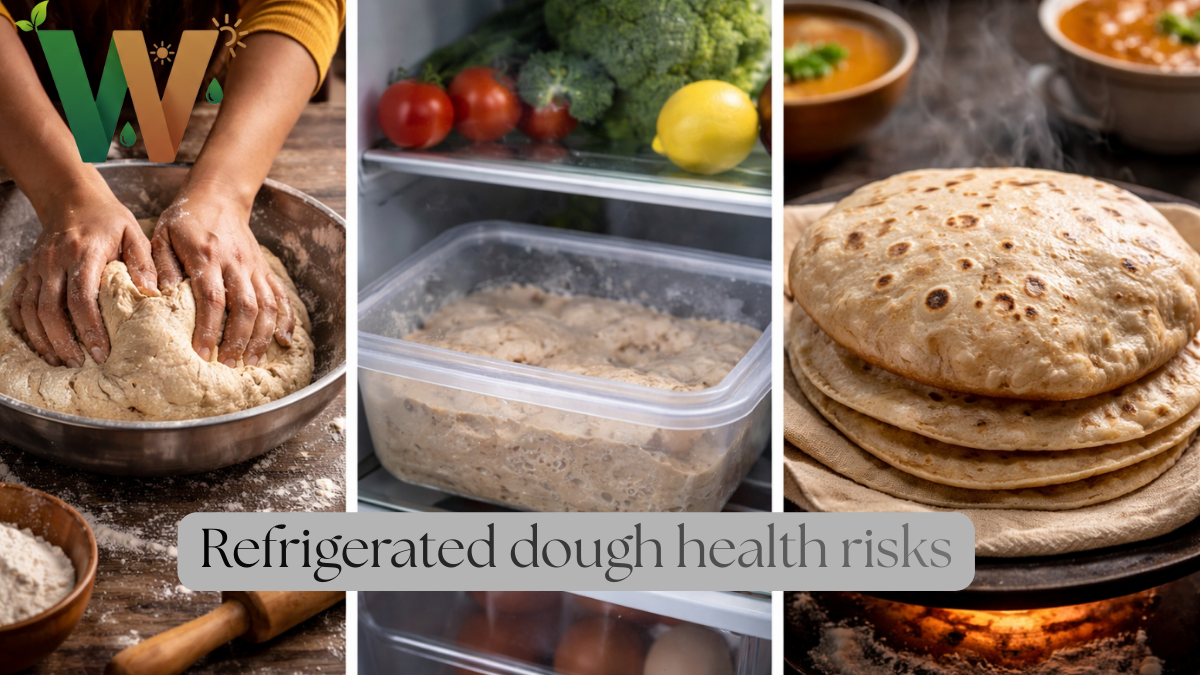
In many Indian homes, rotis are more than food. They are a daily ritual, a comfort, and often the foundation of a balanced meal. With busy schedules, it has become common to knead atta in bulk and store it in the refrigerator for convenience. While this habit may save time, winter changes how dough behaves, how our digestion works, and how our bodies respond to stored food.
Making rotis from refrigerated dough during winter might seem harmless, but it quietly affects nutrition, digestion, taste, and even long-term health. This article takes a deep, practical look at why fresh dough matters more in cold months, how stored atta changes over time, and what that means for your body.
This is not about fear or food rules. It is about understanding what happens between kneading the dough and placing a hot roti on your plate.
Table of Contents
Why Winter Changes the Way Dough Affects Your Body
Before getting into the reasons, it helps to understand one basic fact. Our digestive fire slows down in winter. Appetite may increase, but digestion becomes heavier and more sensitive. Foods that are easy to process in summer can feel dense or uncomfortable in colder months.
At the same time, refrigeration slows visible spoilage but does not stop chemical and microbial activity inside dough. The combination of slower digestion and subtle changes in stored atta makes refrigerated dough a poor choice for winter rotis.
Now let us break this down clearly.
1. Refrigerated Dough Loses Its Nutritional Value Over Time
Freshly kneaded atta begins to change the moment it comes in contact with water. Enzymes activate, gluten structures form, and natural fermentation begins, even if the dough is kept cold.
What Happens Inside Refrigerated Dough
When dough sits in the refrigerator for several hours or days, the following changes occur:
- Water-soluble vitamins such as B-complex begin to degrade
- Natural enzymes break down starch into simpler sugars
- Minerals become less bioavailable
- The dough absorbs fridge odors and moisture imbalance
This means the rotis you make later are not nutritionally the same as rotis made from fresh dough.
Fresh vs. Refrigerated Atta Nutrition
Fresh atta retains:
- Better micronutrient availability
- Balanced carbohydrate structure
- Natural taste and aroma
- Lighter texture that is easier to digest
Refrigerated atta often results in rotis that are heavier and less nourishing, even if they look similar.
In winter, when the body relies on nutrient-dense food to maintain immunity and warmth, this gradual nutritional loss matters more than we realize.
2. Increased Risk of Digestive Issues in Cold Weather
One of the most overlooked side effects of eating old atta roti is digestive discomfort. Many people associate bloating or heaviness with oily food, not realizing that stored dough can be just as problematic.
Why Refrigerated Dough Is Harder to Digest
Even in cold storage, dough continues mild fermentation. This leads to:
- Gas formation
- Increased acidity
- Altered gluten structure
When rotis made from such dough are eaten in winter, common symptoms include:
- Bloating after meals
- Acid reflux or chest discomfort
- Constipation or sluggish digestion
- Feeling sleepy or heavy after eating
Cold weather already slows gut movement. Adding fermented or partially aged dough increases the digestive load.
Real-Life Kitchen Insight
Many home cooks notice that rotis from refrigerated dough feel “tight” or rubbery. This texture is not just a cooking issue. It reflects structural changes in gluten that your stomach now has to work harder to break down.
Fresh dough produces softer rotis that align better with winter digestion.
3. Lactic Acid Buildup Can Trigger Inflammation
One of the least discussed but most important reasons to avoid refrigerated dough in winter is lactic acid buildup in fermented dough.
Understanding Lactic Acid in Stored Dough
When atta is mixed with water, natural bacteria begin converting sugars into lactic acid. Refrigeration slows this process but does not stop it.
Over time, lactic acid accumulates, especially if:
- Dough is stored for more than 24 hours
- The refrigerator temperature fluctuates
- The dough container is airtight
Why This Matters in Winter
Lactic acid in small amounts is not harmful. However, excessive buildup can:
- Irritate the stomach lining
- Increase joint stiffness
- Trigger inflammation in people with arthritis
- Cause acidity and sour burps
Winter already makes joints and muscles stiffer. Adding inflammatory food compounds quietly worsens the problem.
This does not mean fermented foods are bad. It means uncontrolled fermentation in basic staples like roti is not ideal during colder months.
4. Taste and Texture Decline Affect Satisfaction and Portion Control
Food satisfaction plays a major role in how much we eat. When rotis do not taste fresh, we often compensate without realizing it.
How Refrigerated Dough Changes Rotis
Rotis made from stored atta often have:
- Slight sour smell
- Uneven puffing
- Dry edges
- Chewy or stiff center
This leads to two common behaviors:
- Eating more rotis to feel satisfied
- Adding excess ghee, butter, or curry to improve taste
Both can increase calorie intake without improving nutrition.
Winter Comfort Eating Connection
Winter meals are already heavier. When rotis lack natural softness and flavor, the meal becomes less balanced and more indulgent. Over time, this habit contributes to weight gain and sluggishness.
Fresh dough rotis, even with minimal ghee, feel complete and satisfying.
5. Higher Risk of Microbial Growth Despite Refrigeration
Refrigeration gives a false sense of safety. While it slows down harmful bacteria, it does not eliminate them.
What Can Go Wrong in Stored Dough
Refrigerated dough is vulnerable to:
- Cross-contamination from fridge surfaces
- Moisture imbalance leading to mold spores
- Yeast overgrowth
These risks increase when dough is:
- Stored uncovered
- Kept near raw vegetables or leftovers
- Used beyond two days
Side Effects of Eating Old Atta Roti
Repeated consumption of such rotis may cause:
- Mild food poisoning symptoms
- Frequent stomach upsets
- Reduced appetite
- Headaches or fatigue
These symptoms often go unnoticed or are blamed on weather changes, not food habits.
In winter, immunity can already be lower, making the body more sensitive to such issues.
Common Myths About Refrigerated Dough
Let us clear a few misunderstandings that keep this habit alive.
Myth 1: Refrigerated dough is as good as fresh
Reality: Cooling slows spoilage, not nutritional degradation or fermentation.
Myth 2: Adding hot water fixes old dough
Reality: Heat softens texture but does not reverse chemical changes.
Myth 3: Sour smell means better fermentation
Reality: For rotis, sourness indicates over-fermentation, not improved quality.
How Long Is Dough Actually Safe to Use?
If refrigeration is unavoidable, here are practical limits.
- Best: Use within 12 hours
- Acceptable: Up to 24 hours with proper storage
- Avoid: Beyond 48 hours, especially in winter
Even within this window, fresh dough is always superior for daily consumption.
Healthier Alternatives for Busy Winter Days
Convenience does not have to compromise health. Here are smarter options.
Knead Smaller Portions
Instead of bulk storage, knead dough once or twice a day in smaller quantities. It takes less time than dealing with digestive discomfort later.
Use Warm Water for Kneading
Warm water improves gluten formation and makes rotis softer without long resting periods.
Keep Dough at Room Temperature Briefly
In winter, dough can safely rest for 1 to 2 hours at room temperature without spoilage.
Partially Prep Dry Atta Mix
You can pre-mix atta with salt and keep it dry. Add water only when needed.
Who Should Be Extra Careful with Refrigerated Dough
Some people are more affected than others.
- Children
- Elderly individuals
- People with acidity or IBS
- Those with joint pain or inflammation
- Anyone recovering from illness
For these groups, fresh rotis are not a luxury. They are a necessity.
Cultural Wisdom We Often Ignore
Traditional Indian kitchens rarely stored wet dough. Atta was ground fresh, kneaded daily, and cooked soon after. This practice evolved from observation, not trends.
Winter diets historically emphasized:
- Warm, freshly cooked meals
- Minimal leftovers
- Easily digestible grains
Modern refrigeration is helpful, but it should not replace basic food wisdom.
Frequently Asked Questions
Is refrigerated dough harmful if eaten occasionally?
Occasional use is unlikely to cause harm for healthy adults. The issue arises with daily consumption over long periods, especially in winter.
Can sour dough rotis cause acidity?
Yes. Lactic acid buildup and altered starch structure can trigger acidity and bloating.
Does adding ghee reduce the negative effects?
Ghee improves lubrication and taste but does not fix fermentation or nutrient loss.
Is freezing dough better than refrigeration?
Freezing halts fermentation but damages gluten structure. Rotis often turn dry and brittle after thawing.
The Bigger Picture: Food Quality Over Food Speed
Time-saving habits are useful, but not when they quietly erode health. Rotis are eaten daily, sometimes twice a day. Small compromises here add up faster than we think.
Choosing fresh dough in winter is not about perfection. It is about alignment with how the body, food, and season interact.
Conclusion:
Refrigerated dough may look the same, cook the same, and smell acceptable at first glance. Yet beneath the surface, it tells a different story. Nutrient loss, digestive strain, lactic acid buildup, texture changes, and microbial risks make it a poor daily choice for winter meals.
Fresh rotis support digestion, satisfaction, and overall well-being. They connect us back to mindful cooking without demanding much extra effort.
If there is one habit worth revisiting this winter, it is this one. Knead fresh. Eat warm. Let your food work with your body, not against it.
Sometimes, the healthiest change is also the simplest.