
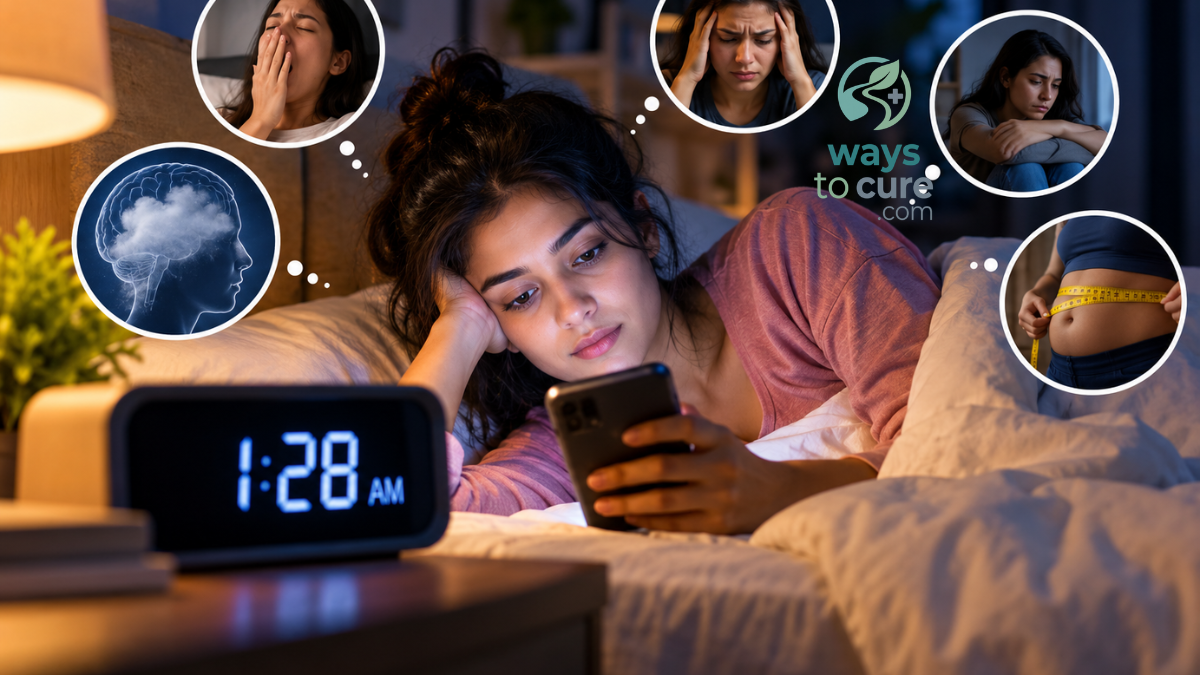
Staying up late can feel harmless, especially when work deadlines, late-night scrolling, streaming shows, or personal commitments push bedtime past midnight. You might even feel productive during the quiet hours of the night. However, if you regularly sacrifice sleep to finish tasks or spend more time on your phone, your body may eventually begin to show signs that something is wrong.
The effects of sleeping late depend on more than the clock. Your total sleep duration, sleep quality, consistency, and natural body clock all influence how you feel during the day. Someone who sleeps from 2 a.m. to 10 a.m. and wakes up refreshed may have a different experience from someone who sleeps at 2 a.m. but must wake up at 6 a.m. for work.
The problem often begins when a late bedtime conflicts with your daily responsibilities or disrupts your natural sleep-wake rhythm. Over time, this pattern can contribute to daytime sleepiness, difficulty concentrating, irritability, and other health concerns.
Recognizing the warning signs sleeping late is harming you can help you make changes before poor sleep becomes a persistent problem.
In this article, we explore five important warning signs, explain why they occur, discuss the health risks associated with chronic sleep disruption, and share practical ways to establish a healthier sleep schedule.
Table of Contents
Why Sleeping Late Can Affect Your Body
Your body follows an internal timing system called the circadian rhythm. This roughly 24-hour cycle helps regulate sleep, alertness, body temperature, hormone activity, and other biological processes.
Light plays a major role in setting this rhythm. Bright light in the evening, particularly from screens and strong indoor lighting, can delay the body’s preparation for sleep. Morning daylight, on the other hand, helps reinforce the timing of your sleep-wake cycle.
Your body also builds up a need for sleep throughout the day. This process, known as sleep pressure, increases the longer you remain awake. When you regularly stay up late and wake early, you may not allow enough time for your body to recover.
Most adults need at least seven hours of sleep each night, and many function best with seven to nine hours. Individual needs vary, but consistently sleeping less than you need can affect physical and mental performance.
Is sleeping after midnight always unhealthy?
No. Sleeping after midnight does not automatically mean you are damaging your health. Your natural chronotype, work schedule, family responsibilities, and lifestyle all influence your preferred sleep timing.
A person who consistently sleeps from 1 a.m. to 9 a.m. may get adequate rest. However, someone who sleeps from 1 a.m. to 5:30 a.m. may accumulate a substantial sleep deficit.
Problems can also arise when your preferred bedtime conflicts with school, work, or other fixed commitments. This mismatch can cause circadian rhythm disruption symptoms, even when you try to catch up on sleep during weekends.
The important questions are whether you get enough sleep, whether you maintain a reasonably consistent schedule, and whether you feel alert and rested during the day.
1. You Feel Tired, Sleepy, or Drained Throughout the Day
One of the most noticeable warning signs sleeping late is harming you is persistent daytime fatigue.
If you wake up feeling exhausted despite spending several hours in bed, or if you struggle to stay awake during meetings, classes, or routine activities, your current sleep schedule may not be meeting your body’s needs.
Occasional tiredness is normal. However, regular exhaustion deserves attention, particularly when it follows a pattern of late nights and early mornings.
Why sleeping late can cause daytime fatigue
Your body uses sleep to support physical recovery, memory processing, immune function, and the regulation of many biological processes. When you shorten your sleep window, these functions may not receive the time they need.
For example, imagine that you go to bed at 1:30 a.m. and wake up at 6:30 a.m. because of work. You get only five hours of sleep, which falls below the recommended minimum for most adults.
You might compensate by drinking several cups of coffee, taking frequent naps, or relying on sugary snacks to get through the day. These strategies may temporarily improve alertness, but they do not replace adequate sleep.
Even when you spend seven or eight hours in bed, a poorly timed schedule or repeated nighttime awakenings may leave you feeling unrefreshed.
Signs your sleep schedule may be leaving you exhausted
Look for patterns such as:
- Struggling to get out of bed most mornings.
- Feeling sleepy during quiet activities, meetings, or travel as a passenger.
- Depending heavily on caffeine to stay alert.
- Experiencing an afternoon energy crash almost every day.
- Sleeping much longer on weekends than on workdays.
- Feeling more refreshed after several nights of adequate, consistent sleep.
These symptoms do not prove that sleeping late is the cause. Conditions such as sleep apnea, anemia, thyroid disorders, medication effects, and depression can also cause persistent fatigue.
How to improve daytime energy
Start by protecting a sleep window that allows you to get at least seven hours of sleep, with enough additional time to account for how long you take to fall asleep and any awakenings.
Try to wake up at approximately the same time each day. Get natural daylight in the morning, move your body during the day, and avoid using caffeine late in the afternoon or evening if it interferes with your sleep.
If you feel sleepy while driving, stop driving and rest safely. Drowsiness can impair reaction time and judgment, even when you believe you can push through it.
When to seek help: Speak with a healthcare professional if fatigue persists despite adequate sleep, becomes severe, or interferes with everyday life. Loud snoring, gasping during sleep, or morning headaches may indicate an underlying sleep disorder.
2. You Have Trouble Concentrating, Remembering Things, or Making Decisions
Do you repeatedly read the same paragraph without understanding it? Have you started forgetting small tasks, misplacing everyday items, or making mistakes you would usually avoid?
Difficulty concentrating is another important sign that your sleep schedule may be affecting your health.
Sleep supports attention, learning, memory consolidation, and decision-making. When you consistently stay awake longer than your body can comfortably tolerate, these abilities may decline.
How sleep deprivation affects the brain
Your brain does not simply switch off when you sleep. During sleep, it processes information gathered throughout the day and supports the formation and stabilization of memories.
Insufficient sleep can interfere with attention and working memory, which help you hold information in mind while completing a task. It can also slow reaction times and make it harder to evaluate risks.
For instance, an employee who stays awake until 2 a.m. preparing a presentation may struggle to identify simple errors the following morning. A student who repeatedly sacrifices sleep to study may spend more hours with books open but find it harder to recall what they learned.
These examples illustrate an important point: more waking hours do not always mean better performance. Adequate sleep helps you use your waking hours effectively.
Common cognitive warning signs
Pay attention if you regularly experience:
- Difficulty focusing on a task for more than a short period.
- Forgetting conversations, appointments, or instructions.
- Taking longer to complete familiar work.
- Making avoidable mistakes in routine activities.
- Feeling mentally foggy after waking up.
- Struggling to organize tasks or make straightforward decisions.
These symptoms can result from stress, anxiety, medication effects, nutritional deficiencies, and other conditions. Sleep disruption is one possible contributor, not the only explanation.
Why chronically sleeping past midnight can affect productivity
Chronically sleeping past midnight becomes particularly problematic when you must wake early and cannot recover the lost hours.
Your body clock influences when you naturally feel alert and sleepy. If you repeatedly work against this rhythm, you may feel less alert during the hours when your responsibilities demand your full attention.
Some people also experience social jet lag. This occurs when their sleep schedule differs substantially between workdays and free days. For example, they might wake at 6:30 a.m. from Monday to Friday but sleep until 10:30 a.m. on weekends.
The resulting changes in sleep timing can make it harder to maintain a consistent rhythm. Sleeping longer on weekends may help relieve some sleep debt, but it does not always eliminate the effects of an irregular schedule.
Practical ways to protect concentration and memory
Set a clear stopping time for work or study, particularly when late-night tasks repeatedly cut into sleep. Use focused work sessions earlier in the day whenever possible.
Keep a regular wake-up time and plan your bedtime backward from it. If you need to wake at 6:30 a.m., a bedtime around 10:30 to 11:30 p.m. may provide a useful starting point, depending on your individual sleep needs and how quickly you fall asleep.
Avoid treating caffeine as a substitute for rest. It may improve alertness temporarily, but excessive or late consumption can make it harder to fall asleep later.
If concentration problems continue despite consistent, adequate sleep, discuss them with a healthcare professional rather than assuming sleep is the only cause.
3. Your Mood Changes, and You Become More Irritable or Anxious
Sleep affects emotional regulation as well as physical energy. When you regularly stay up late and do not get sufficient rest, small frustrations may feel overwhelming, your patience may decrease, and everyday stress may become harder to manage.
You might notice that you snap at family members, feel unusually sensitive to criticism, or become frustrated by minor delays. Some people also experience increased anxiety or feel less motivated to engage in activities they normally enjoy.
These changes can be subtle at first. However, a repeated pattern of poor sleep and worsening mood deserves attention.
The connection between sleep and emotional health
Sleep helps the brain regulate emotional responses and process experiences. When sleep becomes insufficient or irregular, you may find it harder to respond calmly to stressful situations.
Imagine having several nights of short sleep before a busy week. A delayed meeting, a minor work error, or a household disagreement might trigger a stronger reaction than usual.
Poor sleep can also make it harder to manage worry. When you feel exhausted, problems may seem more difficult to solve, and you may have less emotional energy to cope with uncertainty.
The relationship works in both directions. Anxiety and low mood can make it harder to fall asleep, while poor sleep can worsen emotional symptoms. This cycle can continue unless you address both sides of the problem.
Mood-related warning signs of poor sleep
Watch for changes such as:
- Becoming irritated more easily than usual.
- Feeling emotionally overwhelmed by minor problems.
- Experiencing increased worry after several late nights.
- Having less motivation for social activities or hobbies.
- Finding it harder to manage pressure at work or home.
- Feeling unusually low or emotionally drained during the day.
These signs do not automatically indicate a mental health condition. They can also arise from work pressure, relationship difficulties, hormonal changes, and other life circumstances.
The key is to notice whether your symptoms repeatedly worsen when you sleep poorly and improve when you maintain a healthier schedule.
Can sleeping late increase the risk of mental health problems?
Research has linked insufficient or disrupted sleep with depression, anxiety symptoms, and other mental health concerns. However, these relationships are complex, and researchers cannot assume that a late bedtime alone causes a mental health condition.
Sleep duration, circadian timing, existing mental health, lifestyle, and social circumstances may all play a role.
Delayed sleep-wake phase disorder is one example of a condition in which a person’s natural sleep timing shifts later than conventional schedules. The person may struggle to fall asleep early and find it difficult to wake at socially required times. This pattern can contribute to distress and impaired functioning.
If you naturally feel sleepy late at night but sleep well and function normally on a compatible schedule, that is not necessarily a disorder.
What you can do to support your mood
Create a predictable evening routine that gives your mind time to settle. Reduce stimulating activities before bed, dim the lights, and avoid using the final minutes of the day to catch up on stressful work whenever possible.
Regular physical activity, time outdoors, balanced meals, and meaningful social connections can also support emotional well-being.
Most importantly, do not dismiss persistent mood changes as simply being tired. If low mood, anxiety, loss of interest, or irritability lasts for weeks or affects your daily life, consult a qualified healthcare professional. Improving sleep can help, but it may not address every underlying concern.
4. Your Sleep Schedule Becomes Increasingly Irregular
A late bedtime is not always a problem by itself. A schedule that keeps shifting, however, can make it harder for your body to predict when it should sleep and wake.
For example, you might sleep at 11:30 p.m. on Monday, 2 a.m. on Tuesday, and 3 a.m. on Wednesday. You may then sleep until late morning on Sunday to compensate for the week.
This pattern can create a cycle in which you feel tired in the morning but wide awake at night. Over time, you may find that going to bed earlier becomes surprisingly difficult.
What happens when your circadian rhythm becomes disrupted?
Your circadian rhythm helps coordinate sleep and wakefulness with the day-night cycle. Light exposure, meal timing, physical activity, and your daily routine all provide signals that help regulate this internal clock.
When these signals become inconsistent, your sleep timing may drift away from the schedule you need to follow.
For example, bright light late at night can delay the release of melatonin, a hormone that helps signal biological nighttime. Irregular wake times and limited morning daylight can also weaken the consistency of your sleep-wake pattern.
These changes can produce circadian rhythm disruption symptoms such as difficulty falling asleep at the desired time, trouble waking up, and sleepiness during the day.
Signs your body clock may be out of sync
Look for these recurring patterns:
- You feel wide awake late at night even when you need to sleep.
- You cannot fall asleep early despite trying to do so.
- You struggle to wake up at the same time each morning.
- Your sleep schedule shifts later over several days.
- You sleep at very different times on workdays and weekends.
- You feel alert at night but sluggish during the morning.
These symptoms may reflect lifestyle habits, but they can also indicate a circadian rhythm sleep-wake disorder.
Delayed sleep phase versus a habit of staying up late
Delayed sleep-wake phase disorder is different from choosing to stay awake for entertainment or work.
People with this disorder experience a persistent delay in their natural sleep timing. They may not feel sleepy until very late at night and may struggle to wake up in time for work or school.
When they can follow their preferred schedule, they may sleep for a normal duration and experience reasonably good sleep quality. The main difficulty is that their biological timing conflicts with the schedule they need to maintain.
By contrast, someone who stays up late scrolling through social media despite feeling sleepy may have a behavioral pattern that responds to changes in routine and screen use.
The distinction matters because delayed sleep-wake phase disorder may require professional assessment and a more individualized treatment plan.
How to reset your sleep schedule gradually
Avoid forcing a dramatic change overnight. If you usually fall asleep at 2 a.m., suddenly going to bed at 10 p.m. may leave you lying awake and feeling frustrated.
Instead, try the following steps:
- Choose a consistent wake-up time. Keep it reasonably stable throughout the week.
- Move bedtime earlier gradually. Shift your schedule in small increments, such as 15 to 30 minutes at a time, if that feels manageable.
- Get morning daylight. Spend time outdoors after waking, when practical.
- Reduce bright light at night. Dim household lighting and reduce screen exposure during the hour or two before bed.
- Keep naps short and early. Long or late naps may reduce your ability to fall asleep at night.
- Maintain a relaxing evening routine. Read, stretch gently, or listen to calming audio instead of continuing stimulating work.
Do not use bright-light therapy or melatonin supplements indiscriminately to reset your body clock. Timing can affect their results, and melatonin may interact with certain medications. Seek professional guidance if your sleep schedule remains significantly delayed or you suspect a circadian rhythm disorder.
5. Your Physical Health and Daily Habits Begin to Change
The fifth warning sign is a broader change in how you feel physically or manage everyday habits.
You might notice stronger cravings for sweet or high-calorie foods, reduced motivation to exercise, more frequent headaches, or a growing dependence on caffeine. Some people also find that they become less active because they feel too tired to move.
These changes do not prove that a late bedtime has harmed your health. However, they can signal that insufficient or disrupted sleep is affecting the systems that help regulate appetite, energy, and daily functioning.
Why poor sleep can affect appetite and food choices
Sleep influences hormones and brain signals involved in hunger, fullness, and reward. Research suggests that insufficient sleep can increase appetite in some people and make energy-dense foods more appealing.
Consider a person who stays awake until 2 a.m. every night. Those extra waking hours create more opportunities for late-night snacking, especially when the person feels bored, stressed, or tired.
The next morning, the same person may skip breakfast, drink sweetened coffee, or reach for convenient snacks because they lack energy to prepare a meal.
This pattern can make healthy eating more difficult. Over time, inadequate sleep may contribute to weight-management challenges, although diet, activity, medications, genetics, and other factors also influence body weight.
The relationship between sleep and metabolic health
Studies have associated habitual short sleep with a higher risk of obesity, type 2 diabetes, and other metabolic problems. Sleep timing and circadian disruption may also matter, particularly for people who work night shifts or maintain irregular schedules.
However, it is important to distinguish association from direct cause. Researchers cannot conclude that simply going to bed after midnight will cause diabetes or weight gain.
The risk depends on a combination of factors, including how much you sleep, how consistently you sleep, your activity levels, and your overall health.
The practical message is straightforward: protecting sufficient, regular sleep can support healthier routines and may help reduce some risks associated with chronic sleep deprivation.
Other physical effects of sleeping late and sleeping too little
When a late bedtime reduces your total sleep, you may experience several additional effects:
- Headaches: Some people experience headaches after poor sleep, although headaches have many possible causes.
- Reduced exercise performance: Insufficient sleep can affect endurance, reaction time, motivation, and recovery.
- Lower alertness: Sleepiness can increase the risk of mistakes, workplace injuries, and road accidents.
- Changes in immune function: Sleep supports normal immune activity, and inadequate sleep can affect the body’s response to infections.
- Blood pressure and cardiovascular concerns: Persistent short sleep has been associated with hypertension and a higher risk of cardiovascular disease.
These risks develop through complex pathways. A single late night does not automatically cause long-term disease, and symptoms such as headaches or appetite changes require context.
How to protect your physical health
Start by addressing the most obvious issue: insufficient sleep. Give yourself enough time to rest, and avoid routinely sacrificing sleep for late-night entertainment or work that can be completed earlier.
Build a realistic routine around regular meals, physical activity, and a consistent wake time. If you snack late at night because you feel genuinely hungry, consider whether you eat enough during the day rather than relying on willpower alone.
If you experience unexplained weight changes, persistent headaches, unusual thirst, or other concerning physical symptoms, speak with a healthcare professional. Do not assume that changing your bedtime will resolve every symptom.
The Long-Term Health Risks of Chronically Sleeping Past Midnight
The phrase “sleeping late” can mean different things. Some people go to bed late but get enough sleep, while others regularly cut their sleep short. These patterns do not carry identical risks.
The strongest concern arises when late sleep timing combines with inadequate sleep, frequent schedule changes, or a mismatch between your biological clock and your daily responsibilities.
1. Increased risk of chronic sleep deprivation
When you repeatedly sleep less than your body needs, sleep debt can build up. You may feel increasingly tired, less focused, and more emotionally reactive.
Weekend catch-up sleep may help reduce some effects of sleep loss, but it does not reliably reverse every consequence of chronic sleep deprivation.
2. Potential metabolic and cardiovascular consequences
Habitual short sleep has been associated with a greater risk of high blood pressure, type 2 diabetes, obesity, and cardiovascular disease.
Irregular sleep timing may also affect metabolic processes, particularly when it disrupts eating patterns and circadian rhythms.
These findings do not mean that a late bedtime alone causes these conditions. They highlight why consistent, sufficient sleep belongs alongside physical activity, a balanced diet, and other healthy habits.
3. Greater risk of mistakes and accidents
Sleepiness affects reaction time, attention, and judgment. These effects matter when driving, operating machinery, caring for others, or performing tasks that require sustained concentration.
If you regularly struggle to stay awake during the day, do not rely on caffeine or open windows to make drowsy driving safe.
4. Possible worsening of existing mental health symptoms
Poor sleep can make emotional regulation more difficult and may worsen symptoms of anxiety or depression in some people. Mental health difficulties can also disrupt sleep, so both concerns may need attention.
5. Difficulty maintaining a stable daily routine
An irregular sleep schedule can affect meal timing, exercise, work performance, and social activities. These practical consequences may become a significant source of stress, even when you get enough sleep on some nights.
The best approach is not to fear a particular bedtime. It is to establish a schedule that allows adequate sleep, supports daytime alertness, and fits your responsibilities as consistently as possible.
How to Fix a Late Sleep Schedule Without Struggling Every Night
Changing your sleep habits can take time, especially if you have followed the same routine for months or years. A gradual, repeatable plan is usually more practical than trying to transform your entire lifestyle in one evening.
Step 1: Work backward from your wake-up time
First, identify when you need to wake up on most days. Then allow enough time for seven to nine hours of sleep, adjusting to your individual needs.
For example, if you need to wake at 7 a.m., you could aim to fall asleep between 10 p.m. and midnight. If you need more than eight hours to feel rested, plan for an earlier bedtime.
Remember that time in bed is not the same as time asleep. Allow extra time if you usually need a while to fall asleep.
Step 2: Change your schedule in small increments
If your current bedtime is 2 a.m., begin by moving it earlier by 15 to 30 minutes, then maintain the change until it feels manageable.
Continue adjusting gradually rather than forcing yourself to fall asleep several hours earlier immediately.
Keep your wake time consistent, including on weekends where practical. A large weekend shift can make Monday morning more difficult.
Step 3: Use light to reinforce your body clock
Morning daylight helps signal that the day has begun. Try spending time outside after waking, even if you only take a short walk.
In the evening, reduce bright light and switch to calmer activities. Night-mode settings can reduce some screen brightness, but they do not eliminate the alerting effects of engaging content or late-night stimulation.
Step 4: Set a limit on caffeine
Coffee, tea, energy drinks, and some soft drinks contain caffeine. Its effects can last for several hours, although sensitivity varies considerably.
If you struggle to fall asleep, try avoiding caffeine for at least six to eight hours before bedtime. You may need a longer gap if you are particularly sensitive.
Also check whether supplements, pre-workout products, or medications contain stimulants.
Step 5: Make your bedroom comfortable
A dark, quiet, and comfortably cool room can support better sleep. Use curtains, an eye mask, or earplugs if needed and safe for your circumstances.
Choose a comfortable mattress and pillow, and keep your phone away from your bed if notifications or scrolling tempt you to stay awake.
Step 6: Be careful with naps
Short naps can improve alertness when you feel tired. However, long naps or naps late in the day can make it harder to fall asleep at your intended bedtime.
If you need a nap, consider limiting it to about 20 minutes and taking it earlier in the afternoon.
Step 7: Keep a sleep diary
For one or two weeks, record when you go to bed, approximately when you fall asleep, when you wake, how often you awaken at night, and how rested you feel.
Also note caffeine intake, naps, exercise, and significant changes in your schedule.
This record can help you identify patterns. It may also give a healthcare professional useful information if you need an assessment.
Step 8: Do not ignore persistent sleep problems
If you cannot fall asleep at an appropriate time despite following a consistent routine, or if you remain exhausted despite getting enough sleep, consider speaking with a doctor or sleep specialist.
Possible causes include insomnia, delayed sleep-wake phase disorder, sleep apnea, medication effects, and other medical conditions. Treatment depends on the cause, so avoid assuming that all sleep problems result from poor habits.
When Should You See a Doctor About Sleeping Late?
You do not need medical treatment simply because you prefer a later bedtime. However, professional guidance can help when sleep timing interferes with your health, responsibilities, or quality of life.
Consider seeking an assessment if:
- You regularly struggle to fall asleep until very late and cannot wake when needed.
- You feel excessively sleepy during the day despite allowing enough time for sleep.
- Your fatigue or concentration problems persist after improving your routine.
- You snore loudly, gasp during sleep, or experience witnessed pauses in breathing.
- You frequently wake with headaches or feel unrefreshed after a full night in bed.
- Sleep difficulties continue for weeks or substantially affect your daily functioning.
- You experience persistent anxiety, low mood, or other significant emotional changes.
A clinician may ask about your sleep schedule, medication use, caffeine consumption, symptoms, and medical history. Depending on your circumstances, they may recommend a sleep diary, a sleep study, or further evaluation.
Seek urgent medical attention for severe or sudden symptoms, and get immediate help if mental health symptoms involve thoughts of self-harm.
1. What are the warning signs sleeping late is harming you?
The five main warning signs include persistent daytime fatigue, difficulty concentrating or remembering things, mood changes, an increasingly irregular sleep schedule, and changes in appetite, activity, or physical well-being.
These symptoms may indicate insufficient or disrupted sleep, but they can also have other causes. Look for recurring patterns rather than relying on a single bad night.
2. Is sleeping after midnight bad for your health?
Not necessarily. If you sleep after midnight but consistently get enough good-quality sleep and feel alert during the day, the timing alone may not be a problem.
However, a late bedtime can become harmful when it reduces your sleep duration, conflicts with your work schedule, or creates an ongoing mismatch with your circadian rhythm.
3. What are the effects of sleeping late every night?
The effects of sleeping late every night depend on whether you get sufficient sleep. When a late bedtime leads to chronic sleep deprivation, you may experience fatigue, reduced attention, irritability, and impaired daily performance.
Over time, habitual short sleep has also been associated with metabolic and cardiovascular health risks.
4. Can sleeping late cause weight gain?
Sleeping late does not automatically cause weight gain. However, insufficient sleep can affect appetite regulation, food choices, energy levels, and physical activity.
Late-night eating and irregular meal timing may also contribute to difficulties managing weight. Overall diet, activity, medications, and individual health factors remain important.
5. What are the symptoms of circadian rhythm disruption?
Common symptoms include difficulty falling asleep at the desired time, difficulty waking up, excessive daytime sleepiness, irregular sleep timing, and reduced daytime functioning.
Persistent symptoms may indicate a circadian rhythm sleep-wake disorder and deserve professional assessment if they interfere with daily life.
6. How many hours of sleep do adults need?
Most adults need at least seven hours of sleep per night, and many benefit from seven to nine hours. Individual needs vary with age, health, and other factors.
The best guide is a combination of adequate sleep duration, consistent timing, and feeling reasonably rested and alert during the day.
7. How can I stop sleeping late naturally?
Set a consistent wake-up time, move your bedtime earlier gradually, get daylight in the morning, reduce bright light at night, and avoid late caffeine.
A relaxing evening routine and a comfortable bedroom can also help. If your body clock remains significantly delayed despite consistent efforts, consult a healthcare professional.
8. Can sleeping late affect mental health?
Insufficient or disrupted sleep can contribute to irritability, difficulty managing stress, and worsening symptoms of anxiety or depression in some people.
The relationship is two-way because mental health difficulties can also disrupt sleep. Persistent emotional symptoms deserve attention rather than being attributed to bedtime alone.
9. Can I recover from sleeping late by sleeping longer on weekends?
Sleeping longer on weekends may help you recover from some sleep loss. However, it does not necessarily reverse all the effects of repeated short sleep, and large shifts in sleep timing can make your routine less consistent.
Aim to get sufficient sleep every night rather than relying on weekend recovery.
10. How long does it take to fix a late sleep schedule?
The time required varies. Some people adjust within days, while others need several weeks, particularly when their natural body clock runs later than their required schedule.
Gradual changes, consistent wake times, and appropriate light exposure can help. Persistent difficulty may require professional guidance.
Conclusion: Listen to What Your Sleep Habits Are Telling You
Sleeping late is not automatically unhealthy, but repeatedly sacrificing sleep or fighting your natural body clock can affect how you feel, think, and function.
The five warning signs sleeping late is harming you are worth taking seriously: persistent fatigue, reduced concentration, mood changes, an irregular sleep schedule, and changes in physical well-being or daily habits.
You do not need to overhaul your life overnight. Start by giving yourself enough time to sleep, keeping your wake-up time consistent, reducing bright light late in the evening, and getting daylight in the morning.
Pay attention to how your body responds over the following weeks. If you continue to feel exhausted, struggle to sleep at an appropriate time, or notice persistent changes in your mood or health, consult a healthcare professional.
Better sleep starts with consistency, not perfection. A realistic routine that supports your body’s needs can help you feel more alert, protect your well-being, and make your days easier to manage
Editorial note: This article provides general educational information, not an individual diagnosis or treatment plan. Readers with persistent sleep problems or concerning symptoms should consult a qualified healthcare professional.