
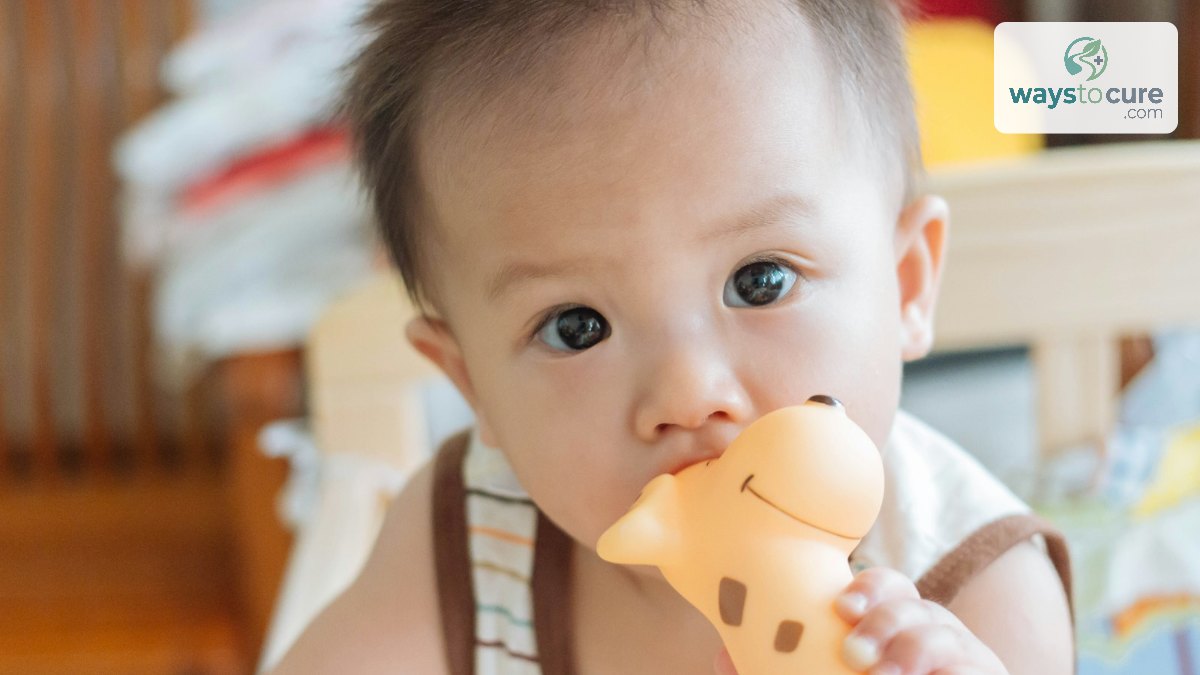
For a teething baby, the safest relief is simple: a clean, chilled (never frozen) teething ring, gentle gum rubbing with a clean finger, and, if your baby is really uncomfortable, a sugar-free paracetamol syrup at the dose your doctor or the label gives. Vanilla extract, numbing gels with benzocaine, homeopathic teething tablets, amber necklaces, honey and brandy on the gums are all unsafe, and a high fever or diarrhoea is not “just teething”.
Here’s how to tell normal teething from something that needs a doctor, and what to say when well-meaning relatives suggest an old remedy.
When do babies start teething?
Most babies get their first tooth at around 6 months, but the NHS notes that some start before 4 months and some after 12 months. A few are even born with a tooth. Lower teeth usually come before the matching upper ones, and most children have all their baby teeth by 2 to 3 years.
| Teeth | Usual age they appear |
|---|---|
| Front teeth (central incisors) | Around 6 months |
| Teeth beside them (lateral incisors) | Around 8 months |
| First back teeth (first molars) | Around 12 months |
| Pointed teeth (canines) | Around 18 months |
| Second back teeth (second molars) | Around 24 months |
These are averages. A baby who gets teeth a few months earlier or later is usually perfectly healthy.
Normal signs of teething
Some babies sail through with no fuss. Others have a few unsettled days each time a tooth comes through. According to the NHS, common signs are:
- Red, sore or swollen gum where the tooth is coming through
- A slightly raised temperature, but under 38°C
- One flushed cheek, or a mild rash on the face
- More drooling than usual
- Rubbing the ear on the same side
- Chewing on fists, toys and anything else they can reach
- Being more fussy and sleeping badly
What teething does NOT cause
This is where many parents get caught out. The American Academy of Pediatrics (AAP) says studies show fever is a false symptom of teething, and that teething doesn’t change the way a baby’s gut works. The NHS says there’s no evidence that teething causes diarrhoea.
The belief is very common in India. In a survey of 550 parents in Udaipur, 70% blamed fever on teething and 87.5% blamed diarrhoea. The trouble is that a baby who starts crawling and putting everything in their mouth at 6–12 months is also at the age for picking up infections. If you put a fever or loose motions down to teething, you can miss a real illness, such as an ear infection, a urine infection or a tummy bug that leads to dehydration.
So the rule is: a temperature of 38°C or more, diarrhoea, vomiting, a rash on the body, or crying that’s much worse than usual needs to be checked on its own merits. Our guide to common causes of diarrhoea explains what else can be behind loose stools.
Safe ways to ease teething pain
- A chilled teething ring. The NHS says some teething rings can be cooled in the fridge first, following the pack instructions. Never put one in the freezer: a frozen ring is hard enough to hurt the gums. Choose a firm, solid rubber or silicone ring, not one filled with liquid, which can split and leak.
- Rubbing the gums. Wash your hands and gently rub the sore area with a clean finger for a minute or two.
- Something to chew, from 6 months. Once your baby has started solid food, the NHS suggests soft fruit such as a slice of chilled melon, or other raw fruit and vegetables. Stay with them the whole time in case they choke. Skip rusks and biscuits, as nearly all contain sugar.
- Comfort and distraction. Cuddles, play and a walk outside can help more than you’d expect.
- Paracetamol if needed. The NHS says sugar-free paracetamol can be given for teething from 2 months of age, and ibuprofen from 3 months. In practice, check with your paediatrician first, especially for a young baby, and use the dose for your child’s age or weight on the label. Never give aspirin to children.
Wipe drool from the chin often so the skin doesn’t stay wet and get sore.
Never tie a teething ring or dummy around your baby’s neck. And once the first tooth appears, the NHS advises starting to brush with fluoride toothpaste. Letting a baby fall asleep with a bottle of milk is a well-known cause of rampant tooth decay in babies.
Teething remedies that are not safe
| Remedy | Why it’s unsafe |
|---|---|
| Vanilla extract on the gums | Pure vanilla extract must contain at least 35% alcohol by US law. Alcohol on the gums is absorbed quickly into a baby’s blood. |
| Brandy, whisky or rubbing alcohol | Same problem: babies absorb alcohol easily, and rubbing alcohol is poisonous if swallowed. |
| Numbing gels with benzocaine or lidocaine | Can cause methemoglobinemia, a dangerous drop in the blood’s ability to carry oxygen. Lidocaine can cause fits and heart problems in infants. |
| Homeopathic teething tablets or gels | No proven benefit and linked to serious harm. Some contained belladonna, a toxic plant extract. |
| Amber, wooden or silicone teething necklaces and bracelets | Risk of strangulation and choking. Deaths have been reported. |
| Honey on the gums, finger or dummy | Can cause infant botulism in babies under 12 months. |
| Frozen teethers or liquid-filled teethers | Frozen ones can damage gums; liquid ones can leak and the liquid may be contaminated. |
Vanilla extract and alcohol. Vanilla extract is often shared online as a “natural” teething remedy, but it isn’t a gentle one. Under the US standard for vanilla extract, it has to be at least 35% alcohol by volume. The AAP warns that alcohol applied to the gums is quickly absorbed into a child’s bloodstream. The same goes for the old idea of rubbing a drop of brandy on the gums.
Benzocaine and lidocaine gels. The US FDA says benzocaine products shouldn’t be used for teething pain in children, because they can cause a serious, sometimes fatal, condition called methemoglobinemia. It also warns that viscous lidocaine can cause fits, heart problems, brain injury and even death in infants and young children. Check the label of any gel sold for mouth ulcers or toothache before using it on a baby.
Homeopathic tablets. The FDA lists homeopathic teething tablets among products that offer little to no benefit and carry serious risks. The AAP specifically warns against those containing belladonna or coffea cruda. The NHS doesn’t recommend homeopathic products for teething either.
Amber necklaces. The FDA has received reports of deaths and serious injuries, including strangulation and choking, from teething jewellery. Use the same caution with any thread, chain or beads a baby wears while sleeping or can put in their mouth.
Honey. The CDC says honey given to children under 12 months can cause botulism, a severe food poisoning, and advises not adding honey to a baby’s food, water, formula or dummy. That includes a lick of honey on the finger to soothe the gums.
Talking to family about traditional remedies
In many Indian homes, grandparents have firm ideas about teething, and they mean well. The Udaipur survey found that 45.6% of parents rubbed their baby’s gums with numbing medicines, while only about a third used chilled objects, which is safer. A few gentle lines can help:
- “The doctor said teething doesn’t cause fever, so we’re getting the fever checked.”
- “Honey isn’t safe until after the first birthday, but a cold teething ring works well.”
- “We’re keeping necklaces and threads off the baby while sleeping, for safety.”
Many traditions, like extra cuddles, gentle gum massage and soft chilled fruit, are perfectly fine to keep.
When to see a doctor
Teething shouldn’t make a baby properly ill. Contact your paediatrician if your baby has:
- Diarrhoea lasting more than a day, or vomiting
- Crying that’s much worse than usual, or won’t settle
- Been given benzocaine, honey or a homeopathic product and seems unwell in any way
Get urgent advice the same day, using the cut-offs from the NHS guidance on fever in children, if your baby:
- Is under 3 months old and has a temperature of 38°C or higher
- Is 3 to 6 months old and has a temperature of 39°C or higher
- Has had a high temperature for 5 days or more
- Has fewer wet nappies, sunken eyes or no tears when crying (signs of dehydration)
Call 112 or go to the nearest hospital emergency department if your baby has a stiff neck, a rash that doesn’t fade when you press a glass against it, a fit, blue, grey or very pale lips or tongue, difficulty breathing, is drowsy and hard to wake, or isn’t interested in feeding at all.
For more on infections that often cause fevers in babies and older children, see our post on flu season and how to protect your family.
Frequently asked questions
Can teething cause fever in babies?
Teething may cause a slight rise in temperature, but under 38°C. A temperature of 38°C or more is a fever, and it has another cause that should be checked.
Are teething gels safe for babies in India?
Avoid any gel containing benzocaine or lidocaine. The NHS says there’s little evidence teething gels work at all, so try a chilled teething ring and gum rubbing first, and ask your paediatrician before using any gel.
Can I freeze a teether to make it work better?
No. Chill it in the fridge, not the freezer. Frozen teethers are hard enough to hurt sore gums.
Is it safe to put honey on my baby’s gums?
Not before 12 months. The CDC warns that honey can cause infant botulism, a severe illness, in babies under one year. That includes honey on a dummy or finger.
How long does teething pain last?
For most babies, discomfort is mild and lasts a few days around each tooth. If your baby seems unwell for longer, see a doctor rather than waiting it out.
This article is for general information and is not a substitute for advice from a doctor. If you have symptoms or a health condition, please consult a qualified healthcare professional.