
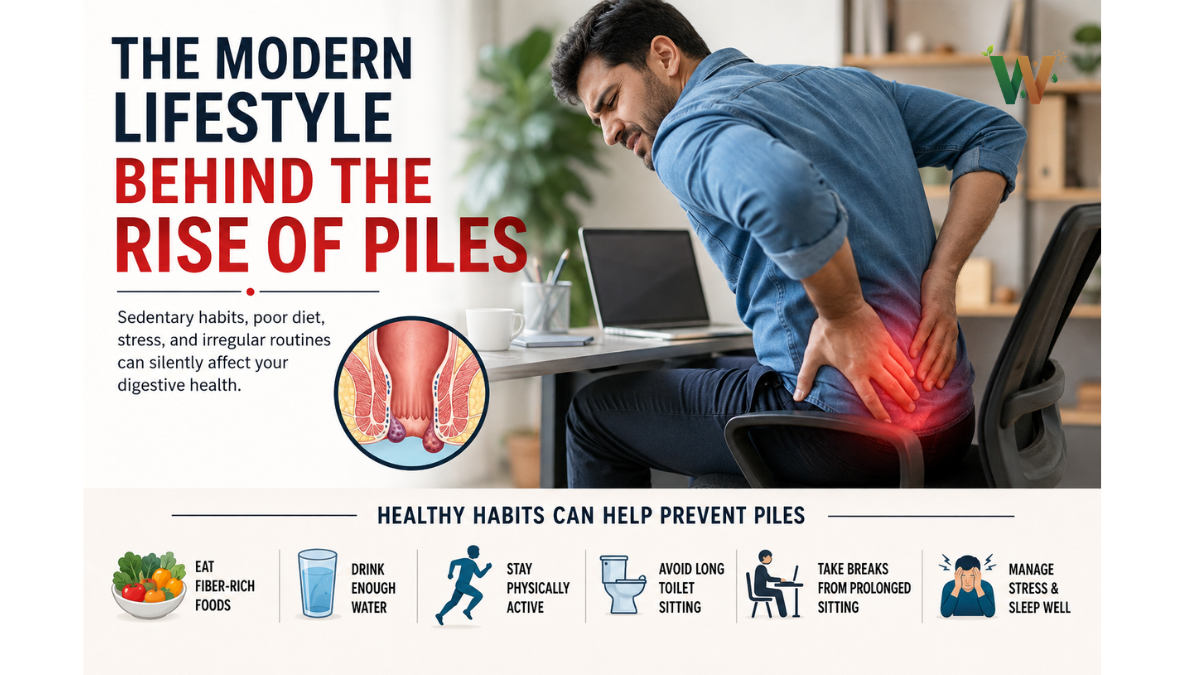
Piles, medically known as hemorrhoids, are often discussed as if they are simply an unavoidable part of getting older. But that explanation tells only part of the story.
Modern life has changed the way many people eat, work, move, sleep, and even use the toilet. Long hours at a desk, frequent reliance on processed foods, low fiber intake, dehydration, irregular meal timings, reduced physical activity, and prolonged sitting have become common parts of everyday life.
These habits do not automatically cause piles in every person. Hemorrhoidal disease is more complex than a single lifestyle choice, and factors such as age, pregnancy, obesity, constipation, genetics, and certain health conditions can also play a role. Still, many features of modern living can create the conditions that make constipation, straining, and pressure around the anal and rectal area more likely.
That connection deserves attention.
A recent systematic review and meta-analysis covering 150 studies and nearly 9 million individuals estimated a pooled global point prevalence of hemorrhoidal disease at about 25.9%. The authors also identified associations with factors including constipation, obesity, pregnancy, older age, diabetes, hypertension, and family history. However, prevalence estimates can vary depending on how hemorrhoids are diagnosed and which populations are studied.
The rise of piles should therefore not be viewed as a simple story of one bad habit. It is better understood as the result of several pressures working together.
A person may spend eight hours sitting at work, commute while seated, eat low-fiber convenience foods, drink too little water, ignore the urge to use the toilet, and then spend extra time scrolling on a smartphone while sitting on the toilet. None of these factors alone guarantees piles. Together, however, they can contribute to bowel habits and physical pressures associated with hemorrhoidal symptoms.
This article explores how modern lifestyles may be contributing to the growing concern around piles, why constipation plays such an important role, and what practical changes can help protect long-term digestive and bowel health.
Important note: Rectal bleeding should not automatically be assumed to be caused by piles. Bleeding can occur for other reasons, including more serious gastrointestinal conditions. Persistent bleeding or other concerning symptoms should be evaluated by a qualified healthcare professional.
Table of Contents
What Are Piles or Hemorrhoids?
Hemorrhoids, commonly called piles, are swollen and inflamed veins or vascular structures in and around the anus and lower rectum.
They are generally classified into two main types:
Internal Hemorrhoids:
Internal hemorrhoids develop inside the rectum. They may cause painless rectal bleeding, prolapse, or a sensation that something is protruding during or after a bowel movement.
External Hemorrhoids
External hemorrhoids develop under the skin around the anus. They may cause itching, discomfort, swelling, or pain. If a blood clot develops, the condition is known as a thrombosed hemorrhoid and can be particularly painful.
Hemorrhoids are common, but symptoms can vary significantly. Some people may have hemorrhoidal tissue without noticeable symptoms, while others experience bleeding, itching, pain, swelling, or prolapse.
The key issue is pressure and strain on the tissues and blood vessels around the lower rectum and anus. Repeated straining during bowel movements, chronic constipation, prolonged toilet sitting, and other factors can contribute to that pressure.
Why Modern Lifestyle Habits Matter
Human bodies are remarkably adaptable, but our daily routines can still influence how the digestive system functions.
Modern work and lifestyle patterns often encourage people to remain inactive for long periods. Food choices have also shifted toward convenience. Meals may contain plenty of calories but relatively little dietary fiber. Water often gets replaced by coffee, sugary beverages, or repeated cups of tea.
At the same time, many people live with irregular schedules.
Breakfast gets skipped. Lunch happens at a desk. Dinner takes place late at night. Sleep becomes inconsistent. The natural urge to have a bowel movement may be ignored because of meetings, commuting, school, travel, or a busy workday.
These patterns can affect bowel regularity.
The strongest established lifestyle-related concerns around hemorrhoids include constipation, straining, prolonged toilet sitting, and low dietary fiber intake. A sedentary lifestyle and other modern habits are often discussed as potential contributors, although researchers have noted that evidence for some individual lifestyle factors remains mixed and requires further study.
The bigger picture matters more than blaming one habit.
Sedentary Work: Sitting Has Become the Default Position
For many adults, work no longer involves substantial physical movement.
A typical office worker may sit at a desk for several hours, sit again during the commute, relax on the sofa after work, and then spend additional time using a phone or watching television.
This pattern can indirectly contribute to problems associated with piles.
Physical activity helps support overall health and can help reduce constipation. Mayo Clinic specifically recommends staying active as part of preventing constipation and reducing pressure associated with hemorrhoids.
That does not mean every person with a desk job will develop piles.
It means that a lifestyle with very little movement can become part of a broader pattern that includes constipation, weight gain, and reduced overall physical activity.
The Problem Is Often Continuous Sitting
A person does not necessarily need to spend twelve hours in an office to become sedentary.
Even people who exercise for 30 minutes each day can spend the remaining hours largely inactive.
The practical solution is not to panic about sitting. Most people need to sit for work. The goal is to interrupt long periods of inactivity.
Simple habits can help:
- Stand up regularly during the workday.
- Walk for a few minutes between tasks.
- Take phone calls while standing or walking when practical.
- Use part of the lunch break for movement.
- Build regular physical activity into the weekly routine.
Small changes are often easier to maintain than dramatic fitness plans.
The Low-Fiber Modern Diet and the Constipation Connection
One of the clearest links between lifestyle and hemorrhoid prevention involves dietary fiber.
Fiber helps add bulk to stool and can help keep it softer and easier to pass when combined with adequate fluid intake. This can reduce the need to strain during bowel movements.
The problem is that many modern diets contain a large amount of highly processed food.
Consider a typical convenience-based day:
- Refined cereal or packaged snacks for breakfast
- Fast food or a refined-grain meal for lunch
- Biscuits, chips, or other packaged snacks in the evening
- A heavy dinner with limited vegetables, legumes, or whole grains
Such a diet can provide plenty of energy while falling short on fiber-rich foods.
The Dietary Guidelines referenced by NIDDK recommend approximately 14 grams of fiber per 1,000 calories consumed. For a 2,000-calorie diet, that equals about 28 grams of fiber per day. Individual needs can vary.
Foods That Can Help Increase Fiber Intake
A more bowel-friendly diet can include:
- Whole grains
- Oats
- Brown rice
- Whole-wheat products
- Beans and lentils
- Chickpeas
- Fruits
- Vegetables
- Nuts and seeds, where appropriate
For an Indian diet, practical choices might include dal, chana, rajma, whole grains, vegetables, fruit, and other minimally processed fiber-rich foods.
The goal is not to suddenly eat enormous amounts of fiber overnight.
Increasing fiber too quickly can cause gas or bloating for some people. A gradual increase, along with adequate fluids, is usually more comfortable.
Constipation: One of the Biggest Lifestyle-Related Concerns
Constipation does not simply mean failing to have a bowel movement every day.
For some people, bowel movements may be infrequent. For others, the main issue is hard, dry, or difficult-to-pass stools.
Repeated straining can increase pressure in the lower rectal and anal area. Chronic constipation and straining are among the commonly recognized factors associated with hemorrhoids.
Research also supports the importance of this relationship. A recent global meta-analysis found constipation associated with a higher likelihood of hemorrhoidal disease, although observational research cannot prove that constipation alone directly causes every case.
Why Constipation Fits So Closely With Modern Life
Modern routines can encourage constipation in several ways.
A person may:
- Eat too little fiber.
- Drink insufficient fluids.
- Remain inactive for most of the day.
- Ignore the urge to use the toilet.
- Travel frequently.
- Work irregular shifts.
- Experience changes in daily routine.
The result may be harder stool and more straining.
This is why improving bowel habits is often more useful than searching for a single miracle remedy for piles.
Smartphone Use on the Toilet: A Small Habit With a Bigger Effect
One modern behavior deserves special attention: taking the phone into the bathroom.
Many people now treat toilet time as reading time, social media time, or video time.
The issue is not necessarily the phone itself. The concern is prolonged sitting on the toilet.
Both NIDDK and Mayo Clinic advise against sitting on the toilet for long periods because this can increase pressure on the veins and tissues around the anus.
A healthy toilet habit is usually straightforward.
Go when you feel the urge. Do not force a bowel movement. Avoid excessive straining. Finish and move on.
The bathroom does not need to become another location for extended screen time.
Ignoring the Natural Urge to Pass Stool
Modern schedules often encourage people to override their body’s signals.
A person may be preparing for work, stuck in traffic, attending a meeting, or uncomfortable using a public toilet. So the urge gets ignored.
Once in a while, this may not create a major problem. When it becomes a repeated pattern, however, bowel regularity can suffer.
People should avoid making a habit of delaying bowel movements unnecessarily.
Creating a consistent routine can help. Some people find that allowing enough time after breakfast is useful because eating can stimulate the gastrocolic reflex, which encourages movement in the colon.
The important point is not to force a rigid schedule. Instead, give your body enough time and respond when you genuinely need to go.
Dehydration and the Busy-Day Problem
Water often receives less attention than food when people discuss digestive health.
A busy person may start the day with coffee or tea, remain focused on work for hours, and suddenly realize in the afternoon that they have barely consumed any water.
Adequate fluid intake can help dietary fiber work effectively and support softer stools. NIDDK notes that drinking water and other liquids can help fiber in the diet work better. Individual fluid needs depend on factors such as health, activity, and climate.
There is no single amount of water that is perfect for every person.
Needs differ based on body size, weather, exercise, medical conditions, and other factors. People with certain heart or kidney conditions, for example, may need individualized medical advice.
The practical lesson is simple: do not rely on thirst alone after spending an entire day distracted by work.
Build hydration into the routine.
Processed Food, Convenience Eating, and Digestive Health
Modern food culture often rewards convenience.
Meals can be ordered within minutes. Packaged snacks are available everywhere. Refined carbohydrates and heavily processed foods are often easier to access than fresh, fiber-rich meals.
Convenience itself is not the enemy.
The problem arises when convenience consistently replaces dietary variety.
A person who occasionally eats fast food but otherwise consumes fruits, vegetables, legumes, and whole grains has a very different dietary pattern from someone whose daily meals rarely contain natural sources of fiber.
Instead of asking, “What food causes piles?” it is often more useful to ask:
Does my usual diet help me produce soft, easy-to-pass stools?
That question brings the focus back to practical prevention.
Stress and Piles: The Relationship Is More Indirect
Stress does not automatically cause hemorrhoids.
However, chronic stress can influence daily habits and digestive function. Some people eat differently when stressed. Others drink less water, exercise less, sleep poorly, or experience changes in bowel habits.
Stress may therefore become part of a chain.
For example:
Work stress → irregular meals → poor food choices → constipation → straining → worsening hemorrhoidal symptoms
This does not mean stress is the direct cause of piles.
It means that lifestyle habits rarely exist in isolation.
A realistic prevention strategy should therefore consider mental well-being as well as food and exercise.
Poor Sleep and Irregular Daily Routines
The body generally benefits from some degree of routine.
Irregular sleep can affect appetite, meal timing, physical activity, and daily habits. A person who sleeps poorly may wake up late, skip breakfast, rush to work, rely on caffeine, delay meals, and have less time for exercise.
Again, this does not establish a simple direct cause-and-effect relationship between poor sleep and hemorrhoids.
The connection is more behavioral.
When daily routines become chaotic, healthy bowel habits can become chaotic too.
Creating a more predictable routine can support regular meals, physical activity, hydration, and adequate time for bowel movements.
Obesity and Excess Pressure
Body weight is another factor worth discussing carefully.
Obesity has been associated with hemorrhoidal disease in research, and the recent global meta-analysis found a higher likelihood of hemorrhoids among people with obesity.
Weight is not a moral issue, and piles are not a punishment for being overweight.
The concern is physical and metabolic. Excess body weight may contribute to increased pressure and can also coexist with inactivity and dietary patterns that affect bowel health.
The most useful approach is not crash dieting.
Sustainable habits are more important:
- More daily movement
- Better food quality
- Adequate fiber
- Consistent hydration
- Improved sleep
- Gradual and medically appropriate weight management when needed
Pregnancy and Piles
Pregnancy is a well-recognized risk factor for hemorrhoids.
Changes in the body, including increased pressure in the pelvic and rectal area, can contribute to hemorrhoidal symptoms. Pregnancy was also identified as an associated factor in the recent meta-analysis.
Pregnant individuals should not attempt aggressive dietary changes, supplements, or treatments without considering their healthcare provider’s advice.
Constipation management during pregnancy can be particularly important, but treatment should be individualized.
Heavy Lifting and Repeated Straining
Regular heavy lifting is also listed among factors that may contribute to hemorrhoids because of increased pressure in the abdominal and rectal region.
This does not mean people should stop exercising or avoid strength training.
Physical activity has many health benefits.
The focus should be on appropriate technique, breathing, gradual progression, and avoiding unnecessary straining. People with existing hemorrhoidal symptoms may benefit from discussing their exercise routine with a healthcare professional.
The Modern Lifestyle Pattern That Creates a Perfect Storm
The real problem is often not one behavior.
Consider this hypothetical example.
Ravi works from home. He wakes up late after sleeping poorly. He skips breakfast, drinks several cups of coffee, and starts work immediately.
He spends most of the day sitting.
Lunch arrives through a food delivery app and contains little fiber. He ignores the urge to use the toilet because of meetings. By evening, he feels tired and orders another convenience meal.
He drinks little water and has almost no physical activity.
A few days later, bowel movements become difficult. He starts straining and spending longer in the bathroom while scrolling through his phone.
This pattern illustrates why piles should be viewed as a lifestyle issue in some cases, even though no single behavior guarantees the condition.
The modern lifestyle can quietly create multiple risk factors at the same time.
Common Symptoms of Piles
Symptoms can differ depending on the type and severity of hemorrhoids.
Common symptoms may include:
- Rectal bleeding, often noticed during a bowel movement
- Itching around the anus
- Swelling or a lump near the anus
- Pain or discomfort
- A feeling of incomplete evacuation
- Prolapse of internal hemorrhoidal tissue
- Painful swelling if an external hemorrhoid becomes thrombosed
Not every anal symptom is caused by piles.
Anal fissures, infections, inflammatory bowel disease, and other conditions can produce overlapping symptoms.
That is why self-diagnosis can be risky.
When Should You See a Doctor for Piles?
Many mild hemorrhoidal symptoms can improve with changes in diet and bowel habits.
However, medical evaluation is important if you experience rectal bleeding or symptoms that persist.
NIDDK advises seeking medical help for rectal bleeding and if symptoms do not improve after a week of home treatment. Mayo Clinic also emphasizes that rectal bleeding should not automatically be attributed to hemorrhoids.
Seek prompt medical care for severe anal pain and rectal bleeding, particularly if accompanied by abdominal discomfort, diarrhea, or fever.
Do not let embarrassment delay necessary medical attention.
Doctors deal with these symptoms regularly.
How to Prevent Piles Through Better Lifestyle Habits
Prevention is not about following a perfect lifestyle.
It is about reducing the habits that repeatedly lead to constipation, straining, and prolonged pressure.
Here are practical strategies.
1. Prioritize Fiber Every Day
Try to include a variety of:
- Fruits
- Vegetables
- Beans and lentils
- Whole grains
- Other naturally fiber-rich foods
Increase fiber gradually if your current intake is low.
A sudden dramatic increase may cause bloating or gas.
2. Drink Adequate Fluids
Adequate fluid intake can help fiber work effectively and support softer stools.
Your individual needs may differ depending on your health and lifestyle.
If you have a medical condition that affects fluid intake, follow your healthcare provider’s recommendations.
3. Avoid Straining During Bowel Movements
Do not force a bowel movement.
Straining increases pressure in the lower rectal area and is a recognized factor associated with hemorrhoids.
If constipation is persistent, address the underlying problem rather than repeatedly forcing bowel movements.
4. Do Not Spend Too Long on the Toilet
Use the toilet for its intended purpose.
Avoid turning bathroom time into a social media session.
Prolonged toilet sitting can increase pressure around the anal area.
5. Stay Physically Active
Regular movement can support overall health and help reduce constipation.
You do not need an extreme workout routine.
Walking, cycling, swimming, strength training, and other forms of activity can all contribute to a healthier lifestyle.
Choose an activity you can continue.
6. Break Up Long Periods of Sitting
If your job requires sitting, movement breaks are valuable.
Stand up regularly.
Walk during calls when possible.
Use short breaks to stretch or move around.
Consistency matters more than intensity.
7. Respond to the Urge to Use the Toilet
Avoid repeatedly delaying bowel movements when you genuinely need to go.
Creating enough time in your daily routine can reduce the temptation to rush or ignore your body’s signals.
8. Manage Constipation Early
Persistent constipation should not simply be accepted as normal.
Dietary changes, hydration, physical activity, and appropriate medical guidance can help.
Healthcare professionals may recommend treatments such as fiber supplements or stool-softening strategies depending on the individual situation.
Can Lifestyle Changes Treat Existing Piles?
Lifestyle changes can play an important role in managing mild hemorrhoidal symptoms.
NIDDK notes that many cases can be managed with measures such as high-fiber foods, adequate fluids as recommended, avoiding straining, and avoiding prolonged toilet sitting. Some people may also use treatments recommended by healthcare professionals.
However, lifestyle changes do not replace medical evaluation when symptoms are severe, persistent, or unusual.
Some hemorrhoids may require office-based procedures or surgery.
Treatment options can include approaches such as rubber band ligation and other procedures, depending on the type and severity of the hemorrhoids. A healthcare professional can determine the most appropriate treatment.
Myths About Piles and Modern Lifestyle
Myth 1: Only Older People Get Piles
Age can increase risk because supporting tissues may weaken over time, but hemorrhoids can affect younger adults as well.
Myth 2: Sitting at a Desk Automatically Causes Piles
A desk job alone does not guarantee hemorrhoids.
The concern is the broader lifestyle pattern that may include inactivity, constipation, weight-related factors, and prolonged sitting.
Myth 3: Spicy Food Directly Causes Piles
Spicy food is often blamed for every anal symptom, but hemorrhoidal disease is more complex.
Food may worsen discomfort for some individuals, but recognized risk factors include constipation, straining, prolonged toilet sitting, low fiber intake, pregnancy, aging, and other factors.
Myth 4: Rectal Bleeding Is Always Due to Piles
This is an important misconception.
Rectal bleeding can occur for several reasons. Persistent or unexplained bleeding should be medically evaluated.
Myth 5: Surgery Is Always Necessary
Many cases can improve with conservative measures.
When symptoms are more severe or persistent, doctors may recommend office-based procedures or surgery depending on the situation.
A Simple Daily Routine for Better Bowel Health
A healthier routine does not need to be complicated.
Here is an example:
Morning
Start the day without immediately rushing into work.
Eat a balanced breakfast if it suits your schedule and dietary needs.
Drink fluids and give yourself enough time to respond naturally if you need a bowel movement.
During Work
Avoid remaining seated continuously for hours.
Take short movement breaks.
Keep water accessible.
Choose meals that include vegetables, legumes, fruits, or whole grains.
Evening
Include some physical activity, even if it is a walk.
Avoid allowing convenience foods to dominate every meal.
Prepare for adequate sleep.
In the Bathroom
Do not force.
Do not strain.
Do not turn toilet time into an extended phone session.
Simple habits can have a meaningful cumulative effect.
The Bigger Lesson: Modern Convenience Should Not Replace Basic Body Care
The modern lifestyle offers extraordinary convenience.
We can work from almost anywhere, order food instantly, communicate constantly, and spend hours connected to screens.
But convenience can also make it easy to ignore basic needs.
Movement becomes optional.
Meals become rushed.
Water gets forgotten.
Sleep becomes negotiable.
The urge to use the toilet gets postponed.
These habits may seem minor in isolation.
Over months and years, however, they can shape digestive health and bowel function.
Piles are not always preventable, and lifestyle changes cannot eliminate every risk. Age, pregnancy, family history, and other factors also matter. Recent research also shows that hemorrhoidal disease has multiple associated risk factors, while some commonly assumed lifestyle links still require stronger evidence.
That uncertainty should not discourage healthy habits.
It simply means we should avoid oversimplified claims.
Frequently Asked Questions About Lifestyle and Piles
Can sitting for long hours cause piles?
Long periods of sitting, especially prolonged sitting on the toilet, are associated with increased pressure around the anal area. A sedentary lifestyle may also contribute indirectly through constipation and other health factors, although the evidence for individual lifestyle factors is not equally strong in all studies.
Does constipation cause piles?
Constipation and straining are strongly associated with hemorrhoidal disease and are recognized risk factors. Research supports an association, although hemorrhoids can have multiple contributing causes.
Can drinking more water prevent piles?
Adequate fluid intake can help dietary fiber work effectively and may support softer stools. However, hydration alone cannot prevent every case of hemorrhoids.
Is fiber good for piles?
High-fiber foods can make stools softer and easier to pass, which can help reduce straining and support prevention and management.
Should I use my phone while sitting on the toilet?
Using a phone is not the medical issue by itself. The problem is that screen use can encourage prolonged toilet sitting, which is best avoided.
Can exercise help prevent piles?
Regular physical activity can help prevent constipation and support overall health. Exercise may also help with weight management, another factor associated with hemorrhoidal disease.
When should I worry about bleeding?
Rectal bleeding should not automatically be assumed to come from piles. Seek medical evaluation, particularly if bleeding persists or occurs with other concerning symptoms.
Conclusion:
The rise of piles cannot be explained by one habit, one food, or one generation.
Hemorrhoidal disease is influenced by multiple factors, including constipation, straining, prolonged toilet sitting, low fiber intake, pregnancy, aging, obesity, family history, and other health factors. Modern living may amplify several of these risks by making inactivity, processed diets, irregular schedules, dehydration, and unhealthy toilet habits easier to adopt.
The encouraging news is that many of the most practical habits are also good for overall health.
Eat more fiber-rich foods.
Drink adequate fluids.
Stay physically active.
Avoid unnecessary straining.
Do not spend long periods sitting on the toilet.
Pay attention to persistent constipation rather than treating it as normal.
And most importantly, do not ignore rectal bleeding or persistent symptoms out of embarrassment.
Modern life may be busy, but basic body care still matters. Sometimes preventing a painful health problem begins with surprisingly simple actions: move a little more, eat more thoughtfully, drink enough fluids, and give your digestive system the attention it deserves.