
Most Indians don’t make enough vitamin D, even with all the sunshine, and winter makes it worse because the sun sits lower, days are shorter and many of us stay indoors behind smog. The fix is regular midday sun on bare arms and legs, the few foods that carry vitamin D, and a supplement at a sensible dose. If you think you need a high-dose course, get a 25(OH)D blood test first.
Why so many Indians are low on vitamin D in a sunny country
A 2018 review from AIIMS New Delhi, published in the Journal of Family Medicine and Primary Care, pulled together Indian studies and found deficiency rates ranging from 40% to 99%, with most studies reporting 80% to 90%.
The same review lists the reasons sunlight doesn’t translate into vitamin D for so many people:
- Darker skin. Melanin slows down how much vitamin D the skin makes from the same amount of sun.
- Indoor lives. Office jobs, school hours, travel by car or metro, and evenings at home mean very little skin ever meets midday sun.
- Clothing and sunscreen. Full sleeves, dupattas, burqas and sunscreen all block the UVB rays the skin needs.
- Air pollution. Haze absorbs and scatters UVB before it reaches the ground.
- Diet. Few Indian foods contain vitamin D, and diets that are low in calcium and high in phytates (from unrefined grains and pulses) can increase the body’s use of its vitamin D stores.
A study from Tirupati in Dermato-Endocrinology (Harinarayan and colleagues, 2013) adds a detail worth remembering: clothing, skin pigmentation and an SPF 15 sunscreen each cut UVB penetration into the skin by more than 95%.
Why winter makes it worse
The sun’s angle is what matters. In winter it sits lower in the sky, its rays travel through more atmosphere, and fewer UVB photons reach the ground. The Tirupati researchers measured vitamin D formation through the year and found it peaked between 11 am and 2 pm in every season at that latitude (about 13°N). So the south of India can make vitamin D year round, but only if you’re outside around midday.
North India has it harder: the sun is lower still, November to January brings thick smog on many days, and people cover up and stay inside more when it’s cold.
How much sun do Indians actually need?
There’s no single verified “X minutes a day” figure for Indian skin. What the research does show:
- In a Delhi study described in the Indian Journal of Endocrinology and Metabolism, blood vitamin D rose by about 2 ng/mL for every hour of sun exposure, and outdoor workers were vitamin D sufficient while indoor workers weren’t.
- In Pune, toddlers who played outdoors for more than 30 minutes a day with over 40% of their skin uncovered had vitamin D levels about three times higher than toddlers who stayed indoors.
- In a UK trial in South Asian adults, exposure equal to 45 minutes of unshaded noon summer sun, three times a week for six weeks, raised levels by an average of 8.7 ng/mL.
Putting that together, a practical routine looks like this: get outside between about 11 am and 2 pm, with your forearms, hands and lower legs uncovered, for half an hour or so, several days a week. Don’t let your skin burn; if you start to redden, it’s time to go in. If your doctor has told you to avoid sun because of a skin condition or a medicine, follow that advice and rely on food and supplements instead.
One reassurance from the NHS: you can’t overdose on vitamin D from sunlight.
Signs that can point to low vitamin D
Many people with low vitamin D feel fine. When symptoms do show up, Cleveland Clinic lists these in adults:
- tiredness that doesn’t lift with rest
- bone pain, often a dull ache in the lower back, hips or legs
- muscle weakness, aches or cramps (trouble getting up from the floor or climbing stairs)
- mood changes, including low mood
In children, long-standing deficiency causes rickets, with soft bones and bowed legs. In adults it can lead to osteomalacia (soft bones) and adds to osteoporosis and the risk of falls. None of these are specific (thyroid problems, anaemia and poor sleep cause the same complaints), so a test, not a guess, should decide whether you need treatment doses. If aches and cramps are your main complaint, our piece on calcium deficiency warning signs covers the overlap.
The 25(OH)D test: what your report means
The blood test you want is called 25-hydroxyvitamin D, written as 25(OH)D on reports. According to MedlinePlus, it’s the standard way to measure vitamin D status, and you don’t need to fast or prepare for it. Results come in ng/mL in most Indian labs (some use nmol/L; divide by 2.5 to convert to ng/mL).
Different bodies use different cut-offs, so one lab’s “insufficient” can be another’s “normal”:
| 25(OH)D level | What it usually means |
|---|---|
| Below 12 ng/mL (30 nmol/L) | Deficient by every standard. Analyses of India’s national nutrition survey use this cut-off. Needs treatment. |
| 12 to 20 ng/mL | Insufficient by the stricter system; deficient by the US Endocrine Society’s 2011 definition (below 20). |
| 20 to 30 ng/mL | Counted as adequate in the Indian national survey analyses; below the 30 ng/mL level the AIIMS review calls desirable. |
| 30 to 100 ng/mL | The “desirable and safe” range described in the AIIMS review. |
| Above 100 ng/mL | Higher than the safe range. Almost always from supplements. Tell your doctor and stop high-dose products. |
Should everyone get tested this winter? Probably not. MedlinePlus says routine testing isn’t recommended for everyone, and the Endocrine Society’s 2024 guideline suggests against routine 25(OH)D testing in healthy people because there’s no clear evidence on the ideal target level for preventing disease. Testing makes sense if you have bone pain, weakness, fractures from minor falls, low bone density, kidney or liver disease, a gut condition that affects absorption (such as coeliac disease), have had weight-loss surgery, take medicines that affect vitamin D, or are about to start high-dose treatment.
Food sources that fit an Indian diet
Adults aged up to 70 need about 600 IU (15 mcg) a day, and those over 70 need 800 IU, as listed by Cleveland Clinic. The AIIMS review notes plainly that the typical Indian diet doesn’t meet this. Still, these foods help:
- Oily fish: sardines (mathi/chaala), mackerel (bangda/ayala), salmon and tuna.
- Egg yolks: the vitamin D is in the yolk, so an egg-white omelette won’t help.
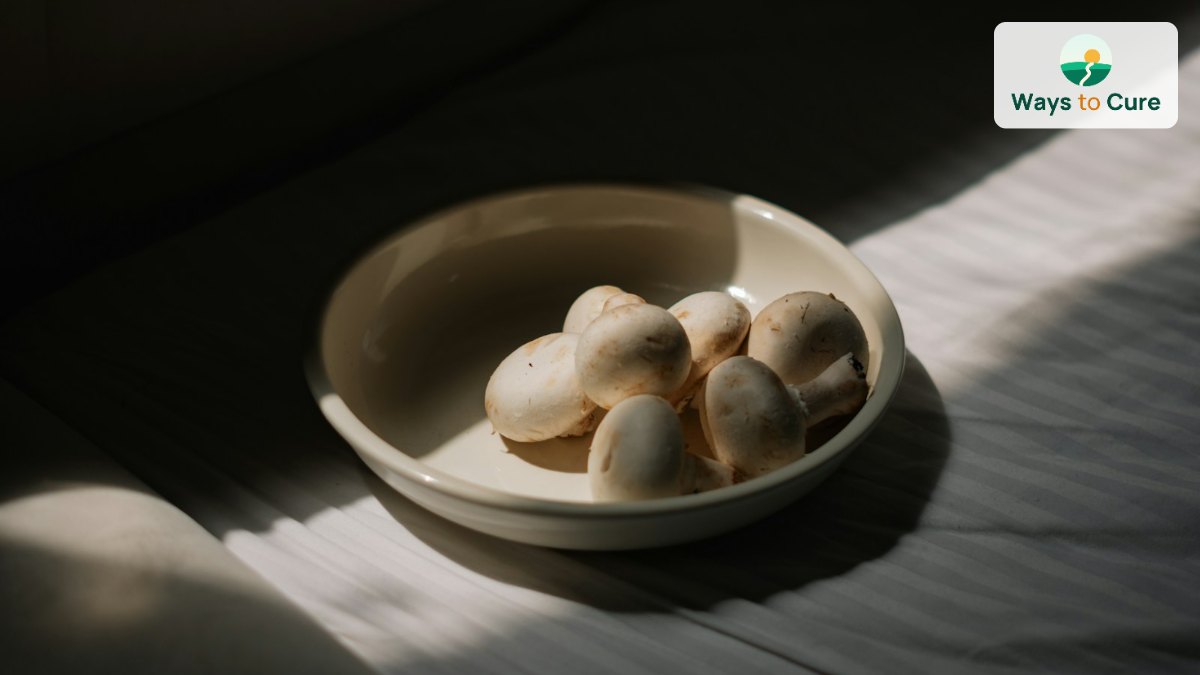
- Mushrooms: a modest source, and one of the few plant foods with any vitamin D.
- Fortified foods: some brands of milk, curd and edible oil are fortified. Vanaspati is fortified at 200 IU per 100 g, but that’s not a reason to eat more vanaspati. Check labels for “fortified with vitamin D”.
For vegetarians, food alone is unlikely to cover the gap, so sun and, where needed, a supplement matter more. Vitamin D also only does its job if you get enough calcium, so keep milk, curd, paneer, ragi and leafy greens in your week. The ICMR-NIN healthy eating advice is a good base.
Supplements: don’t megadose without a test
A low daily dose is a reasonable precaution for many people in winter. The NHS advises 10 mcg (400 IU) a day for adults and children over one, and warns adults and children aged 11 to 17 not to take more than 100 mcg (4,000 IU) a day. Children aged 1 to 10 should not have more than 50 mcg (2,000 IU) a day.
The high-strength weekly sachets and capsules sold over the counter in India are treatment doses. They’re meant for a confirmed deficiency, for a set number of weeks, with a repeat test or review afterwards.
Doctors in Kashmir reported ten adults with vitamin D toxicity in the Oman Medical Journal (2011). All had high blood calcium after being given high doses of vitamin D, and their symptoms included vomiting, passing large amounts of urine, intense thirst, confusion and kidney problems. Too much vitamin D raises calcium, and over time that can weaken bones and damage the kidneys and heart.
Points to keep in mind:
- Count every source: a multivitamin, a calcium-plus-D tablet and a weekly sachet can add up fast.
- Check with your doctor if you take other medicines; see our guide to supplement interactions.
- If you’ve had high blood calcium, kidney stones or kidney disease, ask your doctor before taking any vitamin D product.
When to see a doctor
Book an appointment if you have:
- bone pain, or a fracture from a minor fall
- muscle weakness that makes stairs or standing up from a chair hard
- a child with bowed legs, late walking, or poor growth
- pregnancy, or you’re breastfeeding and rarely get sun
- kidney or liver disease, a gut condition that affects absorption, or a history of weight-loss surgery
- a long-term medicine that your doctor says can affect vitamin D levels
Get medical help the same day if you’ve been taking high-dose vitamin D and develop repeated vomiting, severe thirst, passing a lot of urine, confusion or drowsiness. These can be signs of high calcium. In an emergency, call 112.
Frequently asked questions
Does morning sunlight at 7 or 8 am give vitamin D?
Much less than midday sun. The Tirupati study, which tested sunlight hourly from 8 am, found vitamin D formation peaked between 11 am and 2 pm. Morning sun is still good for your body clock and mood, just not your vitamin D.
Does wearing sunscreen stop vitamin D?
It cuts it sharply: the Tirupati researchers note that SPF 15 reduces UVB reaching the skin by more than 95%. For a short midday session on arms and legs you can skip sunscreen on those areas, but keep your face protected and never stay out long enough to burn.
How long does it take to correct a deficiency?
It depends on how low you started and the dose your doctor prescribes. Treatment courses usually run for several weeks, often followed by a lower maintenance dose. Your doctor may repeat the 25(OH)D test after the course to check that it worked; MedlinePlus lists monitoring treatment as one of the reasons to test.
Is vitamin D2 or D3 better?
Both treat deficiency, and the Endocrine Society’s 2011 guideline recommends either for deficient patients. D3 (cholecalciferol) is the form most commonly sold in India.
Does low vitamin D cause hair fall or depression?
Low vitamin D can come with mood changes, but don’t count on a supplement to fix depression or hair fall; both deserve a proper check-up. Our older post on vitamin D deficiency signs covers more symptoms.
This article is for general information and is not a substitute for advice from a doctor. If you have symptoms or a health condition, please consult a qualified healthcare professional.