
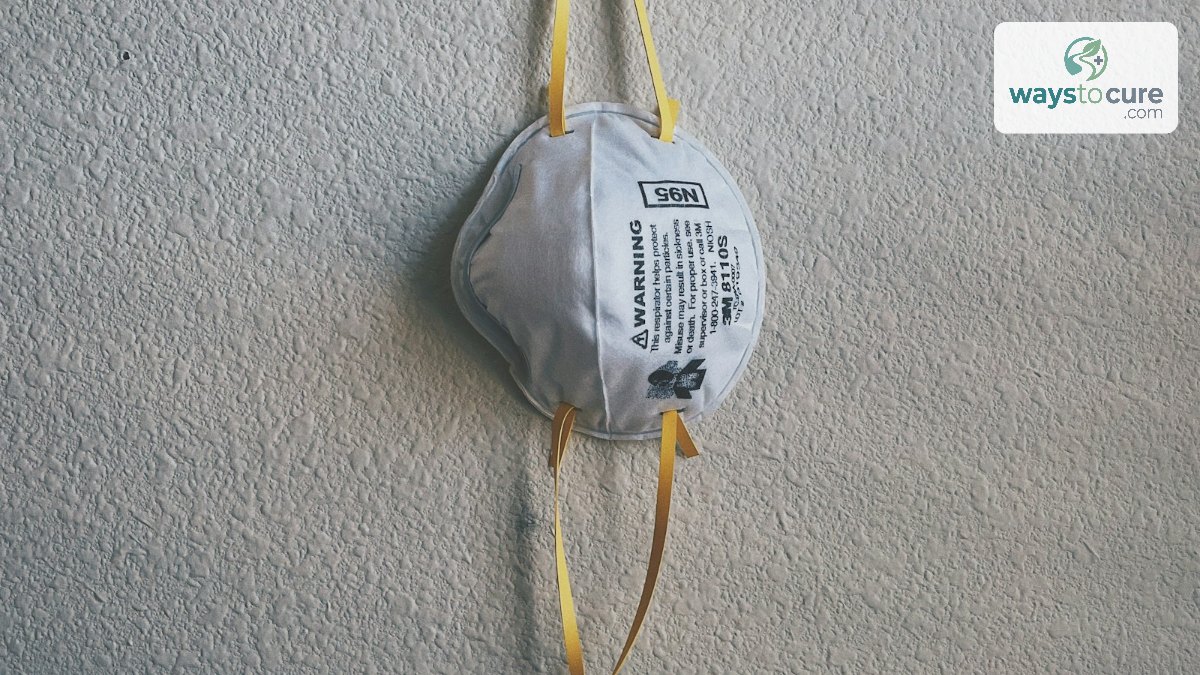
Yes. A genuine N95 or FFP2 mask that seals properly against your face filters out most of the fine particles in smoggy air, which surgical and cloth masks can’t do. The catch is the word “properly”: a well-rated mask with a gap at the nose lets unfiltered air straight in, so fit matters more than the brand name on the box.
What an N95 actually filters
An N95 is a tight-fitting respirator rather than a simple face covering. The US agency that certifies them, NIOSH, says approved N95s achieve a minimum of 95% filtration efficiency in its tests.
Two limits are worth knowing before you buy a box:
- Particles only. Disposable respirators filter particles and do not protect against gases or vapours. On a smoggy day the fine dust is the main thing you’re blocking; the gases still get through.
- Harder breathing. Pulling air through a dense filter takes more effort. For most healthy adults that’s a minor nuisance. For some people with heart or lung disease it’s a real problem (see the section on who should check first).
N95 vs FFP2 vs surgical vs cloth masks
| Mask type | How it fits and filters | Use on a high-AQI day? |
|---|---|---|
| N95 (NIOSH-approved) | Tight-fitting; at least 95% filtration in NIOSH testing | Yes, if it seals on your face |
| FFP2 (BIS-certified under IS 9473) | Tight-fitting filtering half mask made to the Indian particle-mask standard | Yes, if genuinely certified and it seals |
| KN95 and other imported “N95-type” masks | Often ear-loop designs; quality varies | Possibly, but check the fit carefully |
| Surgical or procedure mask | Loose-fitting; not built to block very small particles | Little protection against fine dust |
| Cloth mask, scarf or dupatta | No filtration standard; leaks at the sides | No |
The US FDA describes surgical masks as loose-fitting devices that do not filter or block very small particles, partly because of the gaps between mask and face. CDC says there are no standards for cloth masks at all, and that imported respirators such as KN95s may not seal as well to your face as a NIOSH-approved one. Wetting a cloth or handkerchief doesn’t fix this: NIOSH lists bandanas “wet or dry” among the coverings that don’t filter smoke particles.
Why fit matters more than the brand
Air always takes the easiest route. If there’s a gap along your cheek or over the bridge of your nose, most of each breath comes through that gap and skips the filter. A cheaper certified mask that seals well protects you better than an expensive one that doesn’t.
When it fits, the payoff is big. NIOSH says a properly worn, well-fitting respirator can reduce your exposure by a minimum of 10 times. It also points out three common reasons for a poor seal:
- Facial hair. Beards and stubble where the edge sits cause leaks. NIOSH advises being clean-shaven to get the full benefit.
- Wrong size or shape. If you can’t get a seal, try a different model or size rather than tightening the straps until it hurts.
- Straps worn wrongly. Hanging the top strap low or wearing it over a cap loosens the top edge.
How to put it on and check the seal
This is the routine NIOSH recommends. It takes under a minute, and you should do the seal check every time you put the mask on.
- Wash or sanitise your hands. Hold the mask under your chin with the nose piece at the top.
- Place it over your nose and under your chin. Put one strap at the base of your neck and the other at the crown of your head. If you wear a cap or helmet, it goes over the straps.
- Press the metal nose bar with the fingertips of both hands, sliding down both sides so it moulds to the shape of your nose.
- Do a seal check. Cover the front with both hands and breathe out gently. According to the NIOSH user seal check guide, you should feel slight pressure build inside without air escaping at the edges.
- Watch for leak signs: air moving against your cheeks or eyes, or your glasses fogging up. If you notice either, re-mould the nose bar, adjust the straps and check again.
- If the mask has an exhalation valve, a breath-out check may not work. Instead, cover the filter and breathe in. The mask should pull in slightly against your face with no air sneaking in around the edges.
A seal check isn’t the same as the formal fit test done in workplaces, but NIOSH notes that doing it regularly reduces the chance of wearing a badly fitted mask.
How long does one N95 last, and can you reuse it?
The FDA states that all FDA-cleared N95s are labelled as single-use, disposable devices. In real life, during weeks of smog, many people wear one mask for more than one short trip. NIOSH’s practical rule for smoke is to throw the respirator away when any of these happens:
- It becomes difficult to breathe through.
- The inside gets dirty.
- It’s damaged: a torn strap, a crease that won’t flatten, a split in the material.
NIOSH also suggests using a new one each day if necessary, keeping it clean and dry, and following the maker’s storage instructions. A mask that has gone limp, lost its shape or no longer passes the seal check is finished, however few hours it has been worn.
Indian standards and markings: what to look for
In India, particle-filtering masks come under IS 9473:2002, the Bureau of Indian Standards specification for “filtering half masks to protect against particles”. BIS certifies Class FFP1, FFP2 and FFP3 masks against this standard, as its product certification documents for IS 9473 show.
Practical checks before you buy:
- Indian-certified mask: look for the ISI mark with IS 9473 and a licence number starting with CM/L. You can enter that number in the BIS Care app, which has a “Verify Licence Details” feature that shows who holds the licence.
- Imported N95: CDC says a NIOSH-approved N95 carries the maker’s name, the word NIOSH in capital block letters, the filter class (N95) and an approval number in the form TC-84A-XXXX. You can search that number on NIOSH’s Certified Equipment List. If any of these markings is missing, it isn’t NIOSH-approved.
- Red flags: “N95” printed on its own with no standard or approval number, ear loops on a mask sold as a respirator with no certification details, or a price that seems far too low for a box of certified masks.
Who should check with a doctor before wearing one
The FDA advises that people with chronic respiratory, cardiac or other medical conditions that make breathing difficult should check with their healthcare provider before using an N95, because it can make breathing harder. That includes people with:
- Moderate or severe asthma or COPD (read more on asthma symptoms and precautions)
- Heart failure, angina or a recent heart attack
- Any condition where you already get breathless walking or climbing stairs
Your doctor may still say yes, but might suggest shorter wearing times, a valved model, or simply staying indoors on the worst days. For everyone: if you feel dizzy, light-headed or more breathless with the mask on, take it off once you’re somewhere with cleaner air and rest.
Masks for children
Most N95s are sized for adult faces. The FDA says N95 respirators are not designed for children, and NIOSH says masks and respirators should not be worn by children younger than 2 years old. For older children, NIOSH suggests choosing a size that fits over the nose and under the chin without blocking vision, and one your child is comfortable enough to keep on. A mask that’s too big leaks at the sides, and a child who keeps pulling it down gets little benefit.
For babies and toddlers, the realistic protection is limiting time outdoors on high-AQI days and keeping the room they sleep in as clean as possible, not a mask.
When to see a doctor
A mask reduces how much dust you breathe; it doesn’t treat symptoms. See a doctor if you notice:
- A cough, wheeze or chest tightness that keeps returning on smoggy days
- Needing your reliever inhaler more often than your usual pattern
- Breathlessness that’s new for you, or worse than your normal
- Repeated chest infections or a cough that just won’t settle (see our guide on cough and its causes)
Call 112 or go to the nearest emergency department for severe breathlessness, being unable to speak in full sentences, blue or grey lips, confusion, or chest pain that spreads to the arm, jaw or back. If you’re unsure whether chest pain is serious, read how to tell gas pain from a heart attack, but don’t wait at home to find out.
Frequently asked questions
Is a KN95 as good as an N95 for pollution?
It can be, but there’s more variation. CDC notes that imported respirators like KN95s may not seal as well as NIOSH-approved ones. If you use one, buy from a reliable seller and do the seal check every time.
Does a mask with a valve work against smog?
Yes. The air you breathe in still passes through the filter, and NIOSH says a valve may help if a respirator feels hot or hard to breathe through. The valve doesn’t filter the air you breathe out, though, so it’s not the right pick if you’re ill and around other people.
Should I wear an N95 indoors?
Usually not. Staying indoors with windows shut and cleaner air in your main room is easier on your breathing; our guide on protecting your lungs at home when the AQI is above 300 shows how. Masks are most useful for the time you have to spend outside, like commuting or walking to school.
Can I wear a surgical mask under or over an N95 for extra protection?
A second mask doesn’t add much if the N95 already seals, and anything tucked under the edge, like a surgical mask, can break the seal. Put your effort into fitting one good mask properly.
How many hours can I wear one N95?
There’s no fixed hour count for pollution use. Replace it when it gets hard to breathe through, dirty inside, damaged or stops passing the seal check. Using a fresh one each day is a simple rule if you can manage it.
Flu season overlaps with the smog months in much of north India, and a good mask helps with both. Our guide on protecting yourself in flu season covers the rest of that picture.
This article is for general information and is not a substitute for advice from a doctor. If you have symptoms or a health condition, please consult a qualified healthcare professional.