
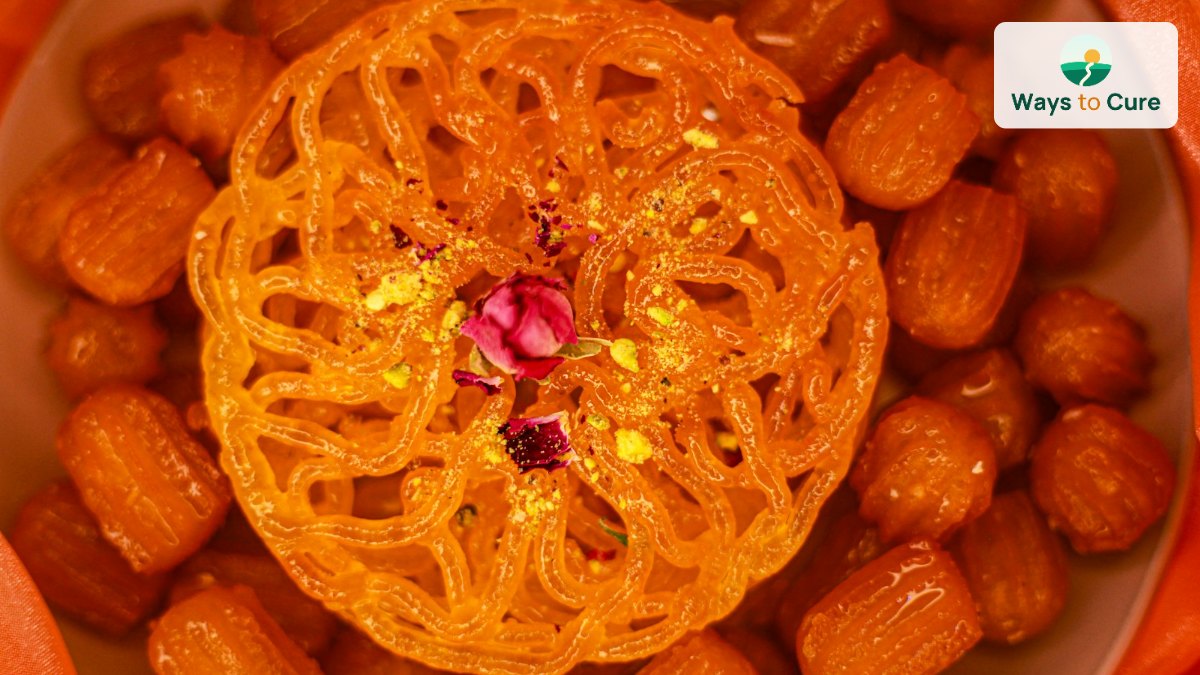
The way to protect your child’s teeth this festive season isn’t to ban sweets. It’s to give them at mealtimes rather than in a steady trickle through the day, to brush twice a day with the right amount of fluoride toothpaste, and to go easy on sticky sweets and sugary drinks. How often teeth meet sugar matters more than the total amount.
That’s useful news in a season of boxes of kaju katli, besan ladoo and soan papdi arriving at the door, and relatives who show love with chocolates. Here’s what actually makes a difference.
Why it’s how often, not how much
Each time your child eats something sugary, bacteria in the plaque on their teeth turn that sugar into acid. The US National Institute of Dental and Craniofacial Research explains that this acid attacks the enamel, and frequent eating or drinking of sugary or starchy foods means the enamel keeps losing minerals. Between snacks, saliva and fluoride help repair the surface. Graze all day and there’s no time for that repair.
The NHS puts it plainly: decay depends on how long and how often the teeth are in contact with sugar. So compare two children who each eat three ladoos in a day:
- Child A has one after lunch, one after dinner and one with the evening snack plate. Three short sugar contacts.
- Child B picks at a ladoo, a few pieces of chocolate, a sip of cola and a toffee every half hour through a Diwali afternoon. Ten or more contacts, and the teeth are bathed in acid for hours.
Child B’s teeth are at far higher risk, even if the total sugar is similar. The WHO lists continued high intake of free sugars, too little fluoride and poor plaque removal as the main causes of tooth decay.
Practical rules for sweets during the festivals
- Serve sweets with or straight after a meal. The NHS advice for young children is to give sweet foods only at mealtimes.
- Agree on a “sweet time”, for example after lunch and after dinner, instead of an open box on the table.
- Put the boxes away. Out of sight really does mean fewer grabs.
- Follow sweets with water. A glass of water or a rinse helps clear sugar from the teeth.
- Ask relatives to give small toys, stickers, crayons or books instead of chocolates. The NHS suggests exactly this.
- No sweets after the night-time brush. Anything eaten after that sits on the teeth all night.
Which festive sweets are hardest on teeth?
Anything that sticks to the teeth or stays in the mouth a long time keeps sugar against the enamel for longer. Here’s a rough guide:
| Type | Examples | Why it matters |
|---|---|---|
| Sticky and chewy | Chikki, gajak, toffees, caramel, dried-fruit bars, sticky dates | Clings in the grooves of back teeth for a long time |
| Slow-dissolving | Lollipops, boiled sweets, hard candy | Kept in the mouth for many minutes |
| Syrup-soaked | Jalebi, gulab jamun, rasgulla, imarti | Very sugary, but eaten quickly. Better with a meal |
| Milk-based and dry | Barfi, peda, kaju katli, ladoo | Still sugary, but clears the mouth faster than toffee |
| Sugary drinks | Cola, packaged juice, sherbet, sweet lassi, rose syrup drinks | Sipping over a long time is like grazing |
None of these is “safe”. The point is that a piece of barfi after lunch is a much smaller problem than a toffee that sits on a molar for an hour. Our article on foods that are good for oral health has ideas for what to put on the plate alongside.
Drinks: the hidden sugar
Festive gatherings come with cold drinks, packaged juices and sweet lassi. For young children, the NHS advises:
- Water and plain milk as the main drinks
- If you give fruit juice, dilute it 1 part juice to 10 parts water, serve it at mealtimes, and keep it to no more than one 150 ml drink a day
- Only milk or water at bedtime and overnight, never juice or sugary drinks in a bottle
For older children, fizzy drinks and packaged juices are worth limiting to occasional treats with a meal. Give them in a glass rather than letting a child carry a bottle around.
Brushing: how much fluoride toothpaste by age
Fluoride is the single most useful thing you can add. The WHO says adequate fluoride exposure is an essential factor in preventing decay and encourages twice-daily brushing with toothpaste containing 1,000 to 1,500 ppm fluoride. The fluoride level is printed on the tube. Here’s the NHS guidance by age:
| Age | Amount | Fluoride level | Who brushes |
|---|---|---|---|
| First tooth to 3 years | A smear (a thin film on the bristles) | At least 1,000 ppm | Parent brushes |
| 3 to 6 years | Pea-sized amount | 1,000 to 1,500 ppm | Child brushes, adult supervises |
| 7 years and over | Pea-sized amount | 1,350 to 1,500 ppm | Child brushes, adult checks |
A few details matter as much as the paste:
- Brush twice a day for about 2 minutes, and make one of those last thing at night.
- Spit, don’t rinse. Rinsing with water washes the fluoride away.
- Keep the tube out of reach so children don’t eat toothpaste.
Advice for the under-2s differs a little between countries. The NHS recommends a smear from the first tooth, while the CDC suggests asking your doctor or dentist before using fluoride toothpaste under age 2. Either way, use only a tiny amount. If your baby is teething, our guide to safe teething remedies covers that stage.
Early signs of tooth decay in young children
Decay in baby teeth (early childhood caries) is very common in India. A systematic review in the Indian Journal of Pediatrics put the overall prevalence at 49.6%, and no state reported less than 40%. So it’s worth checking your child’s teeth once a week in good light. Lift the upper lip and look at the front teeth near the gums.
- Chalky white spots or lines near the gum line. The NIDCR describes a white spot as a sign of early decay where minerals have been lost. At this stage it can be stopped or reversed with fluoride.
- Yellow, brown or black spots, or a visible hole. Decay has gone into the tooth.
- Pain while chewing, or a child who suddenly avoids cold or sweet food on one side.
- Swelling of the gum or a pimple-like bump near a tooth, bad breath or fever with tooth pain. This can mean an infection.
Some parents think decay in milk teeth doesn’t matter because “they’ll fall out anyway”. Milk teeth are in use for years, and badly decayed ones can cause pain, infection and trouble eating. Our article on rampant caries explains how fast decay can spread when it’s left alone.
When to see a dentist
The NHS advises taking your child to the dentist when their first milk teeth appear, or before 12 months. The CDC says by the first birthday. After that, go for regular check-ups as your dentist advises. A dentist can paint fluoride varnish on the teeth and, once the permanent back teeth come in, add sealants to their chewing surfaces, which the NIDCR says can help prevent decay.
See a dentist soon if you notice:
- White, brown or black spots on any tooth
- A hole or chipped area in a tooth
- Your child complaining of tooth pain, or waking at night with it
- Bleeding gums that don’t settle with gentle, regular brushing
Go the same day, or to a hospital, if there’s swelling of the face or jaw, fever with tooth pain, or swelling near the eye. A dental infection can spread.
Frequently asked questions
Is it better to eat all the sweets at once?
It’s better to eat them in one sitting with a meal than to spread the same amount over the day. Fewer sugar contacts give teeth time to recover. That said, a smaller amount is still better for overall health.
Is chocolate worse than Indian sweets for teeth?
Not necessarily. Both are sugary, so what matters most is how sticky the sweet is and how often it’s eaten. Chocolate filled with caramel or nougat clings to teeth more than a plain bar.
Should my child brush right after eating sweets?
Rinsing with water or drinking water straight after is a good habit. The two brushes that matter most are morning and last thing at night with fluoride toothpaste.
Are sugar-free sweets better for teeth?
Sweets made without sugar don’t feed decay bacteria in the same way, but many “sugar-free” mithai still contain jaggery, honey, dates or fruit sugars. Jaggery and honey affect teeth just like sugar. Read the label.
Can white spots on teeth heal?
Early white-spot decay can be stopped or reversed with fluoride and better habits, according to the NIDCR. Once a cavity has formed, it needs a dentist.
This article is for general information and is not a substitute for advice from a doctor. If you have symptoms or a health condition, please consult a qualified healthcare professional.