
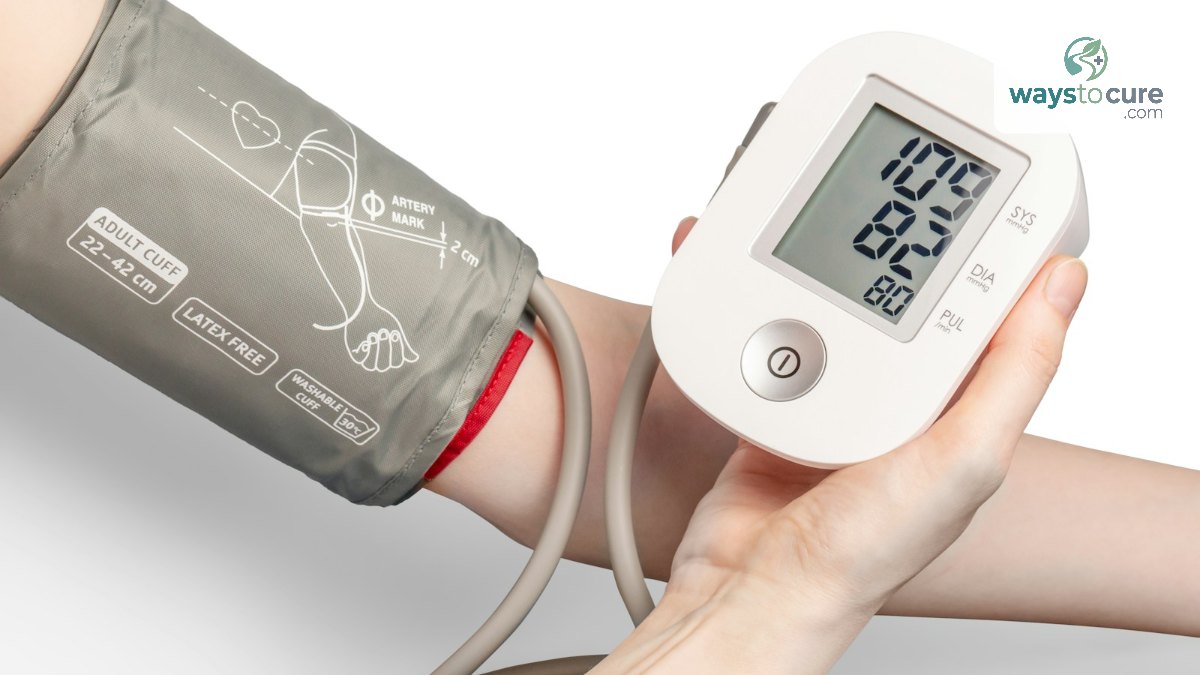
Blood pressure usually runs a few points higher in winter than in summer, because cold air makes your blood vessels tighten and most of us move less and eat saltier, richer food in the colder months. If you already have high blood pressure, that seasonal rise can be enough to push good readings into the unsafe range, so winter is the time to measure more carefully at home, not to change your tablets on your own.
Here’s what drives the rise, how large it tends to be, how to take readings you can trust, and which numbers and symptoms mean you should call a doctor or go to hospital.
How cold weather pushes your blood pressure up
When your skin gets cold, the small blood vessels near the surface narrow so your body loses less heat. Narrower vessels mean your heart has to pump against more resistance, and the pressure inside your arteries goes up. A consensus statement from the European Society of Hypertension describes this seasonal pattern as worldwide: blood pressure is lower when it’s hot and higher when it’s cold, in men and women, at every age, and in people with or without hypertension.
The weather isn’t the only reason. Winter changes how we live:
- Less movement. Shorter days, foggy mornings and cold evenings mean fewer walks and more time sitting.
- More salt. Winter in India brings Diwali, weddings and long family meals. Namkeen, bhujia, mathri, pakoras, pickles, papad and restaurant food all carry a lot of salt.
- Heavier food and weight gain. Ghee-rich sweets, fried snacks and late dinners add up over a few weeks.
- Cold homes. Many homes in north India have no heating at all. In a large Chinese study, the winter rise was especially marked in people living without central heating, which suggests indoor temperature matters as much as the weather outside.
Salt deserves a closer look. The WHO recommends less than 5 g of salt a day (just under a teaspoon). An ICMR-led national survey estimated that Indian adults eat about 8 g a day on average, with men at 8.9 g and women at 7.1 g. That’s before the festive season starts.
How much higher does it go?
For most people the change is a few millimetres of mercury (mmHg), but in people who already have heart or blood vessel disease it can be larger. A study of about 23,000 people with cardiovascular disease in China, published in the European Heart Journal, found:
- Average systolic (top number) pressure was 145 mmHg in winter compared with 136 mmHg in summer.
- Above 5°C, every 10°C drop in outdoor temperature went with about 6.2 mmHg higher systolic pressure.
- The risk of dying from cardiovascular disease was 41% higher in winter than in summer.
A 9-point rise might not sound like much. But if your usual reading is 132/84, it can take you into the range where your doctor would want to act.
Why winter is harder on the heart
Higher pressure isn’t the only winter strain on the heart. A Swedish study of more than 274,000 heart attacks, published in JAMA Cardiology, matched each patient with local weather data. Lower air temperature had the clearest link with heart attack risk: each 7.4°C rise in temperature went with a 2.8% lower risk. Low air pressure, strong wind and fewer hours of sunshine were also linked to more heart attacks. This kind of study shows a link, not proof that cold causes heart attacks.
Winter also brings colds, flu and chest infections, along with less exercise. Any of these can add to the load on a heart that’s already working against higher pressure. If you’re not sure whether chest discomfort is a heart problem, our guide on how to tell gas pain from a heart attack explains the warning signs.
How to check your blood pressure at home properly
Home readings are the best way to see whether winter is affecting you, but only if you take them the same way each time. The CDC’s home measurement advice and the NHS guidance come down to this checklist:
- Don’t eat, drink, smoke, have tea or coffee, or exercise for 30 minutes before.
- Empty your bladder first.
- Sit in a chair with your back supported for at least 5 minutes before you start.
- Keep both feet flat on the floor, legs uncrossed.
- Rest your arm on a table so the cuff sits at chest height.
- Put the cuff on your bare upper arm, not over a sweater or shawl. It should be snug, not tight.
- Don’t talk during the reading.
- Take two readings, 1 to 2 minutes apart, and write both down.
- Measure in the morning and again in the evening, at about the same times each day.
Two winter-specific tips: wait the full 30 minutes after a brisk walk or coming in from the cold, and take your readings in the room where you usually sit, not on a cold balcony or right after a hot bath. Keep a simple log with the date, time and both numbers. Your doctor will find a week of readings far more useful than one high number.
What your home numbers mean
| Home reading | What it means | What to do |
|---|---|---|
| Average below 135/85 | Below the NHS threshold for high blood pressure at home | Keep measuring a few times a week through winter |
| Average 135/85 or higher | High when measured at home (clinic readings count as high from 140/90) | Book a routine review and take your log with you |
| 180/120 or higher, no symptoms | Severe hypertension | Rest for several minutes and recheck; if it stays that high, get medical care the same day |
| 180/120 or higher with symptoms (see below) | Possible hypertensive emergency | Call 112 or go to the nearest emergency department now |
| Much lower than usual, or dizzy on standing | Possible over-treatment | Tell your doctor; don’t stop tablets on your own |
Practical steps that help in winter
Cut the salt you can’t see. Most salt doesn’t come from the shaker. Watch pickles, papad, namkeen, instant noodles, packaged soups, cheese, bread, sauces and restaurant or wedding food. At home, measure salt for dal and sabzi instead of adding it by eye, and use lemon, jeera, ajwain, garlic and black pepper for flavour.
Plan for festive meals. Take a smaller plate, fill half of it with salad or vegetables first, and swap fried snacks for roasted chana, peanuts without added salt, or fruit. One heavy evening won’t undo your control; three weeks of them can.
Keep moving, just change the timing. If early mornings are very cold or smoggy, walk in the late morning or afternoon instead, or walk indoors after meals. Our post on walking after meals has a simple 20-minute routine you can do at home.
Stay warm. Dress in layers, cover your head and hands when you go out, and keep at least one room in the house warm, especially for older family members.
Watch dinner timing and size. Heavy late dinners are common in winter. Our article on shifting your winter dinner time explains why eating earlier can help with weight gain over the season.
Keep alcohol low. Wedding and party drinks add salt-heavy snacks, late nights and extra calories at the same time.
Take your medicine at the same time every day. Travel, guests and late nights make it easy to miss doses. Set a phone reminder.
Should your blood pressure medicine change in winter?
Sometimes, but that’s your doctor’s decision. The European Society of Hypertension statement says the seasonal rise in treated patients may justify a change in treatment, but only after it’s confirmed with repeated measurements, preferably home or 24-hour readings, and after other causes of the change have been ruled out. The same statement warns about the opposite problem in summer: a systolic reading below 110 mmHg on treatment should prompt a review of the dose, even if you feel fine.
What that means for you:
- Don’t double your dose or add an extra tablet because one reading was high.
- Don’t take a family member’s blood pressure medicine.
- Don’t stop your tablets in summer because your readings look good. Show your doctor the log.
- Bring your home readings to your appointment. They’re the evidence your doctor needs to adjust safely.
Long-term high blood pressure also damages the kidneys. If you’ve had hypertension for years, it’s worth knowing the early symptoms of kidney problems too.
When to go to hospital
According to Cleveland Clinic, a reading of 180/120 or higher together with any of the following signs is an emergency. Call 112 or get to an emergency department straight away; don’t wait to recheck:
- Chest pain or a racing, pounding heartbeat
- A severe headache
- Vision changes: blurring, eye pain or loss of vision
- Confusion, drowsiness or a seizure
- Stroke signs: a drooping face, slurred speech, or sudden weakness in an arm or leg
- Dizziness, swelling, or passing much less urine than usual
Stroke signs and chest pain need emergency help even if you haven’t checked your blood pressure. If your reading is 180/120 or higher without any symptoms, rest quietly for several minutes and measure again. If it’s still that high, see a doctor the same day.
Book a routine appointment if your home average is 135/85 or higher, if your readings have crept up over a few weeks, or if you feel dizzy or faint on treatment.
Frequently asked questions
Is it normal for blood pressure to be higher in winter?
Yes. It’s a well-documented pattern seen around the world, in people with and without hypertension. It’s normal, but it isn’t harmless, especially if your readings were already borderline.
How much higher is it in winter?
It varies. In one large study of people with heart or blood vessel disease, systolic pressure averaged 145 mmHg in winter and 136 mmHg in summer. Your own home log is the best guide to how much you change.
Is 140/90 at home high?
Yes. The NHS treats home readings of 135/85 or more as high. Home readings are usually a little lower than clinic readings, which is why the home threshold is lower.
Can cutting salt alone bring my winter readings down?
It helps, and getting closer to the WHO limit of under 5 g a day is worth doing for everyone. But if you’re on medicine, keep taking it. Diet changes work alongside tablets, not instead of them, unless your doctor says otherwise.
Should I take my reading in the morning or evening?
Both. The NHS suggests a morning and an evening session, with two readings each time, a minute or two apart.
This article is for general information and is not a substitute for advice from a doctor. If you have symptoms or a health condition, please consult a qualified healthcare professional.