
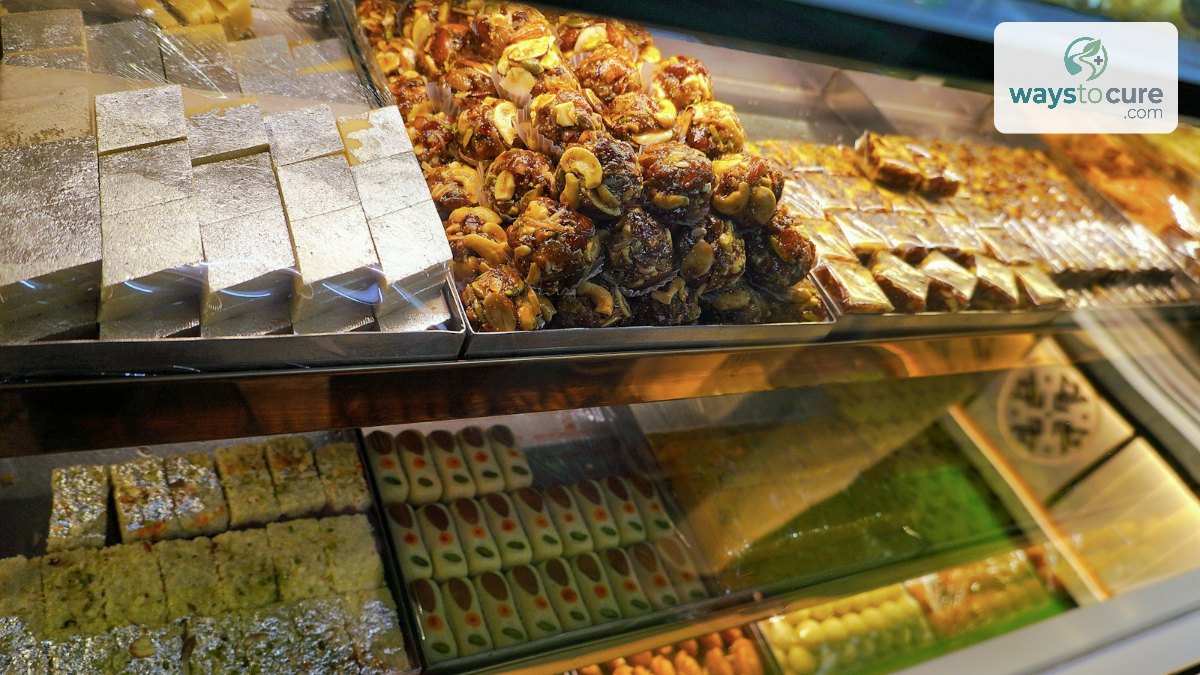
Yes, you can have a Diwali sweet if you have diabetes. Count it as part of a meal’s carbohydrate rather than an extra, keep it to one piece, and check your sugar afterwards. In festival week the bigger danger is often a sugar that goes too low, not too high. That happens when people on insulin or tablets such as glimepiride or gliclazide skip meals for puja or eat late.
Diwali falls on Sunday, 8 November this year, so the next few days bring boxes of mithai, late dinners and plenty of “just one more”. Here’s how to plan for that.
How much carbohydrate is in common Diwali sweets?
The figures below come from a South Asian diet leaflet for people with diabetes published by Cambridge University Hospitals (NHS). Sweet-shop pieces vary a lot in size, so treat these as a rough guide, not exact numbers.
| Sweet | Portion | Carbohydrate |
|---|---|---|
| Gulab jamun | 1 piece | 20 g |
| Rasgulla | 1 piece | about 29 g |
| Jalebi | 1 piece (55 g) | 29 g |
| Barfi | 1 piece, 44 g (about 5 x 4 x 2 cm) | about 17 g |
| Laddoo | 1 ball, 4.5 cm across | about 26 g |
| Kheer | 100 g serving | 29 g |
Two sweets on the list don’t have a reliable per-piece figure:
- Kaju katli: in a study from the Institute of Chemical Technology, Mumbai, the formulation tasters preferred used 65% cashew powder and 35% sugar. So about a third of every piece is sugar. A 20 g diamond would carry around 7 g. The cashew also makes it high in fat and calories.
- Soan papdi: we couldn’t find a trustworthy per-piece figure. If it comes from a sealed box, the nutrition panel lists carbohydrate and sugar per 100 g. Weigh one piece once and you’ll know for the rest of the box.
Syrup-soaked sweets (rasgulla, gulab jamun, jalebi) give you mostly fast-absorbed sugar in a small bite. Squeezing the syrup out of a rasgulla removes some of it, though we couldn’t find a measurement of how much. If you’re new to the difference between carb types, our guide to choosing the right carbs explains it.
How to fit one sweet into a meal
The simplest rule: swap, don’t add. If one laddoo carries about 26 g of carbohydrate, take that much less of the rice, roti or puri on your plate at the same meal. Eaten on top of a full thali, the same laddoo pushes your after-meal sugar higher.
Eat it at the end of a meal, not on an empty stomach
Order matters. In a small study in Diabetes Care, 11 adults with type 2 diabetes ate the same meal on two days. When they ate the vegetables and protein first and the bread and juice 15 minutes later, their glucose was 29% lower at 30 minutes and 37% lower at 60 minutes than when they ate the carbohydrate first. It was one small study, but the habit costs nothing: have your dal, paneer, sabzi or salad first, and the sweet last.
For the same reason, a gulab jamun on its own at 5 pm while guests visit is a worse idea than the same piece after dinner.
Take a short walk afterwards
In a trial of 41 adults with type 2 diabetes, a 10-minute walk after each main meal lowered after-meal sugar by about 12% compared with one 30-minute walk at another time of day. After the evening meal, the drop was about 22%. A walk round the colony to look at the diyas after dinner counts. Our article on walking after meals has more ideas.
Practical portion tricks
- Cut barfi or kaju katli in half before you put it on your plate. Half a piece still tastes like Diwali.
- Choose one sweet you really love and skip the rest. By the figures above, a jalebi, a rasgulla and a laddoo together come to more than 80 g of carbohydrate.
- When gifting, a box of dry fruit or a small box of mithai is kinder than a kilo.
- Drink water or plain chaas with sweets, not a cold drink or sweetened lassi.
“Sugar-free” mithai: what the label doesn’t tell you
Sugar-free sweets aren’t free. The American Diabetes Association points out that foods labelled “sugar free” or “no sugar added” aren’t necessarily carbohydrate-free, or even lower in carbohydrate than the original. Many contain sugar alcohols (polyols such as maltitol or sorbitol). These have about half the calories of sugar, and some are partly digested, so they can still raise your blood glucose.
Other points to check:
- The rest of the recipe hasn’t changed. Khoya, ghee, cashew and condensed milk still bring fat and calories. A sugar-free barfi made with khoya and ghee can still be a high-calorie sweet.
- Dates, figs and jaggery are sugars too. “No added sugar” sweets made with them still contain plenty of sugar.
- Too much can upset your stomach. The NHS notes that polyols such as sorbitol, xylitol and erythritol can have a laxative effect in large amounts. Several “sugar-free” pieces in a day can mean bloating and diarrhoea.
- Read the label for total carbohydrate per piece, and ignore the “sugar-free” banner. Count it the same way you would count a regular sweet.
Checking your sugar during festival week
If you have a glucometer, festival week is the time to use it more, not less. A simple plan:
- Check fasting sugar each morning from Dhanteras to Bhai Dooj.
- Check about 2 hours after the biggest festive meal of the day, so you can see what your usual sweet does to you.
- If you’re on insulin or a sulfonylurea (glimepiride, gliclazide, glibenclamide), also check before driving, before bed after a late party, and any time you feel shaky or sweaty.
- Write the readings down with what you ate. The pattern is more useful to your doctor than any single number.
A single high reading after a sweet doesn’t mean your diabetes is out of control. A run of high fasting readings across the week, or an HbA1c test a couple of months later that has jumped, is a better guide. Our explainer on HbA1c vs fasting blood sugar covers what each test tells you.
Fasting for puja? Watch for low sugar
Many families fast until the evening puja on Diwali, or eat only once on other festival days. If your diabetes is treated with diet alone, or with medicines that don’t lower sugar by themselves, a fast is mainly a question of what you eat when you break it. If you take insulin or a sulfonylurea, skipping a meal can push your sugar dangerously low.
The NHS lists insulin and diabetes tablets such as gliclazide and glimepiride as causes of hypos (low blood sugar). Common triggers include skipping or delaying meals, eating less carbohydrate than usual, extra activity (cleaning, shopping, cooking for hours) and alcohol, especially on an empty stomach. All of these are typical of Diwali week.
Signs of low sugar
Hunger, sweating, shaking, dizziness, a racing heartbeat, tingling lips, irritability, blurred vision and confusion. Severe hypos can cause fits or unconsciousness. The CDC defines low blood sugar as below 70 mg/dL.
What to do (the 15-15 rule)
- Take 15 g of fast-acting carbohydrate: half a cup of fruit juice or regular (not diet) soft drink, 1 tablespoon of sugar or honey, or glucose tablets as the pack directs.
- Wait 15 minutes and recheck.
- If you’re still below 70 mg/dL, repeat.
- Once you’re back in range, eat a proper snack or meal with some protein.
A “sugar-free” sweet won’t help in a hypo. If someone is unconscious, don’t put food or drink in their mouth. Lay them on their side and call 112.
Before you fast
- Talk to your doctor at least a few days ahead. They may change the dose or timing of insulin or tablets for that day. Don’t adjust or stop them on your own.
- Carry glucose tablets or a small juice box to the temple or puja.
- Break the fast with a normal meal, and have your one sweet at the end of it rather than first.
When to call a doctor
Contact your doctor soon if:
- You have more than one hypo in the week, a hypo at night, or one you didn’t feel coming.
- Your readings stay well above your usual range for more than a day or two despite cutting back.
- You have constant thirst, are passing a lot of urine, or feel unusually tired after the festival.
- You’re planning a full-day fast and take insulin or a sulfonylurea.
Call 112 or go to hospital if:
- Someone with diabetes is unconscious, having a fit, or too confused to swallow safely.
- Low sugar doesn’t improve after two rounds of fast-acting sugar.
- Sugar is very high and there’s vomiting, stomach pain, fast deep breathing or drowsiness.
If you get sugar cravings that feel hard to manage once the festival is over, our piece on craving sweets after dinner may help.
Frequently asked questions
Which Diwali sweet is best for someone with diabetes?
There’s no “safe” one, but a small piece of milk- or nut-based barfi (about 17 g carbohydrate for a 44 g piece) is usually easier to fit into a meal than a jalebi or rasgulla (about 29 g each). Portion size matters more than the type.
Is one gulab jamun a day during Diwali okay?
For many people with type 2 diabetes, one piece after a meal, with less rice or roti at that meal, is manageable. Check your sugar 2 hours later to see how you respond.
Are sugar-free sweets safe for diabetes?
They can be part of the plan, but they’re not free food. They can still contain carbohydrate, sugar alcohols that partly raise blood sugar, and plenty of ghee and khoya. Count the carbohydrate on the label.
Can I skip my diabetes tablets if I’m fasting for puja?
Don’t decide on your own. Some tablets and insulin can cause low sugar if you don’t eat, while stopping others can raise it. Ask your doctor a few days before for a plan for that day.
My sugar was 220 mg/dL after sweets. Should I worry?
One high reading after a festive meal isn’t an emergency if you feel well. Go back to your usual meals, take a walk, and recheck. Contact your doctor if readings stay high or you feel unwell.
This article is for general information and is not a substitute for advice from a doctor. If you have symptoms or a health condition, please consult a qualified healthcare professional.