
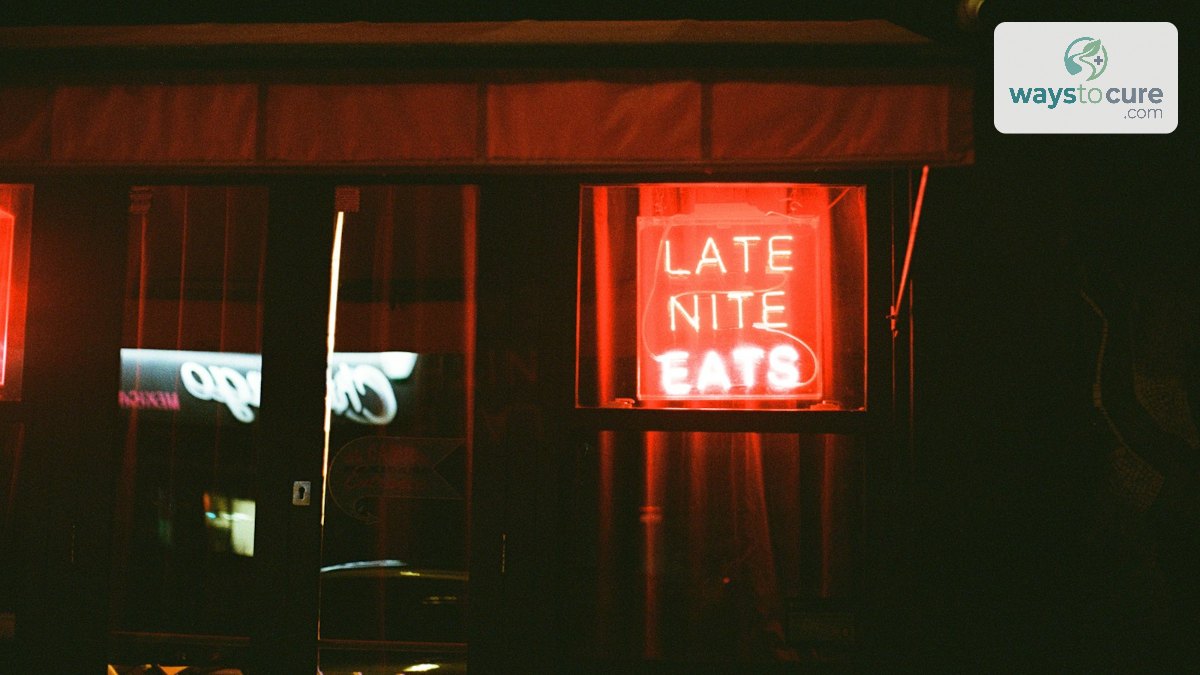
A large US study published in October 2026 found that people who regularly ate after dinner or after going to bed had roughly a 20% to 30% higher rate of fatty liver disease and cirrhosis than people who didn’t. It’s an observational study, so it shows a link rather than proof that late eating damages the liver, but it adds to a growing body of research suggesting that when you eat may matter, not only what you eat.
Here’s what the researchers actually did, what the study can’t tell you, and how to apply it if your family usually eats dinner at 9.30 or 10 pm.
What the OHSU study found
The study was led by Robert Wilechansky, a liver specialist at Oregon Health & Science University (OHSU), with co-authors including OHSU sleep and circadian researcher Andrew McHill. It was published in the journal Clinical Gastroenterology and Hepatology under the title “Late-Night Eating is Associated with MASLD and Cirrhosis”.
The key details, as described in the OHSU release reported by ScienceDaily:
- Who: nearly 200,000 adults from three long-running American studies of health workers: the Nurses’ Health Study, the Nurses’ Health Study II and the Health Professionals Follow-up Study.
- What was measured: participants reported their eating habits, daily routines and lifestyle on questionnaires. Late-night eating meant eating after dinner or after bedtime.
- Result: those who regularly ate late had a 20% to 30% higher risk of liver disease, covering both metabolic dysfunction-associated steatotic liver disease (MASLD, the new name for fatty liver) and cirrhosis.
- Proposed reason: the liver works on a daily body clock. Eating when your internal clock is preparing for sleep may make it harder for the body to process food efficiently, which has also been linked to obesity and diabetes.
Wilechansky’s main suggestion was modest: keeping your food intake to a few hours before bedtime “might be beneficial.”
What the study can’t tell you
This is a useful study, but it has real limits, and the researchers say so themselves.
- It’s observational. It shows that late eaters were more likely to have liver disease, not that late eating caused it. People who snack late may also sleep less, drink more, or eat more overall.
- It relied on self-reports. Both the eating habits and the liver diagnoses were self-reported and broadly defined, rather than measured with scans or blood tests.
- It didn’t capture what people ate late. A glass of warm milk and a plate of fried snacks would count the same.
- The participants were American health professionals. Their diets, genes and routines differ from most Indian households.
- Most fatty liver doesn’t progress. As Wilechansky noted, only a small fraction of people with fatty liver go on to serious disease such as cirrhosis.
OHSU is now recruiting for a clinical trial that will track meal timing directly and test whether eating earlier improves fatty liver. That kind of study will give a much clearer answer.
Fatty liver (MASLD): the basics
In 2023, international liver societies renamed non-alcoholic fatty liver disease (NAFLD) as metabolic dysfunction-associated steatotic liver disease (MASLD). The more serious inflamed form, once called NASH, is now MASH. The new definition is fat in the liver plus at least one cardiometabolic risk factor, such as excess weight, prediabetes or diabetes, high blood pressure, or abnormal blood fats.
The name changed, but the condition didn’t. It runs in stages: fat build-up, then inflammation, then scarring (fibrosis), and in some people cirrhosis. The early stages can improve if the causes are tackled.
How common is fatty liver in India?
Very common. A 2022 systematic review and meta-analysis in the Journal of Clinical and Experimental Hepatology pooled Indian studies and estimated fatty liver prevalence at 38.6% in adults and 35.4% in children. Hospital-based studies gave higher figures than community surveys (40.8% vs 28.2%), and the quality of many included studies was low, so the true number is uncertain. The authors’ summary: roughly one in three Indian adults and children has fatty liver.
Because the definition needs only one risk factor, such as prediabetes or high triglycerides, a “normal” BMI doesn’t rule it out.
Does time-restricted eating help fatty liver?
Time-restricted eating means fitting all your meals into a set window, often 8 to 10 hours. It sounds like the obvious answer to the OHSU findings, but the trial evidence is more mixed.
In the TREATY-FLD trial, published in JAMA Network Open in 2023, 88 adults with obesity and fatty liver in China were randomly assigned to either eat only between 8 am and 4 pm, or eat at normal times. Both groups cut calories to the same target for 12 months. Liver fat, body weight, liver stiffness and metabolic risk factors fell in both groups, and the time-restricted group did no better. The authors concluded that cutting calories explained most of the benefit.
The practical message: an earlier, shorter eating window may make it easier to eat less, especially if late-night snacking is where your extra calories come from. But the timing alone isn’t magic. What you eat and how much still matter most. The US National Institute of Diabetes and Digestive and Kidney Diseases says losing 3% to 5% of body weight can reduce liver fat, and 7% to 10% may be needed to reduce inflammation and scarring, ideally lost gradually.
Dinner timing tips for Indian schedules
Late dinners are normal in many Indian homes, especially in cities with long commutes. You don’t need to eat at 6 pm to apply this research. Some realistic changes:
- Leave a gap before bed. If you sleep at 11.30 pm, aim to finish dinner by about 8.30 or 9 pm. If that’s impossible on weekdays, keep a late dinner light.
- Shift calories earlier. Make lunch your bigger meal and add a planned evening snack at 6 to 7 pm (a fruit, roasted chana, sprouts chaat, buttermilk) so you aren’t starving at a 10 pm dinner.
- Cut the second dinner. The study’s definition of late eating was eating after dinner. The post-dinner mithai, chips while watching TV, or the midnight Maggi are the habits most worth dropping.
- Keep late meals simple. Dal, a vegetable and two phulkas is easier on the body than biryani, fried snacks or a heavy paneer gravy at 10.30 pm.
- Don’t drink your calories at night. Sweetened chai, cold drinks and packaged juice add sugar with no fullness.
- Protect your sleep. Going to bed at a regular time makes it easier to keep a regular dinner time too. Our article on signs that sleeping late is harming you covers the warning signs.
We’ve written more about this in the winter dinner-time post, and our guides to foods that support liver health and post-dinner habits for better digestion pair well with an earlier dinner.
Alcohol and your liver
If you already have fatty liver, alcohol adds a second source of damage to the same organ. Heavy drinking causes its own alcohol-related fatty liver, and the two can exist together. If you have MASLD, ask your doctor if you should cut down or stop entirely, especially if a scan or FibroScan has shown scarring. Late-night drinking often comes with late-night snacking, so cutting one may make the other easier.
Symptoms and tests for fatty liver
Fatty liver is usually silent. Most people find out by chance, from a health check-up or an ultrasound done for something else. Some notice tiredness or a dull discomfort under the right ribs. Even cirrhosis can cause few symptoms early on.
Common tests, as described by NIDDK, include:
| Test | What it shows | What to look for on the report |
|---|---|---|
| Liver function test (LFT) | Liver enzymes in the blood | Raised ALT (SGPT) and AST (SGOT) can prompt further checks |
| FIB-4 score | Calculated from age, AST, ALT and platelet count | Helps decide whether advanced scarring is likely |
| Ultrasound abdomen | Fat in the liver | “Fatty liver grade I/II/III”; can’t show inflammation or scarring |
| Elastography (often FibroScan) | Liver stiffness, a sign of scarring | Stiffness reading in kPa, interpreted by your doctor |
| Liver biopsy | Inflammation and scarring directly | Only needed in selected cases |
If you’re at risk of diabetes, it’s worth checking your HbA1c as well as fasting sugar, since diabetes and fatty liver often travel together.
When to see a doctor
Book a check-up if:
- Your ultrasound says “fatty liver” or your LFT shows raised ALT or AST
- You have type 2 diabetes, prediabetes, obesity, a large waist, high triglycerides or PCOS, and have never been checked
- You feel unusually tired or have ongoing discomfort under the right ribs
- You drink alcohol regularly and find it hard to cut down
Get urgent help, or call 112, if you vomit blood, pass black or very dark stools, or become suddenly confused or drowsy. The NHS lists these as emergency signs in people with cirrhosis. Yellow eyes or skin (jaundice), swelling of the tummy or legs, or new breathlessness also need a doctor promptly.
Frequently asked questions
Does eating late at night cause fatty liver?
Not proven. The OHSU study found a 20% to 30% higher rate of liver disease in people who ate late, but it was observational and based on self-reports. Late eating may be one contributor among many, alongside weight, diet, alcohol and diabetes.
How many hours before bed should I eat dinner?
No study has set an exact number. Leaving 2 to 3 hours between dinner and sleep is a practical target for most people, and skipping food after dinner is the change most in line with the new research.
Is fatty liver reversible?
Often, in the early stages. NIDDK says losing 3% to 5% of body weight can reduce liver fat, and 7% to 10% may reduce inflammation and scarring. Advanced cirrhosis is harder to reverse, which is why early checks matter.
Can thin people get fatty liver?
Yes. MASLD can occur at a normal weight, especially with diabetes, prediabetes, high triglycerides or excess belly fat.
Is a late dinner of dal and roti as bad as late snacking?
The study grouped all late eating together, so it can’t answer this. A light, home-cooked dinner is a better choice than fried or sugary snacks after dinner, but if you can bring dinner earlier, that’s better still.
This article is for general information and is not a substitute for advice from a doctor. If you have symptoms or a health condition, please consult a qualified healthcare professional.