Acupressure may help with weight loss a little, but the effect in studies is small: well under a kilo on average in the largest recent review, which its authors said doesn’t look clinically meaningful. It’s generally safe to try alongside diet and exercise, but it can’t replace them, and no pressure point “melts” belly fat.
If you’ve seen videos promising you’ll drop kilos by pressing a point on your ear or wrist, here’s what the research actually found, how people use acupressure safely, and what reliably works for weight loss.
What acupressure is
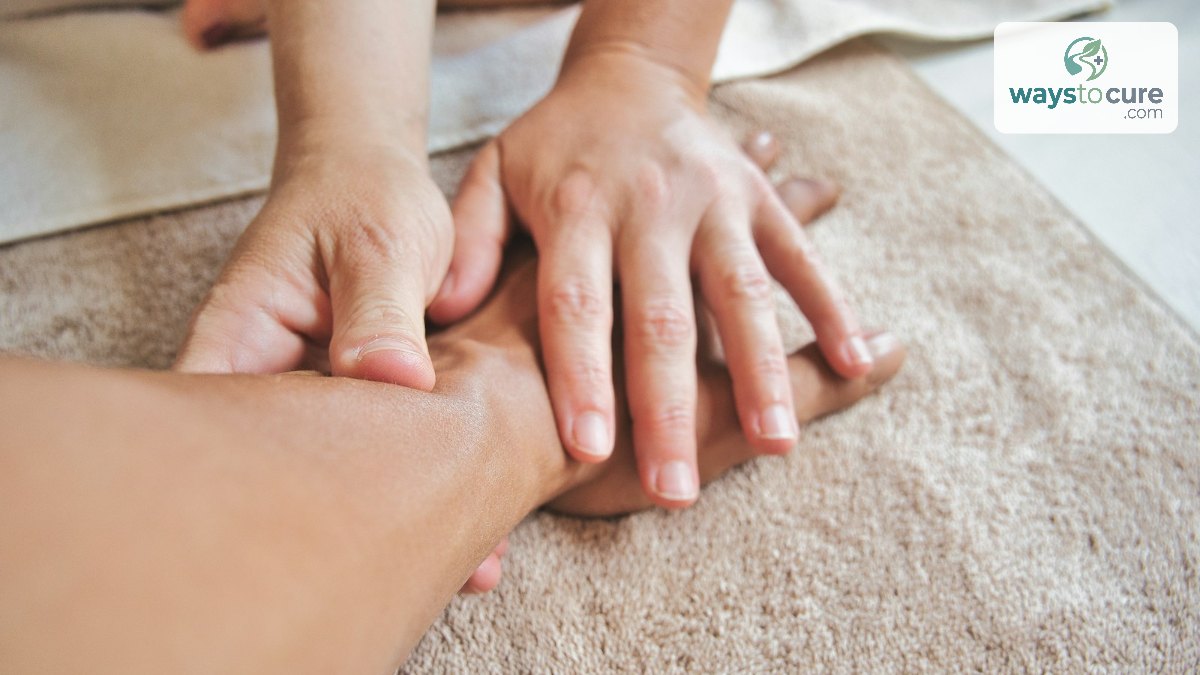
Acupressure comes from traditional Chinese medicine. Instead of needles, as in acupuncture, it uses firm pressure from fingers or small objects on specific points of the body. For weight loss, most research has focused on the ear (called auricular acupressure), where small seeds or metal pellets are taped onto points and pressed several times a day. The idea is that this reduces appetite or cravings.
Online lists also name points on the belly, below the knee, the hand and the wrist. These body points have been studied far less than ear points.
What the studies show
Two systematic reviews give the clearest picture:
| Review | What it included | Average effect compared with control groups | Quality notes |
|---|---|---|---|
| Huang and colleagues, Medicine, 2019 | 7 trials of ear acupressure in people with overweight or obesity | About 2 kg more weight loss and a BMI about 0.95 lower | Results varied widely between trials; none of the studies were double-blinded |
| Hua and colleagues, Frontiers in Neuroscience, 2024 | Up to 15 trials (1,333 people) of ear stimulation, including acupressure, acupuncture and electrical stimulation | About 0.66 kg more weight loss and a BMI about 0.38 lower | Overall trial quality moderate; authors said the effect size “does not appear to be of clinical relevance” |
The 2019 review also found that 12-week programmes had bigger effects than shorter ones, and called for better double-blind trials before firm conclusions. The 2024 review is larger and more recent, and its message is cautious: yes, a measurable effect, but too small to matter much for most people.
To put those numbers in context: losing 0.66 kg is less than the weight of a full one-litre water bottle. For someone carrying 15 or 20 extra kilos, it’s a rounding error. Acupressure might be a small helper for people who find it calms snacking urges, but it isn’t a weight-loss method on its own.
What acupressure can’t do
- It can’t burn fat from one spot. No trial has shown that pressing a belly point reduces belly fat.
- It can’t override calories. Weight changes when energy in is less than energy out, over weeks and months.
- It can’t treat a medical cause. Weight gain from an underactive thyroid, PMOS, certain medicines or depression needs proper diagnosis.
- It can’t replace prescribed treatment. If your doctor has recommended medicines or other treatment for obesity or diabetes, keep to it.
How to try it safely
The 2024 review found side effects were mild and uncommon: pain or minor bleeding at the stimulation site, brief dizziness, redness and skin irritation. Note that review also included needle-based methods. If you want to try acupressure:
- Use gentle to firm pressure with a fingertip; it shouldn’t be painful.
- Don’t press on cuts, bruises, moles, swollen areas or broken skin.
- If you use ear seeds or pellets, keep the skin clean and remove them if the ear becomes red, sore or itchy.
- Skip it and ask your doctor first if you’re pregnant, have a bleeding disorder, or take blood thinners.
- Be wary of paid “weight-loss acupressure” packages that promise fixed kilos in a set number of days.
- Don’t buy slimming pills, teas or belts sold alongside acupressure programmes without checking with a doctor.
What works for weight loss
Lasting weight loss comes from changes you can keep up. The NHS page on obesity recommends eating and drinking fewer calories than your body uses, being active for 45 to 60 minutes a day (which can be split into shorter sessions), and aiming to lose 0.5 to 1 kg a week. The World Health Organization’s obesity fact sheet advises a diet rich in fruit, vegetables, legumes, whole grains and nuts, regular physical activity throughout life, and limiting sugary drinks and energy-dense, nutrient-poor foods.
In an Indian kitchen, that might look like:
- Filling half your plate with sabzi and salad, a quarter with dal, paneer, eggs or other protein, and a quarter with roti or rice.
- Cutting back on fried snacks, sweets, packaged namkeen, sugary chai and cold drinks.
- Walking after meals. Our guide to walking for weight loss has a simple routine.
- Eating earlier in the evening; see why meal timing affects weight gain.
- Getting enough sleep; most adults need 7 to 9 hours. Our tips on improving sleep quality can help.
- Choosing more vegetables; our list of vegetables for weight loss has ideas.
Know your healthy range
BMI targets are lower for South Asians. The NHS says people of South Asian background are at risk of health problems at a lower BMI, with overweight starting at 23 and obesity at 27.5, compared with 25 and 30 for the general adult population. It also suggests keeping your waist to less than half your height.
When medical treatment makes sense
For some people, lifestyle changes alone aren’t enough. The NHS notes that doctors may prescribe weight-loss medicines alongside diet and exercise, and that weight-loss surgery is considered at lower BMI thresholds for South Asian people (37.5, or 32.5 with conditions like type 2 diabetes or high blood pressure). These decisions need a doctor.
When to see a doctor
See a doctor if:
- your BMI is 27.5 or more, or 23 or more with diabetes, high blood pressure or a family history of heart disease
- you’re gaining weight without changing what you eat, or with tiredness, feeling cold, hair loss or irregular periods (possible thyroid or hormone problems)
- you’ve tried for months to lose weight without success
- you’re losing weight without trying, which always needs checking
- you snore loudly and feel sleepy during the day
Call 112 if you have chest pain, sudden breathlessness or fainting, including during exercise or after taking any slimming product.
Frequently asked questions
Which acupressure point is best for weight loss?
Most research is on ear points, and even there the effect is small. There’s no evidence that any single point causes meaningful weight loss on its own.
Can acupressure reduce belly fat?
No. Fat can’t be reduced from one spot by pressing a point. Overall weight loss through diet and activity reduces belly fat over time.
How long does acupressure take to show results?
In one review, 12-week programmes showed more effect than shorter ones, but the average loss was still small. Don’t expect visible change from acupressure alone.
Is acupressure safe?
It’s generally low risk. Reported side effects were mild, such as soreness, redness or skin irritation. Ask your doctor first if you’re pregnant or take blood thinners.
Is acupressure better than diet and exercise?
No. Diet and activity changes produce far more weight loss than the small effects seen with acupressure. At best, acupressure is an add-on.
This article is for general information and is not a substitute for advice from a doctor. If you have symptoms or a health condition, please consult a qualified healthcare professional.