Most bouts of nausea and vomiting come from a stomach bug, food poisoning, motion sickness or early pregnancy, and settle within a day or two with small, frequent sips of fluid and plain food. The real risk is dehydration, especially in babies, young children and older adults, so it helps to know the warning signs and the few symptoms that need a hospital straight away.
Common causes of nausea and vomiting
The NHS lists the usual suspects for feeling sick:
- Stomach bugs and food poisoning: usually with diarrhoea; think of that roadside chaat or reheated biryani
- Infections such as flu, often with fever and headache
- Acid reflux: nausea with heartburn or bloating after eating
- Migraine: with headache and sensitivity to light or sound
- Inner ear problems such as labyrinthitis, with dizziness
- Pregnancy, motion sickness, anxiety, alcohol, medicines and recent surgery
The NHS says vomiting from a stomach bug usually stops within 1 or 2 days, while diarrhoea can last 5 to 7 days. If you also have loose motions, our guide to causes of diarrhoea has more on that side of things.
Safe relief at home
Fluids first, in small sips
When you’re vomiting, a big glass of water often comes straight back up. Take small sips every few minutes instead. If you’re losing a lot of fluid through vomiting or diarrhoea, use oral rehydration solution (ORS) from a pharmacy, made up exactly as the packet says. ORS replaces salts as well as water. The NHS advises avoiding fruit juice and fizzy drinks, which can make diarrhoea worse.
Plain food when you’re ready
You don’t have to eat while you’re actively vomiting. Once things settle, start with small amounts of plain, easy food: dry toast, plain biscuits, rice, khichdi, idli or a banana. The NHS suggests avoiding hot, fried, greasy or strong-smelling food, eating slowly, having smaller and more frequent meals, and not lying down soon after eating.
Other things that help
- Fresh air: open a window or step outside
- Distraction, such as music or a film
- Loose clothing around the waist
- Rest, because tiredness can make nausea worse
Does ginger work?
It depends on the cause. The US National Center for Complementary and Integrative Health (NCCIH) says ginger may help nausea and vomiting in pregnancy, but its value for nausea after surgery or chemotherapy is uncertain, and most studies of ginger for motion sickness haven’t found it helpful.
Ginger tea, a little grated ginger in warm water, or ginger biscuits are reasonable to try. Limits worth knowing:
- Ginger can cause heartburn, tummy discomfort and diarrhoea of its own
- If you’re pregnant, check with your doctor or pharmacist before taking ginger supplements (capsules or extracts), as opposed to ginger in food
- If you take regular medicines, ask before using ginger supplements, because some herbs and medicines interact
Acupressure on the wrist (P6)
The P6 (or PC6) acupressure point is on the inner side of the wrist. Wristbands that press on this spot are sold for travel and pregnancy sickness, and you can also press it with your thumb.
The best evidence comes from people recovering from surgery. A Cochrane review of 59 trials with 7,667 people found that stimulating P6 reduced nausea and vomiting compared with fake (sham) treatment, though the evidence was low quality. For pregnancy and travel sickness, the NHS says acupressure may help some people but doesn’t work for everyone. It’s safe and cheap, so it’s reasonable to try alongside other measures.
Motion sickness
Car rides on hill roads, long bus rides and boat trips are classic triggers. The NHS suggests these ways to reduce motion sickness:
- Sit where you’ll feel the least movement: the front seat of a car, or the middle of a boat
- Look at a fixed point such as the horizon
- Don’t read, watch films or use your phone while moving
- Get fresh air, and take breaks on long trips
- Avoid heavy or spicy meals and alcohol before and during travel
- Distract children with conversation, music or singing
A pharmacist can suggest travel sickness tablets. Some are made for children, but always check the age on the pack; the NHS notes that travel sickness patches are only for adults and children over 10.
Morning sickness, and when it’s hyperemesis
Nausea and vomiting are very common in early pregnancy, and for most women it settles between weeks 16 and 20. Things that help: dry toast or a plain biscuit before getting up, small frequent meals that are higher in carbohydrate and lower in fat, cold food if cooking smells are a trigger, sipping fluids little and often, and rest. If this is your first sign of pregnancy, see our guide to early pregnancy symptoms.
Hyperemesis gravidarum is a much more severe form that can lead to dehydration and weight loss, and it may not ease by weeks 16 to 20 the way ordinary pregnancy sickness does. Contact your doctor, midwife or hospital the same day if you’re pregnant and:
- Can’t keep food or fluids down for 24 hours
- Your urine is very dark, or you haven’t passed urine for more than 8 hours
- You feel very weak, dizzy or faint when standing
- You have tummy pain or a high temperature
- You vomit blood, or you’re losing weight
Getting help early can prevent dehydration and weight loss, so don’t just push through severe vomiting.
Children and babies
Children dehydrate faster than adults. The NHS advises:
- Keep breastfeeding or bottle-feeding; if your baby is vomiting, offer smaller feeds more often
- Give formula-fed or weaning babies small sips of water between feeds, and keep formula at normal strength
- For older children, give small, frequent sips of ORS or water
- Don’t give medicines to stop diarrhoea to children under 12, and don’t give aspirin to anyone under 16
Don’t give children your own anti-sickness tablets. Some adult medicines carry extra risks in children. For example, the European Medicines Agency says metoclopramide should no longer be used in children under one year old, and in older children only as a second choice, because of a higher risk of involuntary movement side effects. A child who needs an anti-sickness medicine should have it prescribed by a doctor.
Signs of dehydration
| Adults and older children | Babies |
|---|---|
| Feeling thirsty | Sunken soft spot on top of the head |
| Dark yellow, strong-smelling urine | Few or no tears when crying |
| Passing urine less often than usual | Fewer wet nappies than usual |
| Dizziness, tiredness, dry mouth, sunken eyes | Drowsy or irritable |
The NHS says blue, grey, pale or blotchy skin, lips or tongue, cold skin, difficulty breathing, confusion, or being unusually sleepy or hard to wake can be signs of shock and need emergency care.
When to see a doctor
See a doctor the same day if:
- You’re worried about a baby under 12 months
- A child under 5 shows any sign of dehydration
- You or your child can’t keep fluids down despite trying small sips
- Vomiting has lasted more than 2 days, or diarrhoea more than 7 days
- There’s blood in the diarrhoea
- Someone has vomited after a head injury
- Nausea keeps coming back, or hasn’t improved after a few days
Call 112 or go to hospital immediately if there is:
- Vomiting blood, or vomit that looks like coffee grounds
- Green vomit (or yellow-green vomit in a child)
- A stiff neck with pain when looking at bright lights, or a sudden, severe headache
- Sudden, severe tummy pain (see when stomach pain needs a doctor)
- Blue, grey, pale or blotchy skin, lips or tongue, severe breathlessness or confusion
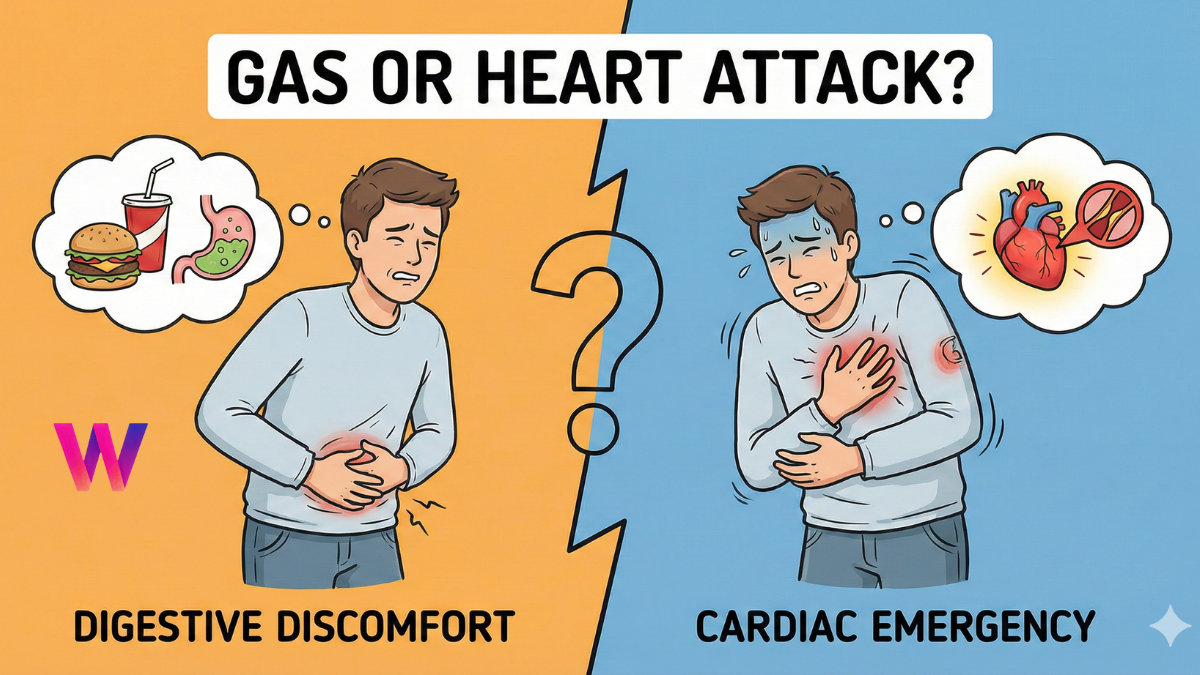
- Sudden nausea with chest pain that feels tight or heavy, or pain spreading to the arm, back, neck or jaw, as this could be a heart attack (more in our guide on gas pain versus heart attack)
Frequently asked questions
What should I drink when I’m vomiting?
Small sips of water or ORS every few minutes. Avoid gulping large amounts, and skip fruit juice and fizzy drinks if you also have diarrhoea.
Is lemon or nimbu pani good for nausea?
It hasn’t been properly studied for nausea. Small sips are unlikely to do harm if you like it, but it doesn’t replace ORS if you’re losing a lot of fluid through vomiting or diarrhoea.
Do acupressure bands really work?
For nausea after surgery, the evidence suggests P6 stimulation helps more than a sham, though the studies are low quality. For travel and pregnancy sickness, they help some people but not everyone.
Can I give my child an adult anti-vomiting tablet in a smaller dose?
No. Some anti-sickness medicines carry extra risks in children. Focus on fluids and see a doctor, who can prescribe something suitable if needed.
How long is too long to be vomiting?
For a stomach bug, vomiting usually stops within 1 to 2 days. Get medical help if it lasts longer than 2 days, sooner if you can’t keep fluids down, or straight away if you see any of the red flags above.
This article is for general information and is not a substitute for advice from a doctor. If you have symptoms or a health condition, please consult a qualified healthcare professional.