If you have diabetes, the biggest winter danger to your feet usually isn’t the cold itself but how you warm them up: hot water bottles, heating pads, radiators and fires can burn numb feet without you feeling it. The other winter basics are checking your feet every evening, keeping them dry in lined waterproof footwear, and moisturising dry, cracked heels (but never between the toes).
Here’s why winter is harder on diabetic feet, and a simple daily routine that covers the risks.
Why winter is risky for feet when you have diabetes
Diabetes can damage the nerves and the blood supply to your feet. The CDC says about half of all people with diabetes have some kind of nerve damage, which can reduce your ability to feel pain, heat or cold. That means:
- You may not notice your feet are getting dangerously cold, or that the water or heater you’re using is too hot.
- A blister from new boots, or a crack in a dry heel, can go unnoticed for days.
- Reduced blood flow, which the US National Institute of Diabetes and Digestive and Kidney Diseases (NIDDK) warns can make it hard for sores and infections to heal, means small injuries can turn into ulcers.
Winter adds its own problems on top: dry indoor heating cracks the skin, wet snow or rain soaks socks, thick socks make shoes tighter, and people spend more time close to heaters and fires.
Never warm your feet with direct heat
This is the rule that prevents the most painful winter injuries. NIDDK’s advice for people with diabetes is clear:
- Do not put a hot water bottle or heating pad on your feet.
- Keep your feet away from heaters and open fires.
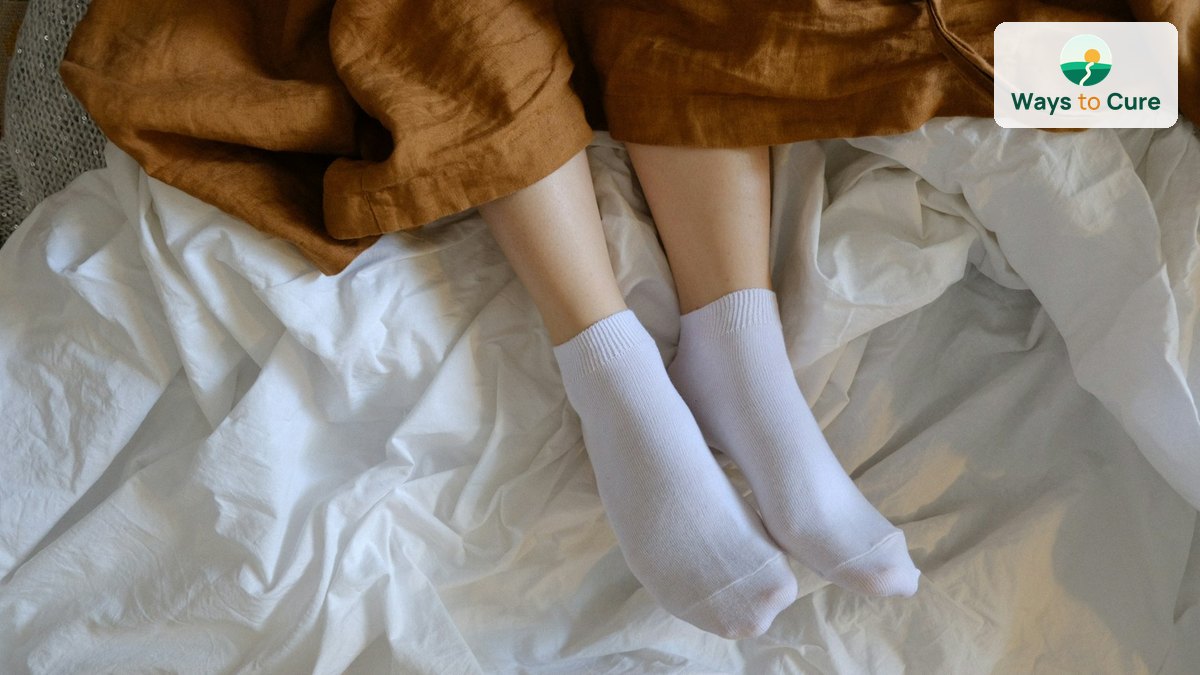
- Wear socks in bed if your feet get cold.
The same applies to resting your feet on a radiator, a heated towel rail, a car heater vent or an electric fire, and to sitting with your feet close to a coal or wood stove. If you can’t feel heat properly, you won’t get the warning signal that tells other people to move away.
Safer ways to warm up:
- Thick, dry socks (wool or thermal blends) and slippers with a firm sole.
- A blanket over your legs rather than heat directed at your feet.
- Gentle movement. NIDDK suggests wiggling your toes and moving your ankles up and down and in and out for a few minutes through the day to help blood flow.
- If your feet have been cold and wet, dry them and let them warm up slowly. The NHS advice on chilblains is to dry and slowly warm skin after cold exposure, and not to put feet on a radiator or under hot water.
If your feet are always cold even indoors, it’s worth reading our guide to cold hands and feet in winter and mentioning it to your doctor, because poor circulation needs checking.
How to wash your feet safely in winter
A hot foot soak feels good after a cold day, but it’s one of the commonest ways people with neuropathy scald their feet.
- Wash your feet every day in warm, not hot, water.
- Test the temperature with your elbow or a bath thermometer. NIDDK gives 90 to 95°F (about 32 to 35°C) as safe.
- Don’t soak your feet for long. NIDDK says soaking dries out the skin, which is the last thing you need in winter.
- Dry carefully, especially between the toes, where skin stays moist and infections start.
Dry, cracked heels: moisturise the right way
Central heating and cold air pull moisture from the skin, and cracked heels are a real entry point for infection. Both the CDC and NIDDK recommend:
- A thin layer of lotion, cream or petroleum jelly on the tops and bottoms of your feet after washing.
- No cream between the toes, because the extra moisture there can lead to infection.
Don’t cut or shave hard skin yourself. NIDDK advises talking to a foot doctor about corns and calluses, because if you have nerve damage they can become ulcers.
Socks and boots for cold, wet weather
NIDDK recommends lined, waterproof boots in winter to keep feet warm and dry. Some practical points:
- Try boots on with your winter socks. Thick socks can make a shoe that fitted in summer too tight, which causes pressure sores.
- Choose clean, lightly padded socks that fit well. Seam-free socks are best, according to NIDDK. Avoid tight elastic tops that dig into your calves.
- Change wet socks straight away. Carry a spare pair if you’ll be out in rain or snow.
- Feel inside your boots before putting them on. Grit, a stone or a fold in the insole can rub a hole you won’t feel.
- Don’t go barefoot indoors. Both the CDC and NIDDK say to wear shoes or slippers at home too. In winter, that includes walking on cold tiles or floors at night.
Your daily winter foot check
NIDDK suggests checking your feet each evening when you take off your shoes. Use this checklist:
| Check | What you’re looking for |
|---|---|
| Tops, soles and heels | Cuts, cracks, blisters, redness, bruising, swelling |
| Between the toes | White soggy skin, peeling or cracks (possible fungal infection) |
| Toenails | Ingrowing edges, thick or discoloured nails |
| Skin colour | Red, purple, pale or dark patches; chilblains (itchy red or purple patches) |
| Temperature | One area or one foot noticeably warmer than the other |
| Inside your socks | Blood or fluid stains you didn’t notice |
If you can’t see the soles easily, use a mirror on the floor or ask someone to look. Note that redness can be harder to see on brown and black skin, as the NHS points out, so also feel for warmth and swelling.
Chilblains and diabetes
Chilblains are small, itchy or burning patches that appear on toes and fingers after cold exposure. The NHS says they usually clear up in 2 to 3 weeks, but specifically advises seeing a GP if you have diabetes, because foot problems can be more serious. The NHS also suggests avoiding smoking, caffeine and decongestant medicines, which can affect blood flow to your toes.
Other winter habits that protect your feet
- Stop smoking. The CDC and NIDDK both say smoking reduces blood flow to the feet.
- Keep moving. Cold weather keeps people indoors and less active. Indoor walking, stair climbing or chair exercises help circulation and blood sugar.
- Watch your blood sugar through the holidays. High glucose slows healing. If you’re unsure what your numbers mean, see our explainer on HbA1c vs fasting blood sugar, and for meal swaps, our comparison of low-GI grains for diabetes.
- Trim toenails straight across after washing, and let a foot doctor do it if your nails are thick, yellowed or ingrowing (NIDDK).
- Get your annual foot check. NIDDK says to get a thorough foot exam at least once a year, including feeling and pulses. In the UK, NICE guidance also recommends a foot assessment at diagnosis and at least once a year.
If you already have tingling or numbness, our article on relieving foot numbness covers some practical steps, but get new numbness checked by your doctor first.
When to see a doctor
Don’t wait for your next routine appointment. Contact your doctor, diabetes nurse or podiatrist within a day or two if you have:
- A cut, blister or bruise that hasn’t started to heal after a few days (NIDDK)
- Skin that’s red, warm or painful, which can mean infection
- A callus with dried blood inside it, which can hide a wound underneath
- Cracked skin or blisters on your feet (NHS)
- Chilblains, since you have diabetes (NHS)
- A foot that is hot, swollen and a different colour from the other, with or without pain. NICE lists this as a possible sign of Charcot foot, which needs urgent specialist assessment.
Get emergency help the same day if you have:
- A foot wound with fever, chills or feeling generally very unwell
- Skin that’s turning black or smells bad, a possible sign of gangrene
- A suddenly cold, pale or blue foot that is very painful
Call your local emergency number (911 in the US, 999 in the UK, 112 in the EU and India) or go to the nearest emergency department.
Frequently asked questions
Can people with diabetes use a hot water bottle?
Not on the feet. NIDDK specifically advises against putting a hot water bottle or heating pad on your feet, because nerve damage can stop you feeling a burn. Wear socks in bed instead.
Can I use an electric blanket if I have diabetes?
NIDDK’s guidance doesn’t mention electric blankets by name, but the same burn risk applies if your feet are numb. A cautious option is to warm the bed before you get in and switch the blanket off before you sleep. Ask your diabetes team if you’re unsure.
Is it OK to soak my feet in warm water?
Wash them in warm water (about 32 to 35°C or 90 to 95°F) but don’t soak. NIDDK says soaking dries the skin, which raises the risk of cracks.
What socks are best for diabetic feet in winter?
Clean, well-fitting, lightly padded socks without seams and without tight elastic. Wool or thermal blends keep you warm; change them if they get damp.
Why is one of my feet warmer than the other?
It can be a sign of inflammation, infection or Charcot foot. If one foot is warm, swollen or a different colour, contact your doctor promptly rather than waiting.
This article is for general information and is not a substitute for advice from a doctor. If you have symptoms or a health condition, please consult a qualified healthcare professional.