Start getting to know how your breasts normally look and feel from your 20s or 30s, and see a doctor about any new change straight away, whatever your age. For routine mammograms, the major guidelines start somewhere between 40 and 50 depending on who you ask, and in India the free government programme offers a clinical breast exam to women aged 30 to 65 rather than a mammogram.
That’s the short version. The longer one matters because the advice you’ll hear from a relative in the US, a doctor in Delhi and a leaflet from the UK can sound like it contradicts itself. Most of it doesn’t, once you see what each guideline is actually for.
Why this matters for women in India
Breast cancer was diagnosed in about 2.4 million women worldwide in 2024 and caused around 694,000 deaths, according to the World Health Organization. WHO also points out that about 80% of breast cancers happen in women whose only risk factors are being female and being over 40. In other words, a clean family history doesn’t mean you can skip this.
In India the bigger problem is timing. Many women reach a surgeon only after a painless lump has been there for months. A painless lump still needs checking.
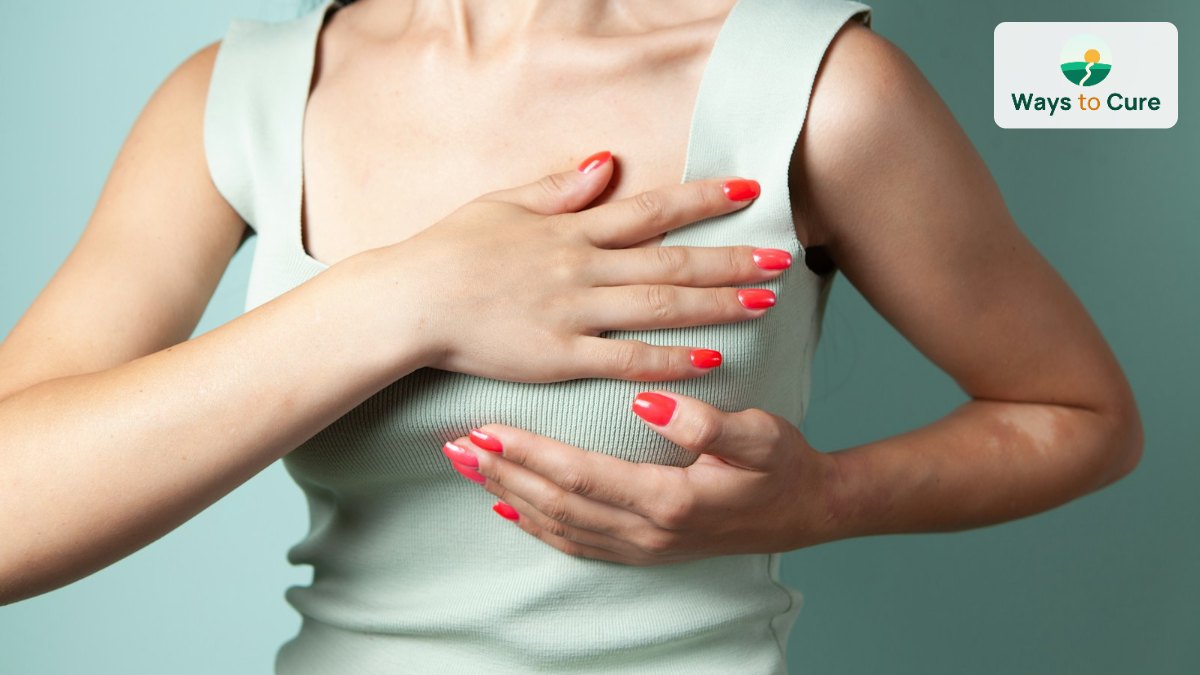
How to check your breasts at home
The NHS calls this being “breast aware”, and its guide to checking your breasts suggests doing it roughly once a month. There’s no special technique you need to get exactly right. The point is to learn what’s normal for you so a change stands out.
- Look first. Stand in front of a mirror with your arms by your sides, then with your arms raised. Look at the shape, the skin and the nipples on both sides.
- Feel with flat fingers. Use small circular movements over the whole breast, going up to the collarbone and into each armpit. Try light pressure and then firmer pressure, but not enough to hurt.
- Check the nipples. Feel around and over each nipple.
- Use whatever is easiest. Many women find it simpler with soapy hands while bathing, or lying down with one arm behind the head.
If you still get periods, your breasts may feel lumpier or more tender in the days before one. Checking at roughly the same point each month, such as a few days after your period ends, makes it easier to compare like with like.
Changes you should report to a doctor
Most of these turn out to be harmless. The NHS notes that tests after a referral usually show a lump is not cancer, with fibroadenomas and fluid-filled cysts among the common benign causes. But you can’t tell the difference yourself, so book a visit if you notice any of these:
- A lump or thickening in the breast, chest or armpit, even if it’s painless
- A change in the size or shape of one breast
- Skin that dimples, puckers, looks like orange peel or turns red
- A nipple that has newly turned inwards, or a rash or crusting on the nipple
- Discharge from the nipple, especially if it’s bloody, when you aren’t pregnant or breastfeeding
- Pain in the breast or armpit that doesn’t go away
- A sore or ulcer on the breast that isn’t healing
At what age should you start mammograms?
This is where the guidelines genuinely differ. They’re written for different health systems, and they weigh the benefits of finding cancer early against the downsides of screening (false alarms, extra biopsies, and finding slow cancers that would never have caused harm) a little differently.
| Guideline | Who gets screened | Test and how often |
|---|---|---|
| WHO | Usually women 50 to 69 | Mammography, in countries where it’s practical |
| India (MoHFW, NP-NCD) | Women 30 to 65 | Clinical breast exam by a trained health worker, once every 5 years |
| NHS (UK) | Women 50 up to their 71st birthday | Mammogram every 3 years; over 71 you can ask for one |
| US Preventive Services Task Force | Women 40 to 74 | Mammogram every 2 years |
| American Cancer Society | Optional from 40; recommended from 45 | Yearly from 45 to 54, then every 1 to 2 years from 55 |
Some detail on each:
- WHO describes screening as mammography in healthy women, “usually women 50-69 years of age”, and says early diagnosis of symptoms can save lives even where mammography isn’t practical (WHO fact sheet).
- NHS invites women from 50 up to their 71st birthday, every three years, and women over 71 can phone their local service to book (NHS breast screening).
- USPSTF lowered its starting age to 40 in April 2024 and recommends a mammogram every two years up to 74. It says the evidence is not yet enough to judge screening at 75 and over, or extra ultrasound or MRI for dense breasts (USPSTF).
- The American Cancer Society lets women start yearly mammograms at 40 if they choose, recommends them every year from 45, and allows a switch to every two years from 55, continuing while a woman is healthy and expected to live at least 10 more years (ACS).
What does this mean for an average-risk woman in India? India doesn’t run a national mammography screening programme for healthy women. If you’re in your 40s and want a mammogram, it’s reasonable to discuss it with your doctor, and the US guidelines support starting at 40. If you’re 50 or older, every major guideline above agrees screening is worthwhile, so don’t put it off.
If you’re at higher risk
The ACS says women with a known BRCA1 or BRCA2 gene change, a parent, sibling or child with one, a calculated lifetime risk of about 20% or more, or chest radiation before age 30 should usually have a yearly MRI and mammogram, typically starting at 30. If your mother or sister had breast cancer young, tell your doctor. You may need a plan that starts much earlier than the standard ages.
Free clinical breast exams at government health centres
Under India’s National Programme for Prevention and Control of Non-Communicable Diseases, women aged 30 to 65 are meant to be screened for breast, cervical and oral cancer. The operational framework for common cancers sets the breast screening method as a clinical breast exam (CBE), done once every five years by trained ANMs and staff nurses at sub-centres and PHCs, now largely through Ayushman Arogya Mandirs. Your local ASHA worker can tell you when screening days are held.
A CBE is simple: a trained health worker looks at and feels both breasts and armpits while you sit and then lie down. It takes a few minutes, needs no machine and costs nothing at a government centre.
Does it actually work? The best Indian evidence comes from a large trial in Mumbai that followed more than 151,000 women aged 35 to 64. Women offered a CBE every two years by trained female health workers were diagnosed at an earlier stage: 37% had stage III or IV cancer at diagnosis, compared with 47% in the group that wasn’t screened. Among women aged 50 and over, deaths from breast cancer fell by nearly 30% (Mittra et al., BMJ 2021). The reduction across all ages was smaller and not statistically significant.
So a CBE isn’t a replacement for a mammogram where you can get one, but it’s far better than nothing, and it’s free.
What happens after a lump is found
Here’s what usually follows, so you know what to expect:
- Referral. If the lump is found at a health centre, a CBE that looks abnormal is referred to a surgeon at the CHC or district hospital for confirmation, according to the national framework. In a private set-up, your GP or gynaecologist will usually send you to a breast surgeon.
- Clinical examination by the surgeon, who will also check your armpits and ask about family history.
- Imaging. An ultrasound, a mammogram, or both. Which one comes first depends mostly on your age, because breast tissue is denser in younger women.
- Biopsy if needed. A small sample is taken with a needle, usually a core needle biopsy under local anaesthetic, and sent to a lab. This is the only test that confirms or rules out cancer.
Doctors call this combination of examination, imaging and biopsy the “triple assessment”. Ask how long the biopsy report will take and who will explain it to you. If the result is benign, ask whether you need a follow-up scan. If it’s cancer, you’ll be referred for staging and a treatment plan, and treatment is generally simpler the earlier the stage.
One thing to avoid: don’t let anyone talk you into “watching” a new lump for months without imaging, and don’t swap a biopsy for herbal treatment. If you’ve read our older piece on breast cancer symptoms and precautions, the same rule applies: a lump needs a diagnosis, not a guess.
When to see a doctor quickly
Book an appointment within days, not weeks, if you have:
- A new lump in your breast or armpit, at any age, painful or not
- Bloody discharge from a nipple
- A nipple that has newly pulled inwards
- Skin that is dimpled, thickened like orange peel, or red and hot without an obvious infection
- A breast that has suddenly changed size or shape
- A sore on the breast or nipple that isn’t healing
Breast changes around menopause can be confused with hormone effects, so if you’re going through that stage, see our guide to perimenopause supplements and what the evidence says, but don’t assume a breast lump is hormonal without an exam.
Frequently asked questions
Does a painful lump mean it isn’t cancer?
No. Many breast cancers are painless, and many painful lumps are benign. Pain doesn’t tell you either way, so any new lump needs a doctor’s check.
Can self-exams replace mammograms?
No. The American Cancer Society says self-exams alone aren’t enough for screening. Being breast aware helps you notice changes between screenings; it doesn’t replace them.
I’m 32. Should I get a mammogram?
Not routinely, unless you’re at high risk or a doctor has asked for one to check a symptom. Get to know your breasts, attend a free CBE at your nearest Ayushman Arogya Mandir, and see a doctor about any change.
Do I still need screening after a hysterectomy or menopause?
Yes. Breast screening isn’t affected by removal of the uterus, and the risk of breast cancer rises with age. Our article on life after uterus removal covers other health checks to keep up with.
This article is for general information and is not a substitute for advice from a doctor. If you have symptoms or a health condition, please consult a qualified healthcare professional.