For most people, chikungunya fever settles in a week or so, but the joint pain often doesn’t. A large 2024 review found that about 44% of patients still had symptoms three months later and roughly a third were still affected at one year, so if your wrists, ankles or fingers still ache weeks after the fever, you’re far from alone.
The good news is that most people do improve with time, and there’s a clear, stepwise plan for the pain: paracetamol first, other medicines only once dengue has been ruled out, and regular, gentle exercise to keep the joints moving.
Why chikungunya leaves your joints aching
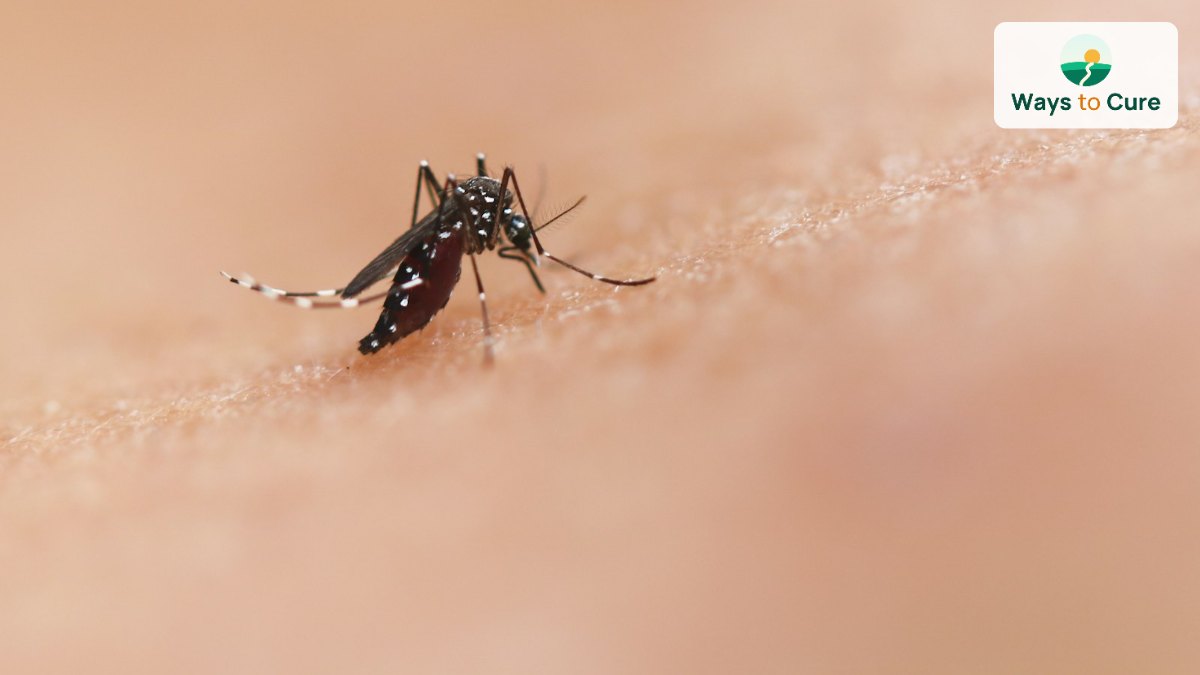
Chikungunya is a virus spread by the bite of infected Aedes mosquitoes, the same day-biting mosquito that spreads dengue. The name comes from a word meaning “that which bends up”, after the stooped posture of people with severe joint pain. India’s National Center for Vector Borne Diseases Control (NCVBDC) says almost every state and UT reports cases, and that recovery can be slow, with persistent joint pain sometimes needing long-term treatment.
The pain usually affects several joints on both sides of the body: fingers, wrists, ankles and knees are common. Some people also get swollen joints, morning stiffness that eases as the day goes on or inflamed tendons around the wrist or ankle. It’s not “all in your head”, and it’s not a sign that the virus is still contagious. Infection appears to give lasting immunity, so you’re unlikely to catch it again.
How long does chikungunya joint pain last?
The national guidelines for clinical management of chikungunya (2023) divide the illness into three phases:
| Phase | Time since symptoms began | What it typically looks like |
|---|---|---|
| Acute | Under 3 weeks | Sudden high fever, severe joint pain, sometimes a rash; acute symptoms usually settle within 7 to 10 days |
| Sub-acute | 3 weeks to 3 months | Joint pain, swelling or stiffness that comes and goes; tiredness; inflamed tendons |
| Chronic | More than 3 months | Pain that persists or flares, lasting from a few months to several years in some people |
How many people move into the chronic phase? A 2024 systematic review and meta-analysis in PLoS Neglected Tropical Diseases pooled data from dozens of studies (Rama et al., 2024). It found:
- About 44% still had chronic symptoms at 3 months
- About 34% at 6 months
- About 32% at 12 months
The studies varied a lot, so treat these as rough averages rather than your personal odds. The CDC says only that “variable proportions” of patients have joint pain for months to years. WHO’s chikungunya fact sheet says the pain usually lasts a few days but can go on for weeks, months or even years.
The Indian guidelines list the things that make long-lasting joint problems more likely: being over 45, being female, having had a rheumatic condition before, and having very severe joint symptoms at the start.
Chikungunya or dengue? The key differences
Both come from the same mosquito, both peak after the monsoon, and they can occur together. You can’t reliably tell them apart at home, which is why a blood test matters. The national guideline’s comparison is a useful starting point:
| Feature | Chikungunya | Dengue |
|---|---|---|
| Main complaint | Fever with severe joint pain | Fever, headache, muscle pain |
| Fever | Abrupt, lasting 3 to 5 days | Acute, lasting 5 to 7 days |
| Rash | Often on day 2 or 3 | Often between days 5 and 7 |
| Joint pain or swelling | Frequent | Less common |
| Bleeding | Uncommon | Common |
| Low platelets | Infrequent | Common |
| Shock | Rare | Frequent in severe dengue |
If you’re trying to make sense of a dengue blood report, our guide to dengue platelet counts explains which numbers matter.
Which painkillers are safe?
In the first days of fever, take paracetamol only. WHO, the CDC and India’s NCVBDC agree on this. Because chikungunya and dengue look so alike early on, you should be treated as a possible dengue case until a test rules it out. Aspirin and NSAIDs such as ibuprofen, diclofenac and naproxen can raise the risk of bleeding in dengue, according to the CDC’s treatment guidance.
The Indian guideline for home care in the acute phase suggests paracetamol 500 mg three or four times a day for adults, not exceeding 3 g in 24 hours. Check the dose with your doctor if you drink alcohol regularly, have liver disease or weigh very little, and watch out for paracetamol hidden in cold and flu combination tablets. The guideline also says steroids should not be used in the acute phase, and advises against self-medicating with antibiotics, steroids or other painkillers.
Once dengue has been ruled out and the fever is over, things change. For pain that carries on into the sub-acute and chronic phases, the guidelines allow NSAIDs at full dose, reviewed after a week and switched if they haven’t helped by about day 10. Your doctor may add a short course of steroids for very inflamed joints, or, for pain lasting beyond three months, a disease-modifying drug such as hydroxychloroquine for 8 to 12 weeks. These need a prescription and monitoring, so don’t start them on your own or because a neighbour found them helpful.
Two groups need extra care: pregnant women should stick to paracetamol and avoid NSAIDs, and children shouldn’t be given NSAIDs in the first 14 days of illness.
Physiotherapy and gentle exercise
Resting completely for weeks tends to make stiff joints stiffer. The Indian guideline recommends light exercise during recovery and lists physical therapy as part of managing chronic pain, and the CDC says physical therapy may help lessen persistent symptoms.
There’s some trial evidence too. In a small randomised trial of 31 people whose joint symptoms had lasted more than three months, those who did progressive resistance exercises with elastic bands (24 sessions over 12 weeks) had less pain and could stand up from a chair more easily than those who got usual care (Eur J Phys Rehabil Med, 2021). It’s one small study, but it fits with what physiotherapists see in practice.
A practical routine to discuss with your doctor or physiotherapist:
- Morning loosening: a few minutes of slow finger, wrist and ankle circles, when stiffness is usually at its worst.
- Cold for hot joints: the national guideline notes ice packs help joint pain. Wrap the ice in a cloth so it doesn’t touch bare skin.
- Light strengthening: squeezing a soft ball, sit-to-stand from a chair, or resistance bands about twice a week (the schedule used in the trial above) once the fever has gone.
- Daily walking: start with what feels manageable and add a few minutes every few days.
- Gentle yoga: slow, supported poses can help with stiffness. Our guide to practising yoga at home has beginner-friendly options. Skip anything that puts full body weight on painful wrists.
A bit of discomfort during exercise is fine. Pain that’s clearly worse the next day means you did too much; scale back rather than stopping altogether. Poor sleep makes pain feel worse, so our tips for better sleep are worth a look too.
When to see a rheumatologist
The national guideline says people whose joint symptoms, particularly signs of inflammatory arthritis, persist for at least three months after the infection should preferably be referred to a rheumatologist. Ask your doctor for a referral if:
- Your joints are still swollen, warm or stiff in the mornings three months after the fever
- Pain is stopping you from working, cooking, gripping or climbing stairs
- NSAIDs haven’t helped after 7 to 10 days, or you can’t take them
- You had arthritis before chikungunya and it has clearly worsened
A rheumatologist can check whether you’ve developed a chronic inflammatory arthritis that looks like rheumatoid arthritis, and whether you need longer-term treatment.
Go to hospital if…
During or soon after the fever, get urgent care if you notice any of these. Several are dengue warning signs, which WHO says often appear after the fever has gone:
- Severe abdominal pain or vomiting that won’t stop
- Bleeding gums or nose, or blood in vomit or stool
- Fast breathing, extreme weakness, restlessness, or cold and clammy skin
- Confusion, a seizure or severe headache
- Very little urine, or you can’t keep fluids down
- Fever in a newborn, a pregnant woman near term, or an older person with diabetes, heart or kidney disease
Call 112 for an ambulance if someone is drowsy, confused or collapsing.
Frequently asked questions
Will chikungunya joint pain go away on its own?
For most people, yes, though it can take weeks to months. The national guideline notes that the chronic stage may end in recovery, either on its own or with treatment, but some people have pain for longer.
Can I take ibuprofen for chikungunya?
Not until a doctor has ruled out dengue. Use paracetamol in the early days. After that, NSAIDs are often used for lasting joint pain, but take them under a doctor’s guidance, especially if you have acidity, kidney problems or take blood thinners.
Can you get chikungunya twice?
Infection appears to give lasting immunity, according to NCVBDC, so a second episode is unlikely. Flare-ups of joint pain months later are usually part of the same illness.
Is there a test to confirm it was chikungunya?
Yes. Blood tests (IgM ELISA) are done at government sentinel surveillance hospitals. This is worth doing if your pain is long-lasting, because it helps a rheumatologist separate post-chikungunya arthritis from other causes.
How do I avoid it next season?
Stop mosquitoes breeding: empty and dry water containers once a week, cover stored water, and use repellent and full sleeves during the day, when Aedes mosquitoes bite. Our piece on monsoon viral infections covers more prevention tips.
This article is for general information and is not a substitute for advice from a doctor. If you have symptoms or a health condition, please consult a qualified healthcare professional.