Dry eyes get worse in winter because heated rooms and dry, cold air make tears evaporate faster, and long hours on screens make you blink far less than normal. Most people feel better with regular screen breaks, more moisture in the air, and lubricating eye drops; omega-3 capsules, despite their reputation, did no better than a placebo in the largest trial.
Why dry eyes flare up in winter
Your eyes stay comfortable because a thin film of tears covers them all the time. Anything that makes that film evaporate faster, or makes you produce less of it, leads to dryness. Several of those things pile up between November and February:
- Dry indoor air. Room heaters and blowers dry the air. The NHS lists long periods in heated or air-conditioned rooms as a risk.
- Wind and smoke. The US National Eye Institute (NEI) says smoke and wind can make symptoms worse. In north India, winter smog adds to this; see our guide on what to do when AQI goes above 300.
- Screens. More time indoors usually means more time on phones, laptops and TV.
- Contact lenses. Wearing them raises the risk.
- Age and sex. Dry eye is more common after 50 and in women.
- Some medicines. The NHS mentions some antidepressants and blood pressure medicines. Don’t stop a prescribed medicine on your own; ask your doctor if you suspect it.
- Smoking and alcohol, which the NHS also lists.
Your skin and lips are dealing with the same dry air, which is why winter tends to bring all three complaints together. We’ve covered winter skin care and dry lips separately.
Symptoms of dry eyes
The NEI lists these common signs:
- A scratchy feeling, as if there’s something in your eye
- Stinging or burning
- Red eyes
- Sensitivity to light
- Blurry vision
Why screens make it worse
Normally you blink about 15 times a minute. The American Academy of Ophthalmology (AAO) says studies show we blink only about 5 to 7 times a minute while using computers and other digital screens. Fewer blinks means the tear film is refreshed less often and dries out between blinks.
The good news: the AAO is clear that screens don’t permanently damage your eyes. The dryness, strain and blur are temporary and improve with breaks. If you’re worried about blue light specifically, we’ve looked at that in the truth about blue light.
How you set up your screen also helps. The AAO suggests:
- Sit about 25 inches (roughly an arm’s length) from the screen.
- Place the screen so your gaze is slightly downward, not straight ahead or up.
The 20-20-20 rule and blinking on purpose
Ophthalmologists use a simple rule: every 20 minutes, look at something at least 20 feet (about 6 metres) away for 20 seconds. The AAO calls this the 20-20-20 rule.
Ways to make it stick:
- Set a repeating 20-minute reminder on your phone or computer.
- During the break, close your eyes gently and then do a few slow, complete blinks, where the lids fully touch.
- Use natural pauses (a call, a page loading) to look out of a window.
Add moisture to the air
Since dry air is a big part of the winter problem, fixing the air often helps as much as drops.
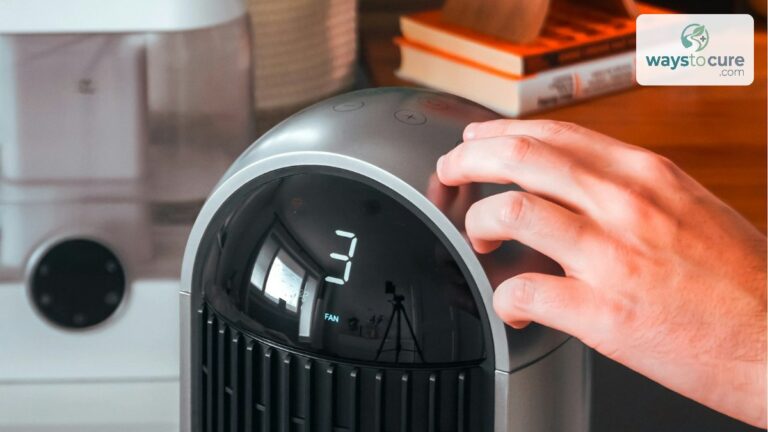
- Run a humidifier in the room where you work or sleep. Both the NEI and the NHS suggest it.
- No humidifier? The AAO suggests placing a pan of water near the heater.
- Don’t sit with a heater, blower or fan pointed at your face, and angle car heater vents away from your eyes.
- Outdoors on windy or smoggy days, wraparound sunglasses help shield your eyes, as the NEI recommends.
An air purifier won’t add moisture, but it can cut smoke indoors. Our air purifier buying guide explains what to look for.
Eye drops, gels and warm compresses
The NEI says the most common treatment for mild dry eye is artificial tears, which you can buy without a prescription. Gels and ointments are also available.
| Product | When it fits | What to know |
|---|---|---|
| Artificial tears (regular) | Occasional dryness, a few times a day | Try a few until you find one that suits you. |
| Preservative-free artificial tears | If you use drops more than six times a day, or are allergic to preservatives | The AAO advises switching because preservatives can irritate the eyes with frequent use. |
| Thicker gel or ointment | Eyes feel worst when you wake up | The AAO suggests using it just before bed. |
| Prescription drops (such as cyclosporine) | Moderate or severe dry eye | Only after an eye doctor’s check. |
Warm compresses and lid cleaning. The NHS suggests a daily routine: soak a clean cloth in warm (not hot) water, press it over your closed eyes for a few minutes, then gently massage and wipe along your eyelids.
Contact lens wearers: switch to glasses for part of the day, or on heavy screen days, to give your eyes a rest.
Do omega-3 supplements help?
Probably not, based on the best evidence. The NEI lists a diet low in omega-3 fatty acids as a risk factor for dry eye, and fish oil capsules have long been sold for it. But the DREAM trial, published in the New England Journal of Medicine in 2018, gave 349 people with moderate to severe dry eye 3,000 mg a day of fish-derived omega-3 and 186 people an olive oil placebo for 12 months. Symptoms improved about equally in both groups, and eye tests showed no meaningful difference.
Eating fish, walnuts and flaxseed is still part of a good diet. Just don’t expect capsules to fix dry eyes, and don’t spend money on them for that reason alone.
Everyday habits that help
- Drink enough water through the day, which the NEI also suggests.
- Sleep 7 to 8 hours. The NEI includes this in its self-care list.
- Cut back on screen time in the evening where you can.
- Don’t smoke, and avoid smoky rooms.
- Keep your computer screen just below eye level, as the NHS advises.
When to see an eye doctor
Book an appointment with an ophthalmologist if:
- Dryness hasn’t improved after a few weeks of home care (the NHS timeframe).
- Symptoms are getting worse, affect your work or reading, or aren’t relieved by over-the-counter drops, as the AAO advises.
- You notice any change in the shape of your eyelids.
Get seen the same day if:
- Your eye is painful and red.
- You have a red eye and wear contact lenses, because it could be an infection.
- There’s redness with a sticky or yellow-green discharge.
Go to an emergency department or call 112 if you have sudden changes in vision (wavy lines, flashes, or loss of sight), if it hurts to look at light, or if you have a red eye with a severe headache and nausea. The NHS lists all of these as emergency signs.
Frequently asked questions
Is it safe to use artificial tears every day?
Yes, for most people. If you need them more than six times a day, the AAO advises preservative-free drops. If you need them that often for weeks, see an eye doctor to find the cause.
Can using my phone or laptop permanently damage my eyes?
No. According to the AAO, screens cause temporary discomfort such as dryness and strain, not permanent damage.
How long should I try home care before seeing a doctor?
The NHS suggests seeing an optician or doctor if dryness hasn’t improved after a few weeks. Don’t wait that long if you have pain, redness with discharge, or any change in vision.
Does a humidifier really make a difference?
For many people in heated rooms, yes. Both the NEI and the AAO suggest adding moisture to indoor air in winter.
Should I take fish oil for dry eyes?
The largest trial found no benefit over placebo after a year, so it’s not a recommended treatment for dry eyes on its own.
This article is for general information and is not a substitute for advice from a doctor. If you have symptoms or a health condition, please consult a qualified healthcare professional.