For an eczema flare in winter, most people need two things used properly: a thick moisturiser (emollient) all over, at least twice a day, and a steroid cream or ointment on the red, inflamed patches once a day for a short burst, measured in fingertip units. The most common mistakes are using too little of both and stopping the steroid too early out of fear of side effects.
Cold air outside, dry heated air inside and long hot showers all strip water from skin that already has a weak barrier. Here’s how to get the amounts, timing and order right.
Why eczema flares when it gets cold
Eczema skin loses water easily. In winter, low humidity outdoors and central heating indoors pull even more moisture out of it, so patches that were quiet in summer start to itch, crack and redden. The NHS lists heat and changes in temperature as eczema triggers, along with soap, detergents, some fabrics, house-dust mites, infections and stress.
Winter adds its own extras: wool jumpers against the skin, sitting close to a heater, hot baths to warm up, and sweating under too many layers. Each of these can set off an itch-scratch cycle that turns a dry patch into a weeping one within days.
Emollients: how often and how to put them on
Emollient is the medical word for moisturiser, and for eczema it’s a treatment, not a cosmetic. The NHS advises applying emollients as often as possible, at least two times a day, and washing with an emollient instead of soap.
- Pick the right texture. Allergy UK says creams suit wet or weeping eczema and ointments suit thick, dry areas. The American Academy of Dermatology (AAD) notes that ointment holds more water in the skin, which makes it a good winter choice.
- Use smooth downward strokes in the direction of hair growth. Smooth it on rather than rubbing it in hard.
- Don’t dip fingers into a tub. Use a clean spoon or a pump to avoid introducing bacteria.
- Apply after every wash, including handwashing, and before bed.
- Skip aqueous cream. The NHS says it can irritate the skin and make eczema worse.
Plain, fragrance-free products often work as well as expensive ones. If you’re in India and choosing from local brands, our guide to body lotions for dry winter skin may help, but for active eczema a thick ointment usually beats a light lotion.
How much steroid cream to use: fingertip units
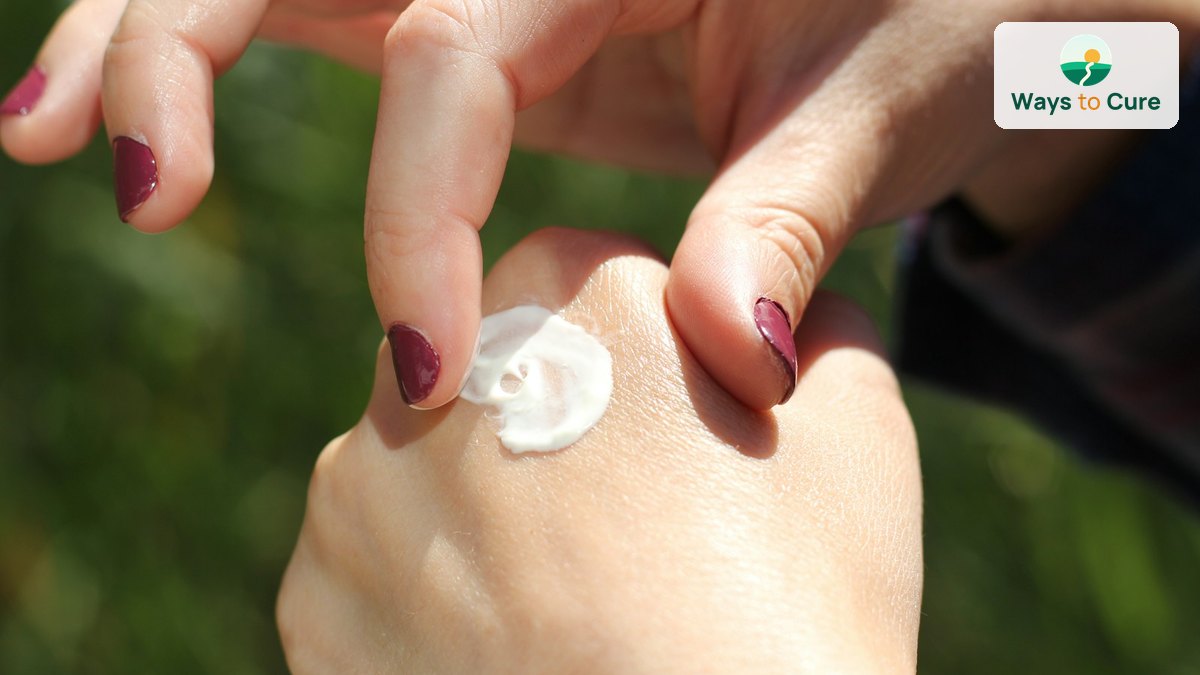
Steroid creams are measured in fingertip units (FTUs). One FTU is the amount squeezed from a standard tube in a line from the tip of an adult’s index finger to the first crease. Allergy UK says one FTU covers an area about the size of two adult hands held flat with the fingers together.
So if a red patch on your forearm is about the size of your two palms, one FTU is the right amount. A thin, barely visible smear is usually too little. The UK National Eczema Society gives these rough guides:
| Area | Approximate amount |
|---|---|
| Patch the size of two adult hands | 1 FTU |
| Whole adult arm | About 3 FTUs |
| Arm and hand of a 4-year-old | About 2 FTUs |
Put steroid only on the inflamed, red or itchy patches, not all over. The emollient is the one that goes everywhere.
How often and for how long to use a steroid in a flare
According to the National Eczema Society:
- Once a day is usually enough. The research it cites found no extra benefit from twice a day, though your prescriber may advise twice daily for some products.
- Use it in short bursts, usually 7 to 14 days, sometimes 5 to 7.
- Some doctors suggest carrying on for 2 more days after the skin looks clear, to reduce a rebound flare.
- If flares keep coming back to the same spots, a doctor may suggest “weekend therapy”: steroid on 2 days in a row each week on those usual sites, for several months.
Steroids come in strengths. In the UK the four levels are mild, moderate, potent and very potent. Hydrocortisone 1% is mild; clobetasone butyrate 0.05% is moderate. Strength usually isn’t printed clearly on the pack, and other countries, including the US, rank them differently, so ask the pharmacist which level yours is.
Which goes first, moisturiser or steroid?
This is where advice genuinely differs, and you’ll see both orders recommended.
- The AAD, for babies, says to apply a prescribed steroid right after the bath and the moisturiser afterwards, on skin without medicine on it.
- The National Eczema Society suggests steroid on slightly damp skin after bathing, then waiting 30 minutes before applying emollient all over.
- Allergy UK suggests emollient first, then waiting 15 to 30 minutes before the steroid.
What they agree on: don’t apply the two at the same moment and mix them on your skin, because the emollient can dilute the steroid and spread it onto skin that doesn’t need it. Leave a gap of 15 to 30 minutes, and follow whatever order your own doctor or pharmacist gave you.
A winter bath and shower routine
- Use lukewarm water, not hot. The AAD suggests keeping baths for babies with eczema to about 5 to 10 minutes.
- Wash with an emollient or a mild, fragrance-free cleanser instead of soap. You only need cleanser on dirty or smelly areas.
- Pat the skin almost dry with a towel. Don’t rub.
- Apply moisturiser quickly. The AAD advises within 3 minutes of getting out of the bath.
- Apply any steroid to the inflamed patches, leaving the gap described above.
A safety note: emollients aren’t flammable on your skin, but they soak into clothing, bedding and dressings and make those catch fire more easily. Keep away from open flames and heaters, don’t smoke while using them, and wash bedding often.
Clothing, heating and other winter fixes
The AAD’s winter advice for children with eczema works well for adults too:
- Wear 100% cotton or other breathable fabrics next to the skin. Wool, acrylic and polyester can irritate.
- Dress in loose layers so you can take one off before you start sweating.
- Keep the thermostat at a level that doesn’t make you overheat, and sit away from radiators, heaters and fireplaces.
- Use a humidifier if indoor air feels dry.
- Wear cotton gloves or a cotton liner under wool gloves.
- Change out of wet clothes and shoes as soon as you come in from rain or snow.
Cracked heels and fingertips are common in winter too. Our article on cracked heels covers splits that bleed or won’t heal.
Are steroid creams safe?
Used as directed, in short bursts, the risk is low. The National Eczema Society says skin thinning mainly happens with long-term use of potent or very potent steroids, especially on the face and skin folds, or under bandages or gloves. Signs include fragile skin, easy bruising, visible small blood vessels and stretch marks.
Topical steroid withdrawal is a separate problem. It’s more likely after continuous use of stronger steroids, usually for more than a year, and can cause burning, red or darker skin. That’s a reason to use steroids in short, planned courses, not a reason to avoid them altogether.
Fear of steroids causes its own harm. If you use too little or stop after two days, the eczema stays active, and you may end up needing a stronger cream to get it back under control. If you’re not sure whether your patches are eczema or something like psoriasis, see our guides to eczema symptoms and causes and plaque psoriasis.
When to see a doctor
See a GP, family doctor or dermatologist if:
- the flare hasn’t improved after 1 to 2 weeks of using a steroid as directed
- you need steroid creams most weeks to keep the eczema calm
- eczema is keeping you or your child awake at night
- it’s on the face, eyelids or genitals and you haven’t had advice about which strength is safe there
- you’ve been using a potent steroid for a long time and want to come off it
Get urgent help if…
The NHS says these can be signs of infected eczema or eczema herpeticum, a herpes virus infection of eczema skin that needs prompt treatment:
- blisters, crusting, leaking fluid or pus-filled spots
- pain, swelling or warmth in the skin
- eczema that suddenly gets worse or spreads fast
- a high temperature or feeling generally unwell
Get a same-day appointment (in the UK, contact NHS 111). If someone is very unwell, drowsy or struggling to breathe, call your local emergency number (911 in the US, 999 in the UK, 112 in the EU and India).
Frequently asked questions
Can I put moisturiser on top of steroid cream straight away?
It’s better to leave 15 to 30 minutes between them so the emollient doesn’t dilute or spread the steroid. Sources differ on which goes first, so follow your prescriber’s instructions.
Is Vaseline (petroleum jelly) good for eczema?
Plain petroleum jelly is an ointment-type emollient and many people with dry eczema find it helpful, especially at night. It’s greasy, so it suits very dry patches better than weeping ones. Keep it away from naked flames once it’s on clothing or bedding.
How many days in a row can I use hydrocortisone cream?
Steroid bursts for a flare usually last 7 to 14 days. If you need it for longer, or keep needing it every few weeks, see a doctor rather than buying more over the counter.
Should I stop showering every day in winter?
You don’t have to. A short, lukewarm shower with a soap substitute, followed by moisturiser within a few minutes, is fine for most people with eczema. Long, hot showers are the problem.
Does eczema go away in summer?
Some people find it improves in warmer, more humid months, but heat and sweat are triggers for others. Keep moisturising all year so the skin barrier is in better shape when winter comes back.
This article is for general information and is not a substitute for advice from a doctor. If you have symptoms or a health condition, please consult a qualified healthcare professional.