The classic signs of type 1 diabetes in a child are needing the toilet a lot, being very thirsty, being unusually tired and losing weight or looking thinner. If your child has these, ask for a finger-prick blood sugar test the same day, because the condition can turn into an emergency within days.
Type 1 diabetes is an autoimmune condition. The immune system destroys the cells in the pancreas that make insulin, so sugar builds up in the blood instead of fuelling the body. It isn’t caused by eating too many sweets, and nothing a parent did brought it on. What a parent can do is spot it early.
The 4 Ts: the early signs to know
Diabetes UK uses a simple memory aid called the 4 Ts. Here is what each one tends to look like at home and at school.
| Sign | What you might notice | Why it happens |
|---|---|---|
| Toilet | Heavier nappies, wetting the bed after being dry at night, asking to leave class for the toilet, getting up at night to pee | The kidneys flush extra sugar out in urine, which pulls water with it |
| Thirsty | Asking for drinks all the time, finishing water bottles fast, drinking from the tap | All that urine leaves the body short of fluid |
| Tired | Trouble staying awake in school, longer or extra naps in toddlers, no energy for play | Without insulin, cells can’t use sugar for energy |
| Thinner | Clothes feel looser, the child looks thinner even though they’re eating normally or more | The body breaks down fat and muscle for fuel instead |
The MedlinePlus medical encyclopedia adds a few more: feeling hungry more than usual, blurry vision, and bedwetting in a child who was dry overnight before. A new bedwetting habit in a school-age child is one of the most commonly missed clues, because parents often put it down to stress or a late drink.
How fast do the symptoms come on?
Usually fast. The US National Institute of Diabetes and Digestive and Kidney Diseases says children with type 1 diabetes typically develop symptoms over a short period of time. In practice that often means a few weeks of thirst and toilet trips, then a quicker slide over a few days if nobody checks blood sugar.
This is why “let’s wait and see if it settles” is the wrong call. The signs don’t fade on their own. They get worse as blood sugar keeps climbing.
Diabetic ketoacidosis: the danger if it’s missed
When the body has no insulin, it burns fat for fuel and makes acids called ketones. If ketones build up, the blood becomes acidic. This is diabetic ketoacidosis, or DKA, and it can be life-threatening.
DKA is often how type 1 diabetes is first discovered. In a large US study of young people, the share who already had DKA at diagnosis rose from 35.3% in 2010 to 40.6% in 2016 (SEARCH for Diabetes in Youth, published in Diabetes Care in 2021). Put simply, roughly four in ten children were diagnosed only once they were already in a dangerous state.
Signs that the 4 Ts have moved into DKA include:
- Tummy pain, feeling sick or vomiting
- Deep, fast breathing
- A fruity or pear-drop smell on the breath
- Dry mouth and skin, flushed face
- Unusual sleepiness, confusion or being hard to wake
Vomiting plus heavy thirst is easy to mistake for a stomach bug. The difference is that a child with DKA has usually been drinking and peeing more for days or weeks beforehand.
Signs in babies and toddlers
Younger children can’t tell you they feel thirsty or that their vision is blurry, so the signs are harder to read. Look for:
- Nappies that are much heavier or wetter than usual
- Constant crying for feeds or drinks
- Napping more often or for longer
- Weight loss or not gaining weight
- Irritability and being floppy or listless
Type 1 diabetes is less common in babies, but it does happen, and at this age the signs are especially easy to mistake for a feeding problem or a virus.
How doctors test for type 1 diabetes
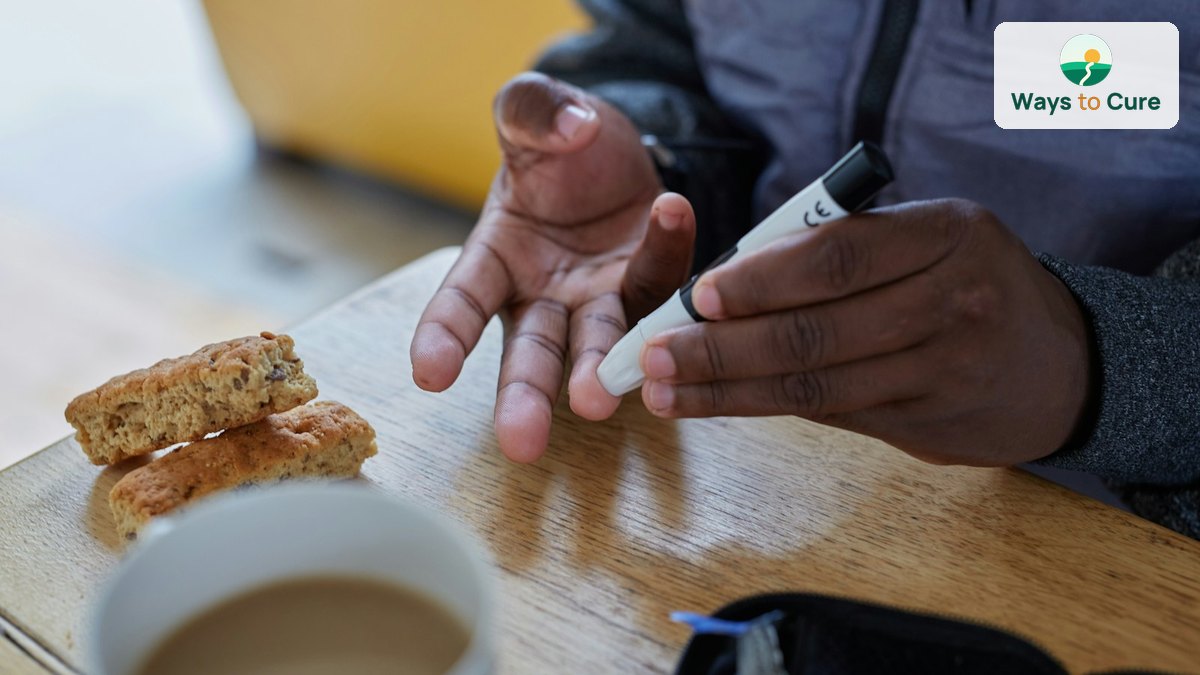
The first check is quick. A doctor or nurse pricks a finger and measures blood glucose in a few seconds. A urine dipstick can also show sugar and ketones. If the result is high, the child is usually sent to hospital or a children’s diabetes team the same day.
Formal diagnosis uses the same blood sugar cut-offs as in adults. According to MedlinePlus:
| Test | Result that points to diabetes |
|---|---|
| Random blood glucose (any time of day) | 200 mg/dL (11.1 mmol/L) or higher, with symptoms |
| Fasting blood glucose | 126 mg/dL (7.0 mmol/L) or higher |
| HbA1c | 6.5% or higher |
| Oral glucose tolerance test, 2 hours | 200 mg/dL (11.1 mmol/L) or higher |
A child with clear symptoms and a high random reading doesn’t need to wait for a fasting test or an HbA1c. Treatment starts straight away. If you want to understand the difference between these lab tests, see our guide to HbA1c vs fasting blood sugar.
Doctors may also order autoantibody tests. These look for the immune markers that attack the pancreas and help confirm that it’s type 1 rather than type 2 diabetes, which is now also seen in some overweight teenagers.
Type 1 or type 2 diabetes in children?
Both can happen in childhood, but they behave differently.
- Type 1: comes on over weeks, often in a child of normal weight, with weight loss and a real risk of DKA. Insulin is needed from day one, for life.
- Type 2: usually builds up slowly over months or years, mostly in teenagers carrying extra weight, often with a family history. It may cause few symptoms at first and is often found on a routine test.
Our overview of diabetes types, diagnosis and treatment explains the differences in more detail.
Can type 1 diabetes be picked up before symptoms start?
Sometimes. Type 1 diabetes develops in stages. The autoantibodies often appear months or years before blood sugar rises. Brothers, sisters and children of someone with type 1 diabetes have a higher risk, and antibody testing can identify people at higher risk if they have a close relative with the condition.
In the US, the research network TrialNet offers autoantibody testing to some family members, and NIDDK notes that a medicine called teplizumab can delay type 1 diabetes symptoms in people found to be in the early stages. Availability varies a lot by country, so ask your child’s doctor what’s offered where you live. For children with no family history, there’s no routine screening test in most countries.
Common reasons the signs get missed
- Bedwetting is blamed on a new school, a new sibling or a late drink.
- Thirst is blamed on hot weather, sport or salty snacks.
- Tiredness is blamed on a growth spurt or late nights.
- Weight loss is welcomed, or not noticed under winter clothes.
- Vomiting and fast breathing are treated as a tummy bug or a chest infection. If you’re unsure about breathing in a young child, our guide to pneumonia danger signs in children under 5 covers what fast breathing looks like.
Any one of these alone is usually nothing. Two or more together, especially thirst plus extra peeing, is the pattern to act on.
When to see a doctor
See a doctor the same day (not next week) if your child has:
- Increased thirst and peeing more, including at night
- New bedwetting after being dry
- Weight loss you can’t explain, or clothes getting looser
- Tiredness that isn’t normal for them
Ask directly for a finger-prick glucose test. Diabetes UK advises that a child with suspected type 1 diabetes should be assessed on the same day, and to go to hospital out of hours.
Get emergency help if your child has any of the 4 Ts plus any of the following. The NHS lists these as reasons to call 999 or go to A&E:
- Symptoms getting worse quickly
- Stomach pain, vomiting or diarrhoea
- Sleepiness or confusion
- Breathing faster and deeper than usual
Call your local emergency number (911 in the US, 999 in the UK, 112 in the EU and India) or go straight to the nearest emergency department. Tell staff you’re worried about diabetes so they check blood sugar and ketones quickly.
Frequently asked questions
What age does type 1 diabetes usually start in children?
It can start at any age, including in babies, but it’s most often diagnosed in children, teenagers and young adults.
Can eating too much sugar cause type 1 diabetes?
No. Type 1 diabetes is autoimmune. The immune system attacks the insulin-making cells. Diet doesn’t cause it and couldn’t have prevented it.
Is a home glucose meter reading enough to know?
A high reading on a relative’s meter is a strong reason to see a doctor the same day, but it isn’t a diagnosis. Meters can give false highs if there’s sugar on the finger. Wash and dry the hands first, and get a proper test either way.
Does bedwetting always mean diabetes?
No. Most bedwetting is not diabetes. It’s worth a test when it starts suddenly in a child who had been dry, and especially when it comes with thirst, tiredness or weight loss.
Can type 1 diabetes in children be cured?
Not at present. It’s managed for life with insulin, blood sugar monitoring and support from a diabetes team. Children with type 1 diabetes go to school, play sport and live full lives. Early diagnosis makes the start much safer.
This article is for general information and is not a substitute for advice from a doctor. If you have symptoms or a health condition, please consult a qualified healthcare professional.