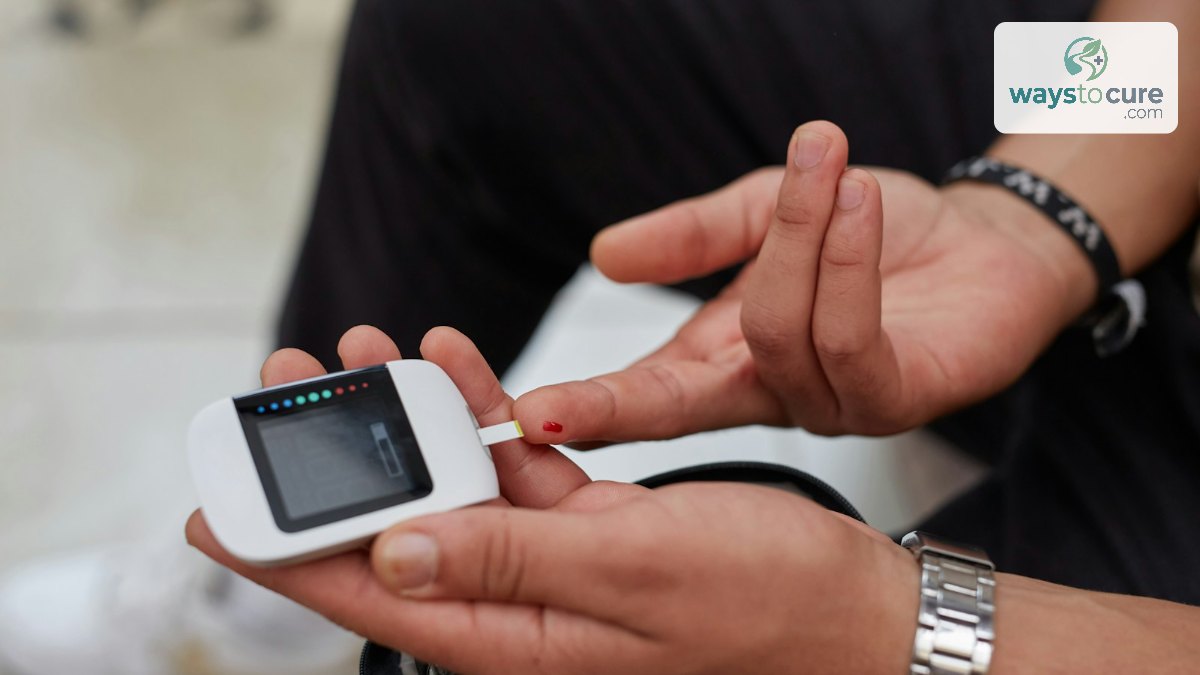
Diabetes means your blood sugar stays too high because your body either doesn’t make enough insulin or can’t use it properly. It’s diagnosed with simple blood tests, such as a fasting sugar of 126 mg/dL or more or an HbA1c of 6.5% or more, and while it can’t be cured, it can be controlled well enough to prevent most of its damage.
This guide covers the main types, the test cut-offs, how treatment works, and the yearly checks that protect your eyes, kidneys and feet.
How common is diabetes in India?
Very. The ICMR-INDIAB study, which tested more than 1 lakh adults across the country, found that 11.4% had diabetes and 15.3% had prediabetes. That’s roughly one in nine adults with diabetes and another one in seven heading towards it. Type 2 diabetes can cause no noticeable symptoms, so the only way to know is to get tested.
The main types of diabetes
| Type | What goes wrong | Who usually gets it | Main treatment |
|---|---|---|---|
| Type 1 | The immune system destroys the insulin-making cells, so the body makes little or no insulin | Usually children and young adults, but can start at any age | Insulin every day, for life |
| Type 2 | The body doesn’t use insulin well and gradually can’t keep sugar normal | Mostly adults, increasingly younger people | Lifestyle changes, tablets, sometimes injections or insulin |
| Gestational | High sugar that develops during pregnancy in someone who didn’t have diabetes before | Pregnant women | Diet changes, sometimes insulin or metformin |
| Prediabetes | Sugar higher than normal but below the diabetes cut-off | Adults with risk factors | Weight loss, activity, diet; regular testing |
Source: CDC. Gestational diabetes usually goes away after birth, but it raises the mother’s later risk of type 2 diabetes. For the factors that push people towards type 2, see our post on the causes of diabetes.
Symptoms to watch for
According to the NHS, the common symptoms of type 2 diabetes are:
- feeling very tired
- passing urine more than usual, especially at night
- feeling thirsty all the time
- losing weight without trying
- blurred vision, cuts that heal slowly, and genital itching or repeated thrush
The CDC notes that type 1 often causes no symptoms in its early stages, then symptoms can appear suddenly and be severe. Type 2 may cause no symptoms you notice, which is why testing matters more than waiting for signs.
Diagnosis: the blood sugar cut-offs
These are the cut-offs used by the CDC, which follow American Diabetes Association criteria:
| Test | Normal | Prediabetes | Diabetes |
|---|---|---|---|
| HbA1c | Below 5.7% | 5.7% to 6.4% | 6.5% or above |
| Fasting blood sugar | 99 mg/dL or below | 100 to 125 mg/dL | 126 mg/dL or above |
| 2-hour glucose tolerance test (75 g glucose) | Below 140 mg/dL | 140 to 199 mg/dL | 200 mg/dL or above |
| Random blood sugar (with symptoms) | n/a | n/a | 200 mg/dL or above |
Your doctor may repeat an abnormal result before confirming the diagnosis, and will tell you which test to use.
Gestational diabetes testing in India
India’s national guidelines recommend testing every pregnant woman at her first antenatal visit, and again at 24 to 28 weeks if the first test was negative. The test is simple: drink 75 g of glucose in water, whether or not you’ve eaten, and have your blood sugar checked 2 hours later. A result of 140 mg/dL or more means gestational diabetes.
Who should get tested?
Under India’s national NCD programme, adults aged 30 and above are meant to be screened for diabetes at government health centres. Get tested earlier if you’re overweight, have a parent or sibling with diabetes, had gestational diabetes, or have high blood pressure.
How diabetes is treated
Food, activity and weight
These form the base of every treatment plan. The NHS says lifestyle changes can sometimes bring blood sugar back to a normal level in type 2 diabetes, a state called remission. It also advises against starting a very strict, low-calorie diet without talking to a health professional first. Practical steps:
- Fill half your plate with vegetables and dal, a quarter with roti or rice, and a quarter with protein such as paneer, eggs, fish or chana.
- Swap maida and white rice for whole wheat, millets or brown rice where you can, and keep portions modest.
- Cut sweetened chai, cold drinks, packaged juices and sweets to occasional treats.
- Build in regular activity, such as a brisk walk after dinner.
Our posts on how glucose works in your body and diabetes-friendly winter fruits have more food ideas.
Medicines
- Type 1: insulin is essential. The CDC notes that people with type 1 need insulin every day to survive.
- Type 2: the NHS says metformin is usually the first medicine, and it’s often combined with an SGLT2 inhibitor. Other options include GLP-1 injections (usually weekly) for some people, and insulin if tablets aren’t enough.
Never change or stop a diabetes medicine on your own, and ask your doctor or pharmacist before adding herbal products, since some may add to the effect of your medicines. Jamun is a popular home choice; see what the evidence actually shows in our jamun guide.
Know the signs of low sugar
If you take insulin or tablets like gliclazide or glimepiride, your sugar can drop too low. The NHS defines low blood sugar as below 4 mmol/L (about 72 mg/dL). Signs include sweating, shaking, hunger, a racing heart and confusion. Treat it at once with something sugary, such as a small glass of fruit juice or 5 glucose tablets, then recheck after 10 to 15 minutes.
Complications and the checks that prevent them
Years of high sugar can damage blood vessels and nerves, leading to heart attack, stroke, kidney disease, eye damage, and foot ulcers that can end in amputation. Most of this damage builds silently, which is why regular checks matter. The CDC care schedule recommends:
| How often | Check |
|---|---|
| Every day | Look at your feet for cuts, blisters or colour changes; take medicines; stay active |
| Every 3 to 6 months | HbA1c (every 3 months if your treatment changed or sugar isn’t at target; every 6 months if it is) |
| Every year | Dilated eye exam, kidney tests, cholesterol test, complete foot exam, dental check, flu vaccine |
Kidney damage in particular gives few early signs. Read about the early symptoms of kidney problems so you know what to report.
When to see a doctor
Get your sugar tested soon if you have any of the symptoms above, are over 30 and haven’t been tested, or are pregnant. If you already have diabetes, see your doctor if your readings are regularly above your target, or if you notice a foot wound that isn’t healing, blurred vision, or swelling in your feet.
Call 112 or go to the emergency department for:
- signs of diabetic ketoacidosis, listed by the NHS: vomiting, stomach pain, deep or fast breathing, fruity-smelling breath, drowsiness or confusion
- low sugar with unconsciousness or a seizure (don’t give food or drink to someone who isn’t awake)
- sudden chest pain, weakness of one side, slurred speech or a drooping face
- a hot, swollen, smelly or blackened foot wound
Frequently asked questions
Can diabetes be cured?
Type 1 can’t be cured. In type 2, lifestyle changes can sometimes bring sugar back to normal (remission), but it still needs regular checks. Avoid any product that claims to cure diabetes.
Is HbA1c better than fasting sugar?
They answer different questions. HbA1c reflects your average sugar over about 3 months, while fasting sugar is a single-day snapshot. Doctors often use both.
Is prediabetes serious?
Yes, because it raises your risk of type 2 diabetes, heart disease and stroke. Losing weight if you’re overweight and being more active lower that risk.
Do I have to take medicines for life?
Type 1 always needs insulin. In type 2, some people reduce their medicines with weight loss, but only under a doctor’s supervision.
What HbA1c should I aim for?
The NIDDK says the goal for most people is below 7%, but your doctor may set a different goal depending on your age and health.
This article is for general information and is not a substitute for advice from a doctor. If you have symptoms or a health condition, please consult a qualified healthcare professional.