
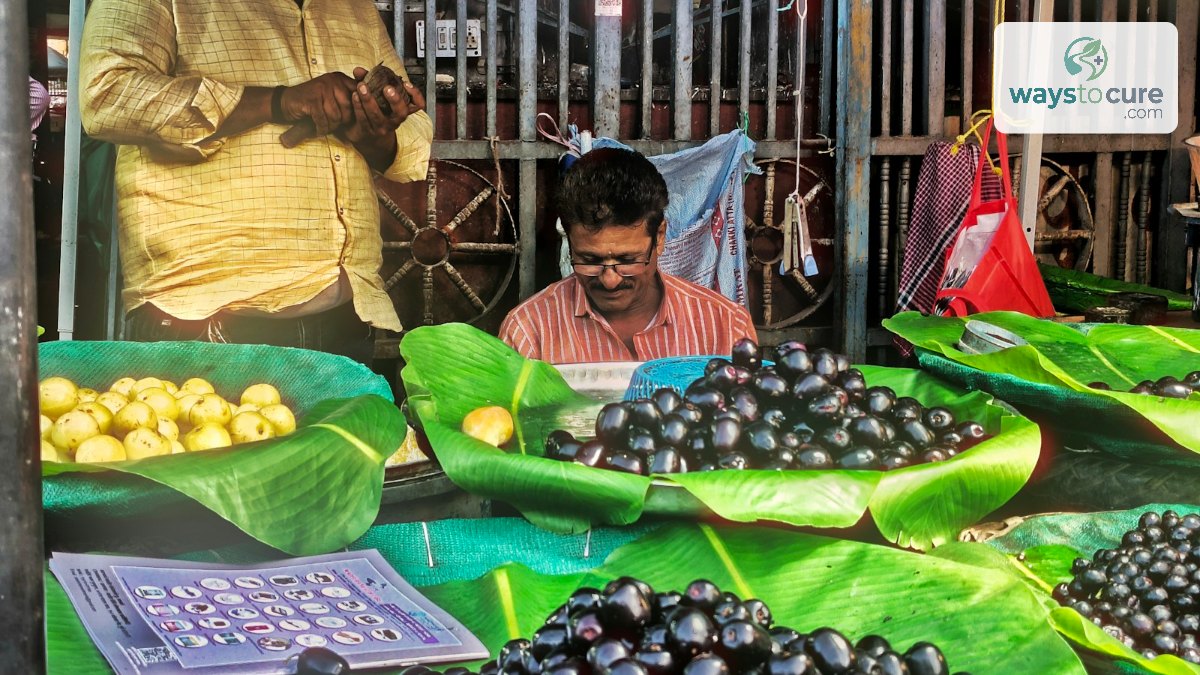
Jamun is a low-calorie fruit with some vitamin C and fibre, and it’s a perfectly good choice in season, including for people with diabetes who count it as part of their carbohydrate. Jamun seed powder may lower fasting blood sugar slightly, but the human studies are small and mixed, so it doesn’t treat diabetes and it can’t replace your medicines.
Here’s what’s actually in the fruit, what the research on blood sugar shows, and who needs to be careful.
What’s in 100 g of jamun?
Jamun (Syzygium cumini, also called Indian blackberry, Java plum or jambolan) is mostly water. These values for the raw fruit come from the US Department of Agriculture’s FoodData Central:
| Nutrient (per 100 g raw fruit) | Amount |
|---|---|
| Energy | 60 kcal |
| Water | 83.1 g |
| Carbohydrate | 15.6 g |
| Protein | 0.72 g |
| Fat | 0.23 g |
| Vitamin C | 14.3 mg |
| Calcium | 19 mg |
| Magnesium | 15 mg |
| Potassium | 79 mg |
| Iron | 0.19 mg |
| Sodium | 14 mg |
Two things stand out. First, jamun is not an iron-rich food, despite what you may have read; 0.19 mg per 100 g is very little. Second, 100 g carries about 15 g of carbohydrate, which is similar to many other fruits, so it still counts if you’re managing blood sugar.
Jamun and blood sugar: what the studies show
Jamun seed powder has been used in traditional medicine for diabetes for a long time, and many animal studies show it lowers blood sugar in rats. Human evidence is a different matter.
- A 2026 systematic review and meta-analysis in the journal Foods pooled 13 randomised trials (802 adults with type 2 diabetes or prediabetes) of jamun and related plants. Nine of the trials used jamun, in forms ranging from seed powder to leaf tea and multi-herb products. Across all the trials, fasting blood sugar fell modestly, by about 14 mg/dL on average, but there was no significant effect on HbA1c or after-meal sugar. The authors rated the certainty of the evidence as low to very low and called these products “promising but unproven”.
- Not every trial was positive. A randomised trial in 27 people with type 2 diabetes found that tea made from jamun leaves had no effect on fasting sugar over 28 days, while the diabetes drug glyburide did.
- An earlier study in volunteers and rats found no blood sugar lowering from jamun leaf preparations either.
Put simply: seed preparations might shave a little off fasting sugar, the trials were small and inconsistent, and nothing shows that jamun prevents diabetes complications. The US National Center for Complementary and Integrative Health warns against replacing proven diabetes treatment with an unproven product. If you want to understand what your sugar numbers mean, read our explainer on glucose and how to manage it.
The real risk: low blood sugar with diabetes medicines
If jamun seed powder does lower sugar even slightly, that effect adds to your medicines. People on insulin or tablets such as gliclazide or glimepiride are the most likely to get low sugar (hypoglycaemia), according to the NHS. Adding a sugar-lowering herb on top, without telling your doctor, makes that more likely.
The NHS describes low blood sugar as usually below 4 mmol/L (about 72 mg/dL). Watch for:
- sweating, shaking, hunger or tingling lips
- a racing heart, dizziness or blurred vision
- irritability, tiredness or confusion
If this happens, take something sugary straight away, such as a small glass of fruit juice or glucose tablets, and recheck after 10 to 15 minutes, as the NHS advises. Then tell your doctor, because your medicine dose may need adjusting.
If you want to try seed powder, discuss it with your doctor first, check your sugar more often for the first few weeks, and never cut your prescribed medicine on your own.
Jamun and kidney stones
You may see claims that jamun prevents or dissolves kidney stones. There’s no good evidence for that, and we couldn’t find a reliable measurement of jamun’s oxalate content, so we can’t say whether it’s high or low in oxalate.
If you’ve had calcium oxalate stones, the most useful steps are the ones the US National Institute of Diabetes and Digestive and Kidney Diseases recommends: drink enough fluid, don’t cut out calcium on your own, and limit known high-oxalate foods such as spinach, nuts, peanuts and wheat bran if your doctor advises it. Eating jamun in normal amounts is unlikely to matter much either way, but don’t treat it as a stone remedy. More on kidney stone causes and symptoms here.
How to eat jamun
- Portion: a small bowl (around 100 g) is a sensible serving. If you have diabetes, count it as a fruit portion and eat it as part of a meal or snack rather than in large amounts at once.
- Wash well: jamun is often sold loose from carts. Rinse it in clean water before eating.
- Eat the fruit, not the juice: whole fruit keeps its fibre. Packaged jamun drinks and “jamun shots” can contain added sugar, so check the label.
- Salt and masala: a pinch of black salt is traditional, but go easy if you’ve been told to cut salt for blood pressure.
- Seed powder: treat it like a supplement, not a food. Products vary and their purity isn’t checked the way medicines are.
For more on fitting fruit and starchy foods into a diabetes diet, see can diabetics eat potatoes.
Who should be careful
- People on insulin or sugar-lowering tablets who want to use seed powder or concentrated extracts, because of the low sugar risk.
- Pregnant or breastfeeding women: eating the fruit is fine, but there isn’t enough safety data on seed powder or extracts, so avoid them unless your doctor agrees.
- People with kidney disease or a history of stones: ask your doctor or dietitian how fruit fits into your diet.
- Anyone about to have surgery should tell the surgical team about all herbal products, including jamun seed powder.
- Young children: remove the seed before giving jamun, as it’s a choking hazard.
When to see a doctor
See your doctor if:
- you have diabetes and want to add jamun seed powder or any herbal product to your routine
- you get repeated low sugar readings or symptoms after starting a herbal product
- your sugar stays high despite diet changes; jamun won’t fix that, and your treatment may need reviewing
- you have severe pain in your side or back, blood in your urine, or fever with that pain (possible kidney stone)
Call 112 if someone with diabetes is drowsy, confused, having a seizure or unconscious. Don’t give food or drink to someone who is unconscious.
Frequently asked questions
Can people with diabetes eat jamun?
Yes, in sensible portions. Count it as a fruit serving, about 15 g of carbohydrate per 100 g, and keep taking your medicines as prescribed.
Does jamun seed powder cure diabetes?
No. At best, studies suggest a small drop in fasting sugar, with low-certainty evidence. It doesn’t replace medicines, diet or exercise.
How much jamun seed powder is safe?
There’s no established safe dose. Trials used very different amounts and preparations, and long-term safety hasn’t been well studied. Ask your doctor before trying it.
Is jamun good for anaemia?
Not really. It contains only about 0.19 mg of iron per 100 g. Iron-rich foods and, if needed, iron tablets prescribed by a doctor are far more useful.
Does jamun lower blood pressure or cholesterol?
The 2026 meta-analysis found no significant effect on cholesterol and other blood fats. There isn’t good human evidence on blood pressure.
This article is for general information and is not a substitute for advice from a doctor. If you have symptoms or a health condition, please consult a qualified healthcare professional.
Hello! I know this is somewhat off topic but I was wondering
which blog platform are you using for this website? I’m getting sick and tired of WordPress because I’ve had
issues with hackers and I’m looking at alternatives for
another platform. I would be fantastic if you could point me in the direction of a good platform.
I do not even know the way I finished up right here,
however I believed this post used to be good. I don’t
understand who you are but definitely you’re going to
a well-known blogger if you are not already. Cheers!