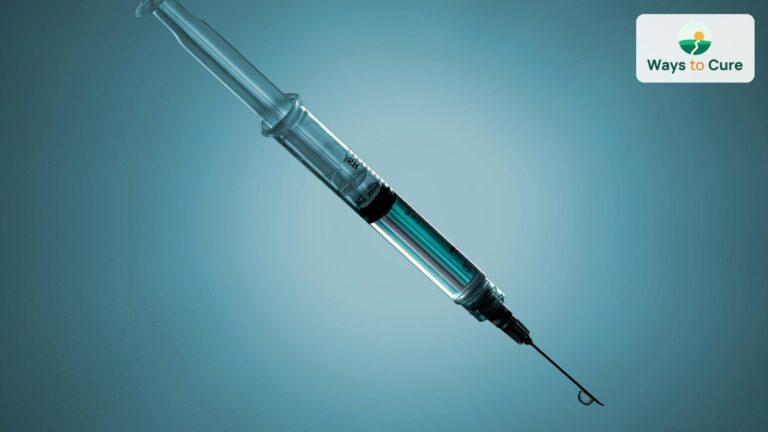
Yes, newborns need vitamin K, and the shot is the most reliable way to give it. Babies are born with very little vitamin K, and one injection in the thigh soon after birth prevents a rare but dangerous bleeding disorder that can cause bleeding into the brain.
This question is back in the news because more parents in the US are turning the shot down. Two large studies published in November 2026 linked missed shots to more bleeding in babies. Below is what the shot does, what the oral option involves, what the new research found, and the warning signs to know if your baby didn’t get it.
Why do newborns need vitamin K at all?
Vitamin K helps blood clot. Adults get it from leafy greens and from gut bacteria, but newborns start life short of it. According to the CDC, only small amounts cross the placenta, the gut bacteria that make vitamin K aren’t established yet, and breast milk contains little of it. Babies stay at higher risk until they start solid foods, usually around 4 to 6 months.
A University Hospital Southampton NHS factsheet puts it in numbers: at birth, a baby’s liver holds between 30% and 60% of the vitamin K stored by an adult.
Without enough vitamin K, a baby can develop vitamin K deficiency bleeding (VKDB), which used to be called haemorrhagic disease of the newborn. It can cause bleeding from the nose, mouth, umbilical stump or bowel, or bleeding inside the skull.
The three types of vitamin K deficiency bleeding
Doctors split VKDB by when it starts. The late type is the one that worries paediatricians most, because it often strikes with no warning in a baby who seems perfectly well.
| Type | When it happens | What it looks like |
|---|---|---|
| Early | First 24 hours | Severe bleeding, mainly in babies whose mothers took certain medicines in pregnancy, such as some seizure drugs or the TB drug isoniazid |
| Classical | Day 2 to day 7 | Bruising, bleeding from the umbilical cord stump, blood in vomit or stool |
| Late | 1 week to 6 months, most often 2 to 8 weeks | Brain bleeding in about 30% to 60% of cases; mostly breastfed babies who didn’t get vitamin K |
The CDC estimates that babies who don’t get the shot are 81 times more likely to develop late VKDB than babies who do. The NHS Southampton factsheet says that when the right dose is given at the right time, the chance of VKDB drops to about 1 in 100,000.
What the November 2026 studies found
Two US studies came out on 5 November 2026, both using electronic health records from hospitals on the Epic system.
- The JAMA study followed about 5.24 million babies born between 2017 and 2025. As AABB’s summary reports, 4.5% didn’t receive vitamin K at birth. Those babies had a 47% higher risk of bleeding in their first six months. The researchers estimated one extra baby with bleeding for every 114 newborns who missed vitamin K.
- The JAMA Pediatrics study looked at more than 11 million babies. Recorded VKDB diagnoses rose from 24 to 107.4 per 100,000 babies between 2017 and 2025, while the share of babies recorded as getting the shot fell from 97.7% to 95%.
Both studies show a link, not proof that the missed shots caused every extra case. Health records can contain coding errors, and the data only cover hospitals that use Epic. Still, the direction matches what an earlier Children’s Hospital of Philadelphia study found: refusals rose from 2.92% of US newborns in 2017 to 5.18% in 2024.
Is the vitamin K shot safe?
Yes. The shot is a single dose of vitamin K, a nutrient that’s also in vegetables, meat, dairy and eggs. The American Academy of Pediatrics has recommended it for more than 50 years and calls it safe and effective.
The common worry comes from the 1990s, when a study raised a possible link with childhood cancer. The AAP says that multiple large studies since then have found no evidence for that link.
Side effects are what you’d expect from any injection: a moment of pain, and sometimes a little bleeding or a bruise where the needle went in. The NHS factsheet notes that infection at the injection site is rare.
If you want uninterrupted skin-to-skin time first, the CDC says the shot can wait up to 6 hours after birth.
Vitamin K shot vs oral drops
This is where advice differs by country. In the US, the AAP doesn’t recommend oral vitamin K because babies absorb it poorly. In the UK, parents are offered a choice between the injection and drops by mouth, though the injection is preferred.
| Injection | Oral drops (UK-style schedule) | |
|---|---|---|
| Number of doses | One | Two or three |
| Dose | 1 mg into the thigh muscle (AAP, for babies over 1,500 g / 3.3 lb) | 2 mg at birth, 2 mg at 4 to 7 days, and for exclusively breastfed babies, 2 mg at 1 month |
| How long protection lasts | Longer, because the vitamin is stored in the muscle and released slowly | Shorter; depends on every dose being given and absorbed |
| Who can’t use it | Very few babies | Not suitable for premature or unwell babies, who get the injection |
| Common problems | Brief pain, small bruise | Missed later doses; baby spits it out |
The UHS factsheet gives practical rules for the drops. Give them right after a breast milk or formula feed, because the fat helps absorption. If your baby spits the dose out or vomits within three hours, it needs repeating. Formula-fed babies only need two doses because vitamin K is added to formula.
The weak point of the oral route is the third dose. It’s given at home a month after birth, and it’s easy to forget during those exhausting weeks. Late VKDB peaks at 2 to 8 weeks, which is exactly the window the later doses are meant to cover.
Which babies are at higher risk?
The NHS factsheet lists these risk factors:
- Premature birth
- A complicated or difficult delivery
- Needing surgery, including tongue-tie release
- Being unwell for any reason
- Liver disease, which can show up as jaundice that won’t clear, pale stools or dark urine
- Trouble feeding or absorbing feeds
- A mother who took seizure medicines or blood thinners during pregnancy
About a quarter of babies who bleed have no risk factor at all. That’s why the recommendation covers every baby, not only high-risk ones.
If you take anticonvulsants or anticoagulants, tell your obstetrician before the birth. Your baby will need vitamin K as soon as possible, and your doctor may suggest you take vitamin K in late pregnancy too.
Questions to settle before the birth
You’ll be asked about vitamin K minutes after delivery, which isn’t a great time to weigh evidence. Decide in advance, and add it to your birth plan alongside the other newborn and pregnancy decisions, such as which vaccines to get while pregnant.
- Do I want vitamin K for my baby? (Every major paediatric body says yes.)
- Injection or drops? If drops, who gives the second and third doses, and where do I get them?
- Can the shot be given after the first feed or skin-to-skin?
- Am I taking any medicine that affects my baby’s vitamin K?
If you’re unsure about routine newborn care more generally, a paediatrician can walk you through the evidence, the same way they would for the MMR vaccine later on.
Get emergency help if…
If your baby didn’t have vitamin K, or had only part of the oral course, learn these signs. The CDC says that in most cases there is no warning before a serious bleed, so don’t wait for several signs together.
Call your local emergency number (911 in the US, 999 in the UK, 112 in the EU and India) or go straight to hospital if your baby has:
- Unusual sleepiness, floppiness, or being hard to wake
- A seizure, or repeated forceful vomiting
- Unusual irritability
- Vomit with blood in it, or black, tarry or bloody stools
See a doctor the same day if you notice:
- Bruises, especially on the head or face, without a clear cause
- Bleeding from the nose or umbilical stump
- Paler skin than usual (or pale gums in babies with darker skin)
- Yellow whites of the eyes after 3 weeks of age, or pale stools and dark urine
Tell the doctor straight away that your baby didn’t have vitamin K. Treatment is vitamin K, sometimes with blood products, and babies without brain bleeding usually recover well. If your baby also has breathing trouble or fever, our guide to danger signs in children under 5 covers what to watch.
Frequently asked questions
Can I give my baby vitamin K drops instead of the shot?
In some countries, such as the UK, yes, as long as all doses are given on time. US paediatricians advise against it because absorption is unreliable. Premature or sick babies should have the injection.
Does breastfeeding give my baby enough vitamin K?
No. Breast milk has only a small amount, and exclusively breastfed babies are the group most at risk of late VKDB. Breastfeeding is still the best food for your baby; it just doesn’t replace vitamin K at birth.
Can my baby still get vitamin K if we skipped it at birth?
Yes. Talk to your paediatrician or GP soon. They can give the injection or arrange oral doses. The NHS factsheet notes that babies later found to be at high risk may get an injection or weekly 1 mg drops for at least 12 weeks.
Should I take vitamin K in pregnancy instead?
Not routinely. Very little crosses the placenta. Your doctor might prescribe it in late pregnancy only if you take medicines that interfere with vitamin K, and your baby will still need it after birth.
Does the vitamin K shot cause cancer?
No. That concern came from a 1990s study. The AAP says large studies since then have found no link.
This article is for general information and is not a substitute for advice from a doctor. If you have symptoms or a health condition, please consult a qualified healthcare professional.