A hickey is a bruise, so there’s no instant fix: most fade on their own within a few days to two weeks. You can help it along with a wrapped cold pack while it’s fresh, then warm compresses after that, and you can hide it while it heals. Skip the viral tricks like toothpaste, coin scraping or lemon juice, which can make the mark worse.
What a hickey actually is
A hickey (love bite) forms when suction or a bite breaks tiny blood vessels just under the skin. Blood leaks into the surrounding tissue and shows up as a red, purple or dark patch. Cleveland Clinic describes it as a bruise that sits in the dermis, the second layer of skin.
Like any bruise, it changes colour as your body breaks down and clears the trapped blood, and then fades. On brown skin, it may look dark brown or purplish rather than red.
Because hickeys are shallow, they often clear faster than a bump on the shin. Cleveland Clinic puts the usual healing time for bruises at three days to two weeks.
Step 1: Cold, while it’s fresh
Cold is most useful right at the start. Cleveland Clinic’s dermatologist says ice mainly helps in the first few minutes after a hickey appears, so don’t expect it to shift a mark that has already settled.
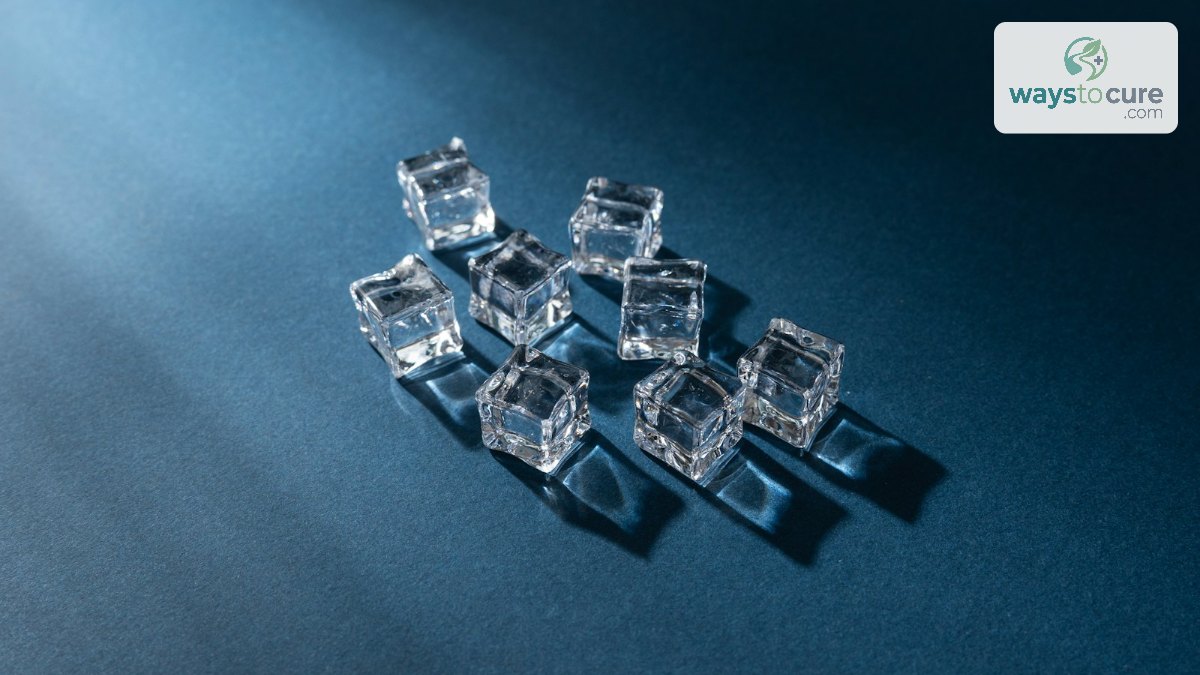
- Wrap ice cubes, a cold pack or a packet of frozen peas in a thin cloth. Never put ice directly on skin; MedlinePlus advises keeping a towel between the ice and your skin.
- MedlinePlus advises applying ice to a bruise for up to 15 minutes each hour.
- A steel spoon chilled in the fridge is an easy option for a small mark on the neck. Keep it cool, not frozen, and don’t press hard.
- Use cold on and off through the first day or so.
Step 2: Warmth, once it’s settled
After the first day or so, switch to warmth. Warm compresses are Cleveland Clinic’s main recommendation for the rest of the healing period. They suggest:
- Soak two washcloths in water that’s warmer than bathwater but nowhere near boiling.
- Hold one on the hickey until it cools to room temperature, then swap to the second, for 15 to 20 minutes in total.
- Repeat up to four times a day until it fades.
Test the cloth on your wrist first. The skin on your neck is thin, and too-hot water can scald it.
Creams: arnica and vitamin K (the evidence is weak)
You’ll see arnica gels and vitamin K creams sold for bruises. Here’s what the research shows:
- Arnica: In a small randomised trial in the British Journal of Dermatology, volunteers had small bruises made on their arms with a laser. Bruises treated twice daily with 20% arnica ointment improved more than those treated with plain petroleum jelly. That’s a laboratory-style bruise, not a hickey, and the study was small.
- Vitamin K: In the same trial, arnica did no better than 5% vitamin K cream, but it did beat a low-strength vitamin K and retinol mix. Cleveland Clinic advises using vitamin K on the skin, not as tablets.
So these creams might speed things up slightly, but don’t expect a dramatic difference. Avoid arnica if you take blood thinners, don’t put it on broken skin, and stop if the area gets itchy or red. Don’t take vitamin K tablets for a bruise; Cleveland Clinic notes that taking it by mouth carries more risks than using it on the skin. If you take any blood-thinning medicine, ask your doctor before trying either product.
Hickey myths that don’t work (and some that hurt)
| Myth | What actually happens |
|---|---|
| Rubbing toothpaste on it | No scientific support. Toothpaste can irritate the thin skin on your neck. |
| Scraping with a coin, comb or fork | Cleveland Clinic warns this can cause scratches, bleeding, more discolouration or even scarring. |
| Lemon juice, then going out in the sun | Lime and lemon juice contain chemicals that react with sunlight. DermNet explains that this phytophotodermatitis can make skin red and blistered, and the dark marks left behind may last for years. |
| Ice held directly on the skin “works faster” | It doesn’t, and bare ice can hurt the skin. Always wrap it in a cloth. |
A study in the Annals of Dermatology also notes that citrus fruits such as lime, lemon and grapefruit can leave brown patches after sun exposure even without an obvious burn first. On brown skin, that’s the last thing you want on your neck.
How to cover a hickey while it heals
- Clothing: a collared shirt, a light scarf, a dupatta or a high-neck kurta.
- Hair: leave longer hair loose over the side of your neck.
- Makeup: concealer works well. Many people use a colour-correcting shade first (peach or orange tones for purple marks on brown skin, green for redness on lighter skin), then pat their usual concealer or foundation on top and set it with powder.
- A plaster or bandage: works for a small mark, though it may draw more questions than it answers.
Use clean makeup and remove it gently at night. If you’re out in the sun, sunscreen on the area is a sensible habit, as covered in our daily skin habits guide.
A quick plan by day
- Straight away and on day 1: wrapped cold pack, up to 15 minutes at a time.
- From day 2: warm washcloth compresses, up to four times a day.
- Any time: cover with clothing or concealer if you want to.
- If it’s still there after about two weeks, or new bruises keep appearing, see a doctor.
The same cold-then-warm approach is used for other bruises, such as a black eye.
When to see a doctor
A hickey on its own is harmless. But bruising that doesn’t fit what happened needs checking. MedlinePlus advises contacting a doctor if you are bruising without any injury, fall or other reason. See a doctor if you notice:
- Bruises appearing without a clear cause, or much bigger than expected for a minor knock.
- Bleeding gums when there’s no obvious dental cause, or frequent nosebleeds.
- Tiny red or purple dots on the skin (petechiae) that don’t fade when you press on them.
- Bruising along with tiredness, pale skin, night sweats, fever or frequent infections.
- A bruise that hasn’t faded after two weeks.
- Redness spreading from the area, pus, or fever, which can mean infection.
- You bruise easily and take blood thinners such as aspirin or warfarin. Don’t stop the medicine; talk to your doctor.
Leukaemia UK points out that in most cases, bruising is not caused by leukaemia, and that bleeding gums are more often due to gum disease or brushing too hard. Still, unexplained bruising and bleeding are worth a simple blood test called a complete blood count (CBC), which checks your platelets. For gum health, see our piece on foods for oral health, and see a dentist if your gums bleed regularly.
Frequently asked questions
Can you get rid of a hickey overnight?
No. Cold, warmth and creams may shorten the time slightly, but a bruise needs days for your body to clear the blood. Covering it is the only same-day option.
Does a cold spoon really help?
A chilled spoon is just a small cold compress. It may help a little if used early, but it won’t remove a hickey that’s already formed.
Are hickeys dangerous?
Generally no. They’re small, shallow bruises. See a doctor if you bruise easily without reason or notice the other warning signs above.
Does aloe vera help a hickey?
Probably not much. Cleveland Clinic’s dermatologist says aloe offers little help, because a hickey involves very little inflammation.
What if a hickey happened without my consent?
No one should mark or hurt you without your agreement. If you feel unsafe, call 112. For emotional support, India’s Tele-MANAS helpline is 14416.
This article is for general information and is not a substitute for advice from a doctor. If you have symptoms or a health condition, please consult a qualified healthcare professional.