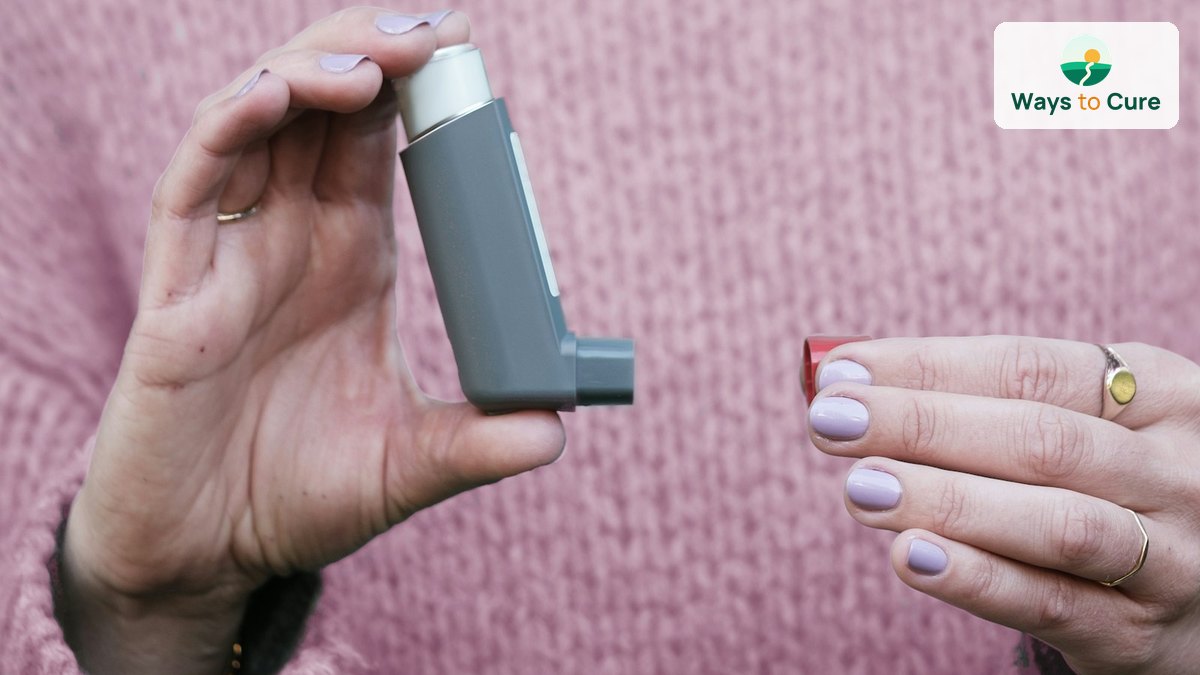
To use an inhaler with a spacer, shake the inhaler, fit it into the back of the spacer, seal your lips around the mouthpiece, press the canister once, and then either take one slow deep breath and hold it for up to 10 seconds, or breathe in and out normally about five times. One puff at a time, every time.
That’s the short version. The details matter, though, because small slips like pressing twice, breathing too fast or rubbing the spacer dry can mean far less medicine reaches your lungs. Here’s the full method for adults and older children, with the common mistakes and how to look after the spacer.
Why a spacer helps
A spacer is a plastic tube or chamber that sits between your inhaler and your mouth. According to Asthma + Lung UK, it helps more medicine reach your lungs, wastes less, makes the inhaler easier to use, and can reduce side effects from steroid (preventer) inhalers, such as a sore mouth or thrush.
Spacers only work with pressurised metered dose inhalers (pMDIs), the “puffer” type with an aerosol canister. If you use a dry powder inhaler or a breath-actuated inhaler, you don’t need one.
What you need
- Your metered dose inhaler (reliever, preventer or combination)
- A spacer that fits it. Most are universal, but check with your pharmacist
- A face mask attachment, only if you’re helping a baby, toddler or someone who can’t seal their lips around a mouthpiece
- A glass of water, if your inhaler contains a steroid
Before you start: test a new or unused inhaler
If the inhaler is new or you haven’t used it for a few days, test it by spraying one puff into the air, away from your face. The Asthma + Lung UK guide says you don’t need to do this before every use. Check your inhaler’s leaflet, as some brands need more than one test spray.
Look at the dose counter too. MedlinePlus, from the US National Library of Medicine, notes that the old “float the canister in water” test doesn’t work, so don’t rely on it.
How to use an inhaler with a spacer: step by step
- Take the cap off the inhaler and check the mouthpiece is clean and empty.
- Shake the inhaler well. Four or five firm shakes is a good rule of thumb.
- Fit the inhaler into the back of the spacer. If your spacer has a valve, make sure it’s facing the right way (usually upwards). Remove the spacer’s mouthpiece cap if it has one.
- Sit or stand up straight and tilt your chin up slightly. This opens your airway.
- Breathe out gently, away from the spacer.
- Seal your lips around the mouthpiece. No gaps at the corners.
- Press the canister once to release a single puff into the spacer.
- Breathe in using one of two methods:
- Single breath and hold: breathe in slowly and steadily until your lungs are full (roughly 3 to 5 seconds), take the spacer out, and hold your breath for up to 10 seconds if comfortable. Then breathe out slowly.
- Tidal breathing: keep your lips sealed and breathe in and out normally about five times. This is easier for children, older adults, or anyone who’s breathless.
- If you need a second puff, take the spacer away from your mouth, wait about a minute, shake the inhaler again, and repeat steps 6 to 8.
- Put the caps back on the inhaler and spacer.
- If your inhaler contains a steroid, rinse your mouth with water, gargle and spit it out.
Guidance on the gap between puffs varies a little. Asthma + Lung UK suggests about one minute. MedlinePlus says to wait 1 to 2 minutes between puffs of a quick-relief (reliever) inhaler, while other medicines don’t need a wait. Follow what your doctor, nurse or pharmacist told you for your inhaler.
Single breath vs tidal breathing
| Single breath and hold | Tidal breathing | |
|---|---|---|
| Best for | Adults and older children with good breath control | Young children, older adults, anyone breathless |
| How you breathe | One slow deep breath, then hold up to 10 seconds | About 4 to 5 normal breaths through the spacer |
| Sign you’re doing it right | No whistle (whistling means you’re breathing in too fast) | A soft click as the valve opens and closes |
| Puffs per go | One | One |
Common mistakes
- Pressing two puffs into the spacer at once. The medicine clumps and sticks to the walls. Always one puff, then breathe.
- Not shaking the inhaler. The medicine and propellant may not mix properly.
- Waiting too long after pressing. Breathe in straight away. If you wait, more of the medicine settles on the spacer walls instead of reaching your lungs.
- Breathing in too fast. Some spacers whistle to warn you. Slow and steady is the goal.
- A loose seal. If air leaks at the sides, you lose part of the dose.
- Skipping the mouth rinse after a steroid inhaler. This raises the risk of oral thrush and a hoarse voice.
- Drying the spacer with a towel. Rubbing creates static, which makes the medicine cling to the plastic.
How to clean and replace your spacer
Advice differs slightly by country and brand, so check your spacer’s leaflet first. In general:
- Clean it before first use and then regularly. Asthma + Lung UK suggests about once a month; National Asthma Council Australia suggests weekly and after you’ve had a cold or chest infection.
- Take it apart and wash it gently in warm (not boiling) water with a little washing-up liquid. Don’t scrub the inside.
- Many brands say not to rinse, leaving a thin soapy film that reduces static. Others say to rinse. Follow your leaflet.
- Let it air dry completely. Don’t wipe the inside with a cloth or paper towel.
- Wipe the mouthpiece before you use it again.
- Replace it at least once a year, sooner if you use it daily, if it cracks, or if a rubber valve goes stiff.
Get emergency help if…
If you’re having an asthma attack, the NHS advises sitting up straight, staying as calm as you can, and taking 1 puff of a blue reliever inhaler every 30 to 60 seconds, up to 10 puffs, using a spacer if you have one. If you use an AIR or MART combination inhaler, the NHS advice is 1 puff every 1 to 3 minutes, up to 6 puffs. Follow your personal asthma action plan if it says something different.
Call your local emergency number (911 in the US, 999 in the UK, 112 in the EU and India) if:
- you feel worse at any point
- you don’t feel better after the maximum puffs
- you don’t have your inhaler
If help hasn’t arrived after 10 minutes and you’re still struggling, the NHS says you can repeat the reliever doses. Don’t drive yourself to hospital.
When to get professional help
- You’re using your reliever more often than usual, or asthma is waking you at night.
- You’re not sure your technique is right. A pharmacist can check it, often without an appointment.
- Your spacer doesn’t seem to fit your inhaler properly.
- A child is struggling to use the mouthpiece and may need a mask.
Winter colds, flu and air pollution are common triggers. Our asthma checklist for patients and families and guide to pollution and asthma warning signs in children cover what to watch for, and our flu season guide explains why vaccination matters if you have asthma.
Frequently asked questions
Can adults use a spacer, or is it just for children?
Adults can and often should. Spacers help anyone get more medicine into their lungs, and they’re especially useful during an asthma attack or with steroid inhalers.
How many breaths should I take with a spacer?
Either one slow deep breath held for up to 10 seconds, or about four to five normal breaths (tidal breathing) for each puff.
Can I put two puffs in the spacer at the same time?
No. Put in one puff, breathe it in, then repeat. Two puffs at once leaves more medicine stuck to the spacer walls.
Do I need a spacer with a dry powder inhaler?
No. Spacers are only for pressurised metered dose inhalers. Dry powder inhalers rely on you breathing in quickly and deeply on your own.
How often should I replace my spacer?
At least once a year, or sooner if you use it daily, it’s damaged, or its valve gets stiff. Check your spacer’s leaflet for the brand’s advice.
This article is for general information and is not a substitute for advice from a doctor. If you have symptoms or a health condition, please consult a qualified healthcare professional.