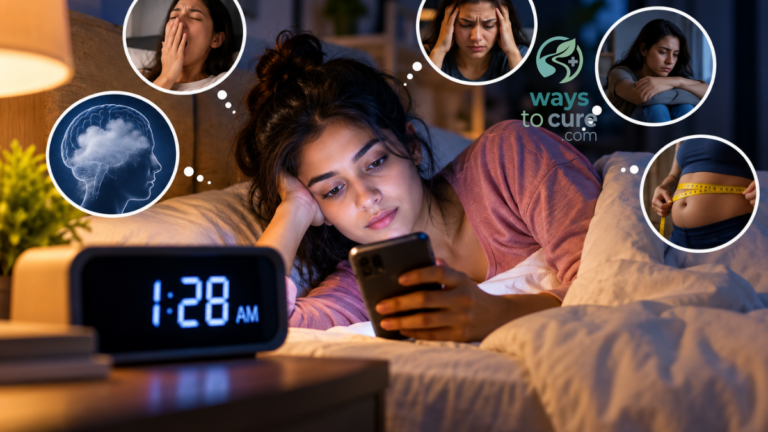
For most healthy adults, taking melatonin every night for a few weeks looks fairly safe, but nobody knows whether nightly use for months or years is safe, and it’s not a good long-term fix for ongoing insomnia. If you’ve been reaching for it most nights for more than a month or two, that’s the point to stop and work out why you can’t sleep.
Melatonin feels harmless because it’s a hormone your own body makes, and in the US it sits on supermarket shelves next to vitamin C. That’s part of the problem. Here’s what the evidence actually says about nightly use, what the new heart study means, and better options if you’re stuck in a cycle of poor sleep.
What melatonin does (and doesn’t do)
Your brain releases melatonin as it gets dark. It doesn’t knock you out like a sleeping pill. It works more like a signal that says “it’s night now”, nudging your body clock toward sleep.
That’s why it helps most with timing problems, like jet lag or a body clock that runs very late, and much less with classic insomnia, where you’re tired but your mind won’t switch off or you wake at 3 a.m. According to the US National Center for Complementary and Integrative Health (NCCIH), there isn’t enough strong evidence on how well melatonin works, or how safe it is, for chronic insomnia.
Is short-term use safe?
Mostly, yes. NCCIH says short-term use appears to be safe for most people, and a 2015 review of short-term studies found only mild side effects. The ones people report most:
- Daytime sleepiness or a “hungover” feeling the next morning
- Headache
- Dizziness
- Nausea
The NHS also lists stiff or painful joints as a common side effect. Don’t drive, cycle or use machinery while you still feel drowsy after a dose.
What about taking it every night for months?
This is where the honest answer is “we don’t know”. NCCIH states plainly that information on the long-term safety of melatonin supplements is lacking. Most trials ran for weeks, not years.
In November 2025, a study presented at the American Heart Association’s Scientific Sessions added a reason for caution. Researchers looked at health records of 130,828 adults with insomnia. Those whose records showed melatonin use for 12 months or more were compared with matched non-users over five years. The AHA’s summary reported:
| Outcome over 5 years | Long-term melatonin users | Non-users |
|---|---|---|
| New heart failure diagnosis | 4.6% | 2.7% |
| Hospital stay for heart failure | 19.0% | 6.6% |
| Death from any cause | 7.8% | 4.3% |
Those numbers sound alarming, so read the small print. This was a conference abstract, not yet peer-reviewed. It shows a link, not proof that melatonin caused heart problems. People who needed melatonin for a year or more may have had worse insomnia, depression or anxiety, all of which can affect the heart. And because melatonin is sold over the counter in the US, many “non-users” were probably taking it without it showing in their records.
So the study doesn’t mean one tablet will harm your heart. It does mean “it’s natural, so it’s fine forever” isn’t a safe assumption, and that’s the same conclusion NCCIH reached before the study came out.
Why the dose on the label may not be the dose you get
In the US, melatonin is sold as a dietary supplement, which means it doesn’t go through drug-style approval for strength and purity. The difference shows. NCCIH describes a 2023 study in which 22 of 25 melatonin gummy products were inaccurately labelled, and the actual melatonin content ranged from 74% to 347% of what the label claimed. In other words, a gummy marked 5 mg could contain several times that.
Rules differ by country. In the UK, melatonin is prescription-only, so you get a licensed medicine with a known dose. If you live somewhere it’s sold as a supplement, pick a product that carries an independent quality-testing seal, and avoid gummies if you’re trying to control the dose.
Who should avoid melatonin or check first
Talk to a doctor or pharmacist before using melatonin if any of these apply:
- Epilepsy: both NHS and NCCIH say people with epilepsy need medical supervision.
- Blood thinners such as warfarin: melatonin can interact, so you’ll need monitoring.
- Liver or kidney problems, or an autoimmune condition such as lupus or psoriasis (NHS lists these).
- Pregnancy, trying to conceive, or breastfeeding: the NHS says it isn’t usually used. If you’re breastfeeding, don’t share a bed with your baby after taking anything that makes you drowsy.
- Other medicines the NHS names as possible interactions: fluvoxamine and some other antidepressants, carbamazepine, zopiclone, the combined contraceptive pill, HRT and anti-inflammatory painkillers such as ibuprofen.
- Children: there aren’t many studies, and NCCIH notes open questions about effects on puberty and hormones. Don’t give it to a child without a doctor’s advice.
Skip alcohol too. The NHS says it can stop melatonin working properly and make side effects worse. Our piece on alcohol limits and medicines explains why mixing the two is a bad idea in general.
When melatonin is a reasonable choice
There are situations where it makes sense:
- Jet lag: NCCIH reports melatonin may beat a placebo for jet lag symptoms, especially after flying east.
- A late-running body clock (delayed sleep phase), where you can’t fall asleep until 2 or 3 a.m. One trial NCCIH cites used melatonin one hour before the desired bedtime, combined with a fixed bedtime.
- A short reset, such as a week or two after travel or a run of late nights.
For shift work, the evidence is weak. One review found people slept about 24 minutes longer during the day, but the studies were small and low quality.
If you do take it, take it about 30 minutes to an hour before bed (the NHS timing for its liquid form), use the lowest dose that helps, and set yourself an end date.
What works better for long-term insomnia
If you’ve had trouble sleeping on most nights for months, the first-choice treatment isn’t a pill. The American College of Physicians recommends cognitive behavioural therapy for insomnia (CBT-I), according to NCCIH. It’s a structured programme, delivered in person, online or through apps, that retrains your sleep habits and the worry loop around sleep.
Things you can start tonight:
- Get up at the same time every day, including weekends. This anchors your body clock more than a fixed bedtime does.
- Get daylight in the first hour after waking, especially in winter.
- Only go to bed when you’re sleepy. If you’re lying awake for what feels like 20 minutes, get up and do something dull in dim light, then go back.
- Cut caffeine after lunch.
- Keep screens out of the last half hour before bed.
Our guide to resetting your sleep after a run of late nights walks through a one-week plan, and these warning signs show when a late sleep pattern is starting to cause harm.
When to see a doctor
See a doctor if:
- You’ve had trouble sleeping on most nights for more than a few months.
- You need melatonin most nights for more than a few weeks to sleep at all.
- You snore loudly, gasp or stop breathing in your sleep (someone else may notice this first), or you’re very sleepy in the daytime despite a full night in bed. These can point to sleep apnoea, which melatonin won’t fix.
- Your poor sleep comes with low mood, loss of interest in things, or anxiety. Winter can make this worse; see our article on winter blues and seasonal depression.
Get urgent help (call your local emergency number: 911 in the US, 999 in the UK, 112 in the EU and India) if you have chest pain, a seizure, fainting or signs of a severe allergic reaction after taking melatonin. If you’re having thoughts of harming yourself, contact a crisis line now: 988 in the US, Samaritans on 116 123 in the UK, or Tele-MANAS on 14416 in India.
Frequently asked questions
Can you get addicted to melatonin?
Melatonin isn’t usually thought of as habit-forming in the way some prescription sleeping pills are. The more common trap is relying on it every night instead of fixing the cause of your poor sleep.
Does melatonin stop your body making its own?
There isn’t good evidence either way from long-term human studies, which is part of why long-term safety is uncertain.
How long can I take melatonin for?
There’s no agreed limit. Short courses of a few weeks have the best safety data. If you need it beyond that, check in with a doctor rather than carrying on indefinitely.
Is melatonin safe with other sleep aids?
Don’t combine it with other sleeping tablets such as zopiclone, or with sedating antihistamines or alcohol, unless a doctor has told you to. The drowsiness can add up.
Should I stop melatonin because of the heart failure study?
If you take it now and then for jet lag or a short reset, the study doesn’t change much. If you’ve used it nightly for a year or more, especially with heart disease risk factors, talk to your doctor about whether you still need it and what else could help.
This article is for general information and is not a substitute for advice from a doctor. If you have symptoms or a health condition, please consult a qualified healthcare professional.