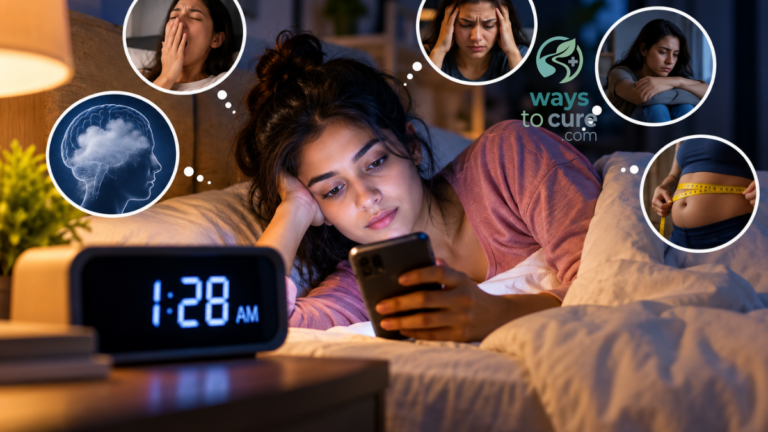
The fastest way to recover from a week of late festival nights is to fix your wake-up time first, not your bedtime: get up at your normal workday time for three days in a row, get daylight soon after, and stop caffeine by early afternoon. Sleeping till noon to “catch up” feels good on the day but usually makes the first workday morning harder.
Between Dhanteras on Friday, Choti Diwali on Saturday and Diwali tonight, plenty of people will have been up past 1 am three nights running, with card parties, crackers and a late dinner. Here’s how to get back to normal without a week of foggy mornings.
Why a few late nights throw your body clock off
Your body runs on a roughly 24-hour cycle controlled by a master clock in the brain, a cluster of nerve cells called the suprachiasmatic nucleus. According to the US National Institute of General Medical Sciences, light and dark have the biggest influence on this clock. The clock uses the light reaching your eyes to time the release of melatonin, the hormone that rises in the evening and makes you sleepy. Meals, exercise, temperature and social activity nudge it too.
Festival week pushes all of these later at once: bright lights and screens until midnight, dinner at 11, then lying in until the sun is high. Your clock gets the message that “night” now starts later, so when you try to sleep at your usual time, your body isn’t ready yet.
Social jetlag: why a long Sunday lie-in makes Monday worse
Researchers call the gap between your body’s preferred timing and the timing your work or school demands social jetlag. A 2012 study in Current Biology by Till Roenneberg’s group linked social jetlag to a higher body mass index, beyond the effect of how many hours people slept. It’s like flying a couple of time zones west every weekend and flying back every Monday.
A controlled lab study shows how this plays out. In a 2019 Current Biology trial, 36 healthy adults were put on 5-hour nights during the week. One group then got a weekend of unrestricted sleep before going back to short nights. The extra weekend sleep didn’t prevent weight gain or reduced insulin sensitivity, and their body clocks drifted later: by the time they were back on short sleep after the weekend, melatonin was rising about 1.7 hours later than at the start. In plain terms, the lie-in moved their internal “bedtime” later, right before they needed to wake early again.
So if you sleep from 3 am to 11 am on Diwali night and then try for 11 pm on Monday, you may lie awake until 1 am and start the week short on sleep. The fix is to anchor the morning.
A 3-day reset plan
Use this from the first morning after the festivities. Adjust the times to your own schedule, but keep the wake-up time the same every day, including any holiday.
| Day 1 | Day 2 | Day 3 | |
|---|---|---|---|
| Wake up | Normal workday time, even if you slept late | Same time | Same time |
| Morning | Open curtains, step outside for daylight, have breakfast | Same, add a walk if you can | Same |
| Caffeine | Last chai or coffee by about 2 pm | Same | Same |
| Nap | If you must, one nap of 20 to 30 minutes, early afternoon | Try to skip it | Skip |
| Dinner | Light (dal, sabzi, roti or khichdi), 2 to 3 hours before bed | Same | Same |
| Evening | Dim the lights an hour before bed, phone away | Same | Same |
| Bedtime | When you feel sleepy, even if later than usual | Aim 30 to 60 minutes earlier | Back to your usual time |
Day 1 is usually the worst because you’ll be short of sleep. That’s fine: the tiredness builds “sleep pressure” that helps you fall asleep earlier on Day 2. Lying in bed wide awake for ages doesn’t help, so if sleep won’t come, get up, sit somewhere dim and quiet, and go back when you feel drowsy.
Keep dinner light and early this week. Heavy late meals of puri, biryani and leftover mithai make it harder to settle, and our 6 November article on late-night eating and your liver explains why the timing of food may matter for more than sleep.
Caffeine and naps: how late is too late?
Caffeine stays in your system longer than most people think. In a small but often-cited 2013 study in the Journal of Clinical Sleep Medicine, 400 mg of caffeine taken 6 hours before bed still cut sleep by more than an hour. The authors recommended avoiding substantial caffeine for at least 6 hours before bedtime. If you aim to sleep at 11 pm, that means your last strong coffee by 5 pm at the latest, and earlier is better while you’re resetting. Remember that strong chai, cola and energy drinks count too.
Naps are a mixed blessing during a reset. Cleveland Clinic sleep psychologist Alicia Roth advises keeping naps to 30 minutes or less and taking them earlier in the afternoon, because the later you nap, the more it eats into your night’s sleep. Dozing off on the sofa at 9 pm counts as a nap, so stay upright and busy in the evening.
Sleeping well in a noisy, smoky week
Crackers often carry on for a night or two after Diwali, and smoke can hang around for days. Some things that help:
- Noise: foam earplugs, a fan or white-noise app, and heavy curtains all reduce bursts of noise. For children and older family members, our article on protecting hearing from firecracker noise has more.
- Smoke: keep bedroom windows shut on bad-air nights and run an air purifier in the bedroom if you have one. If you have asthma, keep your reliever inhaler by the bed. Our guide on protecting your lungs at home when AQI is above 300 explains when to keep windows closed.
- Temperature: a closed room can get stuffy. A fan on low keeps air moving without opening windows.
- Alcohol: a nightcap may make you drowsy, but it’s not a sleep aid. If there was drinking last night, our guide to alcohol at festival parties covers safe limits and hangover myths.
Getting children back on track
Children feel festival nights more than adults, and the reset is the same: fix the wake-up time first. The American Academy of Sleep Medicine recommends these amounts of sleep in each 24 hours:
| Age | Recommended sleep |
|---|---|
| 4 to 12 months | 12 to 16 hours (including naps) |
| 1 to 2 years | 11 to 14 hours (including naps) |
| 3 to 5 years | 10 to 13 hours (including naps) |
| 6 to 12 years | 9 to 12 hours |
| 13 to 18 years | 8 to 10 hours |
A school-going child who needs to be up at 6.30 am should be asleep by around 9 to 9.30 pm to get even the low end of that range. Practical steps:
- Bring bedtime back by 15 to 30 minutes a night rather than all at once.
- Get them outdoors in the morning: a walk to the bus stop or play in the park.
- Switch off the TV and tablet an hour before bed, and keep the routine boring: bath, brushing, a story.
- Cut down on leftover sweets and cold drinks in the evening.
- Expect a few cranky days. That’s normal after a big break in routine.
When poor sleep needs a doctor
Most post-festival tiredness clears within a week. See a doctor if:
- Your snoring is loud and someone notices you stop breathing or gasp in your sleep. The US National Heart, Lung, and Blood Institute lists these, along with daytime sleepiness and headaches, as signs of sleep apnoea, which may need a sleep study.
- Trouble sleeping happens 3 or more nights a week and has lasted more than 3 months. That’s how the NHLBI defines chronic insomnia. A doctor may ask you to keep a sleep diary to work out what’s going on.
- You feel sleepy while driving, or nod off at work, even after the reset.
- Your sleep problems come with persistent low mood, worry or loss of interest. You can call Tele-MANAS on 14416 any time for free support.
- A child snores loudly most nights, seems to pause or gasp while breathing in sleep, or is unusually sleepy in the day.
Our earlier post on 5 warning signs sleeping late is harming you covers what long-term late nights do to energy, mood and focus.
Frequently asked questions
How long does it take to reset sleep after late nights?
After a short run of late nights, most people feel back to normal within a few days of a fixed wake-up time and morning light. It can take longer if your sleep timing was already late before the festival.
Should I sleep in to make up for lost sleep?
Keep any lie-in short. Sleeping several hours past your usual time pushes your body clock later and makes the next night harder, as the 2019 weekend recovery study showed.
Is it better to pull an all-nighter to reset?
No. Staying awake all night leaves you exhausted and less safe, especially if you drive, and doesn’t reset your clock any better than a fixed wake time.
Can I take melatonin to fix my sleep after Diwali?
Ask your doctor or pharmacist first, especially if you take other medicines. Timing and dose matter, and for a few late nights, a fixed wake-up time and morning light are usually all you need.
Why do I feel more tired after sleeping 10 hours?
A long sleep at the wrong time of day shifts your body clock, and waking from deep sleep can leave you groggy. A steady wake-up time usually works better than extra hours.
This article is for general information and is not a substitute for advice from a doctor. If you have symptoms or a health condition, please consult a qualified healthcare professional.