
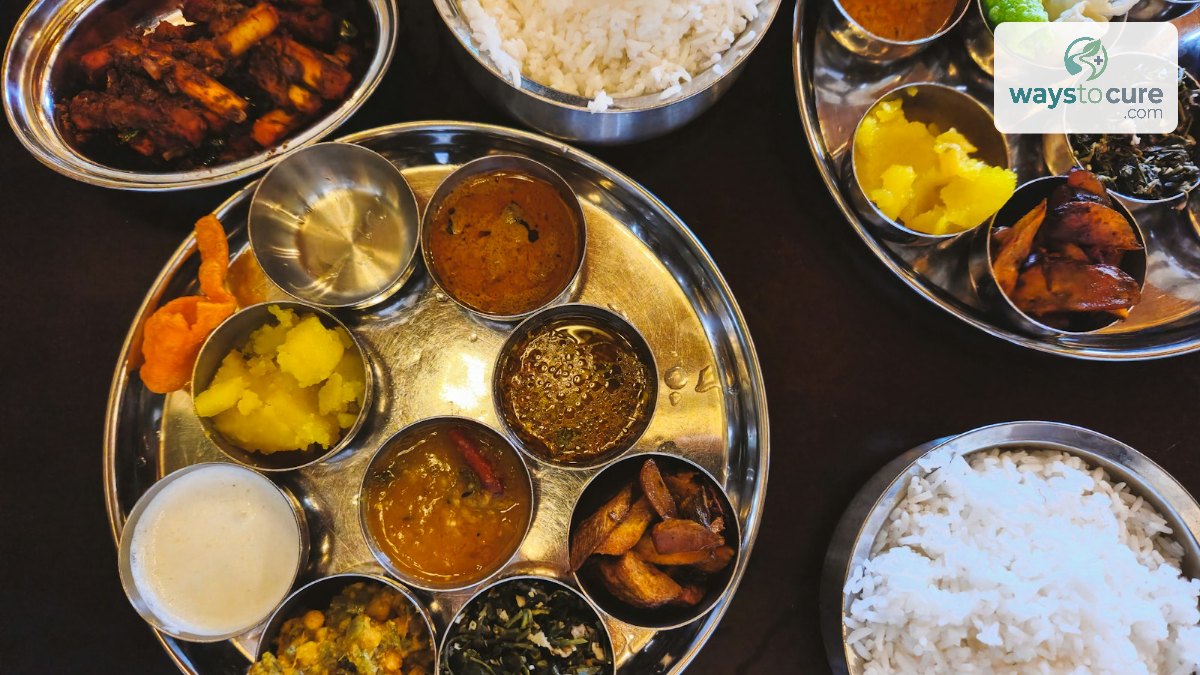
“Acidity” is what most people in India call the burning behind the breastbone, the sour taste in the throat and the heavy, gassy feeling after a big meal. Occasional acidity usually settles with a few changes to when and how you eat, but if it keeps coming back, it may be gastro-oesophageal reflux disease (GERD), which is worth getting assessed and treated properly rather than masking with antacids for years.
This guide covers what’s going on, the lifestyle steps that actually have evidence behind them, how the common acidity tablets differ, and the signs that mean you should see a doctor soon.
What “acidity” usually means
When people say “I have acidity”, they can mean a few different things:
- Heartburn: a burning feeling in the chest, often after meals or when lying down.
- Regurgitation: sour or bitter liquid coming up into the throat or mouth.
- Indigestion (dyspepsia): discomfort, fullness or burning in the upper tummy, sometimes with burping or nausea.
The first two point towards reflux, where stomach contents flow back up into the food pipe (oesophagus). The third can come from reflux too, but also from gastritis, an ulcer or other stomach problems. That difference matters, because the causes and the right tests aren’t the same.
Occasional reflux vs GERD
Everyone refluxes a little. The US National Institute of Diabetes and Digestive and Kidney Diseases (NIDDK) says having reflux once in a while is common and often causes no symptoms at all. GERD is the longer-lasting form, where reflux causes repeated, bothersome symptoms or leads to complications over time, such as inflammation of the oesophagus.
There’s no single number that turns acidity into GERD. In practice, if you’re getting heartburn or regurgitation most weeks, if it’s disturbing your sleep, or if you’re reaching for antacids several times a week, treat it as more than a minor nuisance.
Common triggers
Reflux happens when the valve at the bottom of the food pipe relaxes at the wrong time or is under extra pressure. Things that commonly make it worse:
- Large, late meals, especially heavy dinners followed by going straight to bed
- Extra weight around the tummy, and pregnancy
- Smoking and other tobacco use
- Personal trigger foods, which vary from person to person: for many Indians these include fried snacks like pakoras and samosas, very spicy curries, strong chai or coffee on an empty stomach, citrus, tomato-heavy gravies, chocolate and fizzy drinks
- Alcohol
- Painkillers such as ibuprofen, diclofenac and aspirin, which irritate the stomach lining
Painkillers deserve a special mention. NIDDK notes that NSAIDs such as aspirin and ibuprofen are a common cause of stomach ulcers, and ulcer pain is often mistaken for “acidity”. If you take these regularly for joint or back pain, tell your doctor about your acidity.
Lifestyle changes that have evidence behind them
The American College of Gastroenterology (ACG) published a detailed GERD guideline in 2022. It’s written for doctors, but the lifestyle advice is useful for everyone. Here’s what it recommends, and how strong the evidence is:
| Measure | What the ACG 2022 guideline says | What it looks like day to day |
|---|---|---|
| Lose weight if overweight | Recommended (strong recommendation, moderate evidence) | The only lifestyle step in the guideline with a strong recommendation |
| Avoid meals 2 to 3 hours before bed | Suggested (low evidence) | If you sleep at 11 pm, finish dinner by 8 to 8:30 pm |
| Stop smoking and tobacco | Suggested (low evidence) | Includes cigarettes, bidis and chewing tobacco |
| Avoid your trigger foods | Suggested (low evidence) | Keep a two-week food and symptom diary rather than cutting out everything |
| Raise the head of the bed | Suggested for night-time symptoms (low evidence) | Blocks under the bed legs or a wedge, not a pile of pillows |
The NHS adds a few practical points: eat smaller, more frequent meals, don’t eat within 3 or 4 hours of bed, and don’t drink too much alcohol. The ACG guideline also notes that lying on your right side tends to increase night-time reflux compared with your left side.
Notice what’s missing: there’s no strong evidence that you need to give up every spicy or sour food for life. Blanket food bans tend to fail. Find your own two or three triggers and cut those.
Antacids, H2 blockers and PPIs: how they differ
Most acidity tablets fall into three groups. NIDDK explains the differences clearly.
| Type | Examples | How it works | Best for | Limits |
|---|---|---|---|---|
| Antacids and alginates | Magnesium or aluminium hydroxide, calcium carbonate gels and chewables; alginate liquids | Neutralise acid already in the stomach; the NHS suggests taking them with or soon after food | Quick relief of occasional, mild symptoms | NIDDK advises against daily use or use for severe symptoms without talking to a doctor |
| H2 blockers | Famotidine | Reduce the amount of acid the stomach makes | Occasional symptoms; some people use them before a known trigger meal | Over-the-counter famotidine: no more than two tablets in 24 hours, and not for more than 2 weeks without a doctor’s advice |
| Proton pump inhibitors (PPIs) | Omeprazole, pantoprazole, rabeprazole, esomeprazole | Switch off acid production more strongly | Frequent symptoms, GERD, healing an inflamed oesophagus | Over-the-counter omeprazole: no longer than 14 days, and not more often than once every 4 months without a doctor |
NIDDK says PPIs are better than H2 blockers at treating GERD symptoms and healing the oesophagus. Timing matters with PPIs: the ACG recommends taking them 30 to 60 minutes before a meal (usually breakfast), rather than at bedtime.
In India, PPIs are easy to buy without a prescription and are often taken for months. That’s where problems start.
Long-term PPI use: what to know
PPIs are useful medicines, and for some people (for example, those with severe inflammation of the oesophagus or Barrett’s oesophagus) long-term use is the right choice. But they shouldn’t become a habit by default.
- For classic heartburn and regurgitation without warning signs, the ACG recommends an 8-week trial of a once-daily PPI, then trying to stop it if symptoms have settled.
- The American Gastroenterological Association advises that people with uncomplicated GERD who respond to short-term PPIs should try to stop or reduce them, and that anyone on long-term treatment should have their dose reviewed so they’re on the lowest one that works.
- MedlinePlus notes that people taking PPIs may be more likely to fracture the wrist, hip or spine, and may develop small growths called fundic gland polyps. These risks are highest with high doses or use for a year or longer.
Don’t stop a prescribed PPI suddenly on your own if a doctor started it for a specific reason. Instead, ask at your next visit if you still need it, and at what dose.
H. pylori: the infection behind some “acidity”
Helicobacter pylori is a bacterium that lives in the stomach lining. NIDDK lists it as a common cause of peptic ulcers. An ulcer can feel like acidity: a gnawing or burning pain in the upper tummy, sometimes better or worse with food.
This is one reason not to self-treat indefinitely. If your symptoms are mainly upper-tummy pain rather than chest burning, or they don’t settle, your doctor may test for H. pylori with a breath test, stool test or biopsy. The NHS notes that the bacteria can be treated with a combination of antibiotics and PPIs. That’s a prescription-only course; don’t try to piece it together from leftover antibiotics.
Burping that won’t stop can also be part of the picture; this overview of reasons for excessive burping covers some related causes.
When to see a doctor
Book an appointment if:
- You have heartburn most days, or it’s waking you at night
- Pharmacy medicines and lifestyle changes haven’t helped after 2 weeks
- You’ve needed antacids or PPIs on and off for months
- You take NSAID painkillers regularly
See a doctor promptly if you have any of the alarm symptoms the ACG lists, as these usually need an endoscopy:
- Difficulty swallowing, or food sticking on the way down
- Weight loss you can’t explain
- Repeated vomiting
- Signs of bleeding, or anaemia (tiredness, breathlessness, pale skin; see our guide to iron deficiency symptoms)
Go to hospital or call 112 straight away if:
- You vomit blood, or vomit that looks like coffee grounds
- Your stools are black and tarry, or have red or maroon blood in them
- You have sudden, sharp or severe tummy pain that doesn’t go away
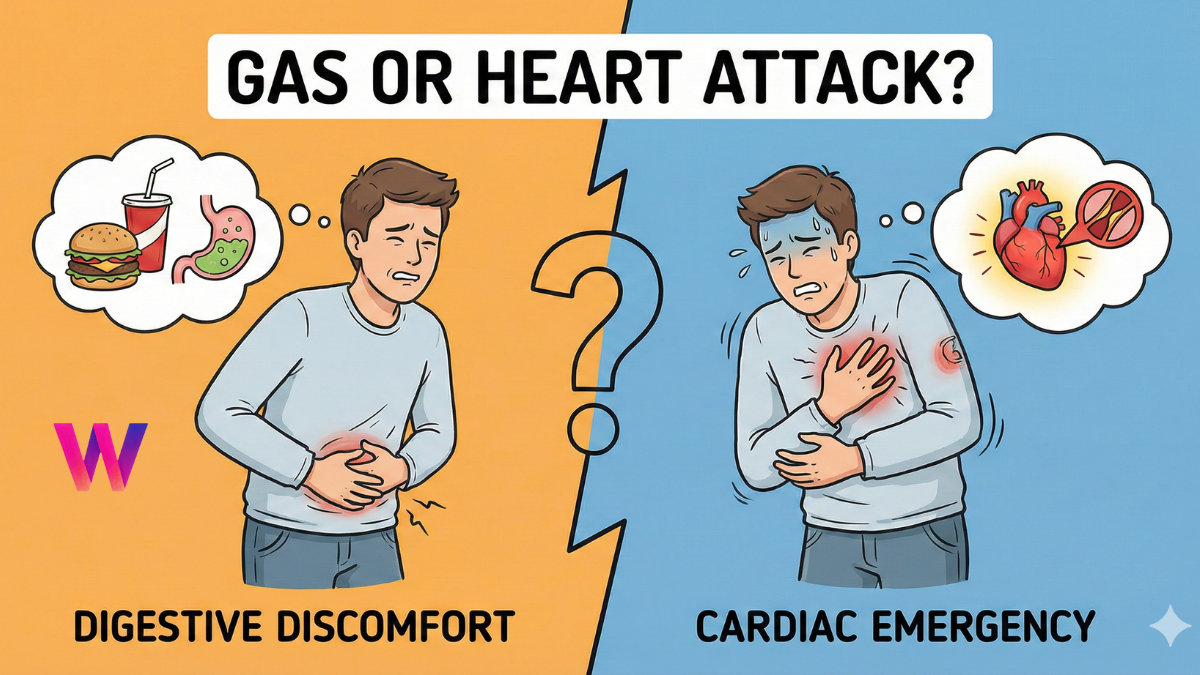
- You have chest pain that feels tight, heavy or squeezing, spreads to the arm, jaw, neck or back, or comes with sweating or breathlessness
That last point is serious. A heart attack can feel like bad acidity, and it’s easy to lose valuable time taking an antacid and waiting. If you’re not sure, get checked. Our guide on telling gas pain from a heart attack explains the differences, but when in doubt, treat it as an emergency. For tummy pain without acidity, see when stomach pain needs a doctor.
Frequently asked questions
Is acidity the same as gastritis?
Not exactly. Acidity is a loose everyday term. Gastritis means inflammation of the stomach lining, which can cause similar burning or discomfort. Reflux, gastritis and ulcers can overlap, which is why persistent symptoms need a proper assessment.
Can I take a PPI every day without a prescription?
Over-the-counter omeprazole is meant for 14-day courses, no more than once every 4 months, unless a doctor advises otherwise. If you need it more than that, you need a diagnosis, not just a refill.
Should I take pantoprazole before or after food?
Before. The ACG recommends taking PPIs 30 to 60 minutes before a meal, usually breakfast, rather than at bedtime. Follow your doctor’s instructions if they’ve told you otherwise.
Does stress cause acidity?
Stress can make you more aware of symptoms and push you towards habits that trigger reflux, like late meals, smoking and skipping sleep. It’s rarely the whole story, so look at those habits too.
Can acidity be cured permanently?
Occasional acidity often goes away once triggers are dealt with, especially after weight loss. GERD is usually a long-term condition that can be controlled well, and an H. pylori ulcer can be treated with the right course. There’s no single remedy that fixes everyone.
This article is for general information and is not a substitute for advice from a doctor. If you have symptoms or a health condition, please consult a qualified healthcare professional.

I am so satisfied finding this blog and I have to admit that all information stated here is really useful. I hope that you will continue to post such great posts like this one in the future. Thanks a lot again.
We’re going walking in the Peak District a lot and visit family in Switzerland so this would be perfect for taking all the drinks and snacks for our walks