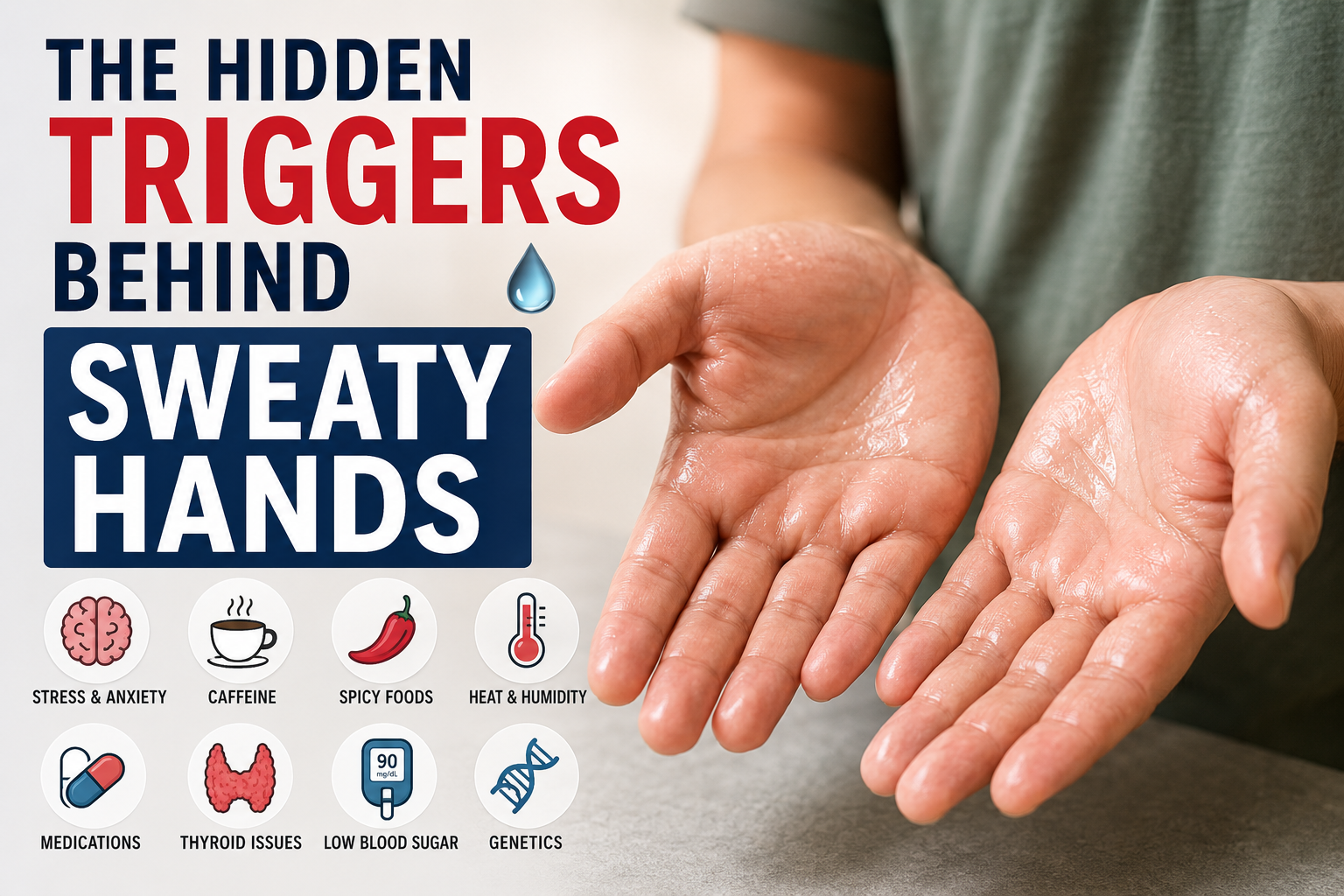
Sweaty hands can seem like a small problem until they begin interfering with everyday life.
A handshake becomes uncomfortable. Holding a phone feels slippery. Writing on paper leaves damp marks. Using a keyboard or steering wheel can become frustrating. For some people, sweaty palms appear only during stressful moments. For others, they seem to happen for no obvious reason at all.
If you have ever wondered, “Why do my palms sweat so much?”, you are not alone.
Sweating is a normal biological function. Your body produces sweat to regulate temperature and prevent overheating. But the palms are also closely connected to your nervous system and emotional responses. That means your hands can sweat even when you are sitting in a cool room and doing absolutely nothing physically demanding.
In some cases, sweaty hands simply reflect temporary triggers such as anxiety, heat, caffeine, spicy food, or nervousness. In other cases, persistent excessive sweating may point to palmar hyperhidrosis, a condition in which the sweat glands in the hands become unusually active. Medical conditions, hormonal changes, medications, and metabolic issues can also contribute.
Understanding the difference matters.
This guide explores the most important sweaty hands causes and triggers, explains why your palms react differently from other parts of your body, and offers practical ways to manage excessive palm sweating.
Important note: Occasional sweaty hands are usually harmless. However, sudden or unexplained excessive sweating, especially when accompanied by other symptoms, deserves medical attention.
Table of Contents
Why Do Our Hands Sweat in the First Place?
Before looking at the hidden triggers behind sweaty hands, it helps to understand why the palms sweat at all.
Your skin contains millions of sweat glands. The majority involved in temperature regulation are called eccrine sweat glands. These glands produce a watery fluid that evaporates from the skin and helps cool the body.
The palms, soles of the feet, forehead, and underarms have particularly important relationships with the body’s sweating system. Your nervous system can activate these glands not only when your body becomes hot but also when you experience strong emotions.
For example, your palms may suddenly become damp when you:
- Feel nervous before an interview
- Speak in public
- Take an important exam
- Meet someone new
- Feel embarrassed
- Experience fear or excitement
- Anticipate a difficult conversation
This response occurs because sweating is partly controlled by the autonomic nervous system, the system that regulates many automatic bodily functions.
Your brain does not always distinguish between physical danger and emotional pressure. A stressful presentation may not require you to run or fight, but your nervous system can still activate a physical stress response.
That is why emotional sweating often appears quickly on the palms.
Normal sweating becomes more concerning when it happens frequently, heavily, or unpredictably enough to interfere with daily activities.
Understanding Sweaty Hands Causes and Triggers
There is no single explanation for sweaty palms.
For some people, the trigger is obvious. Their hands sweat before meetings or during stressful social situations. For others, the pattern is more complicated. Their palms may become sweaty after coffee, during humid weather, after eating certain foods, or seemingly at random.
The most useful way to understand the problem is to divide sweaty hands causes and triggers into two broad categories:
- Temporary or situational triggers
- Persistent medical or neurological causes
Temporary triggers can increase sweating in almost anyone.
Persistent sweating may indicate that the body’s sweat response is unusually sensitive or that an underlying condition deserves investigation.
The following sections explore both
1. Stress and Anxiety: One of the Most Common Triggers for Sweaty Palms
Stress is one of the strongest triggers for sweaty hands.
When you feel anxious, nervous, afraid, or emotionally pressured, your nervous system activates a stress response. Your heart rate may increase, your breathing may change, and your sweat glands can become more active.
The palms are especially sensitive to emotional sweating.
This explains why someone can sit in an air-conditioned office and still have cold, damp hands before an important meeting.
The situation can also become a frustrating cycle.
You notice that your hands are sweating. You become worried that other people will notice. That worry increases your stress level. Your palms sweat even more.
Over time, some people begin avoiding situations involving handshakes, presentations, close physical contact, or activities that require fine hand control.
How stress-related sweaty hands usually behave
Stress-related palm sweating often:
- Appears suddenly
- Occurs during emotionally intense situations
- Improves after the stressful situation passes
- Happens alongside symptoms such as a racing heart or tense muscles
- Becomes worse when you focus heavily on the sweating itself
Stress does not necessarily mean the sweating is “all in your head.” The physical response is real. Your nervous system is sending signals that activate sweat glands.
If stress is a major trigger, managing the nervous system response may reduce the frequency or intensity of sweaty palms.
2. Palmar Hyperhidrosis: When Sweaty Hands Become Excessive
One of the most important medical explanations for persistent sweaty palms is palmar hyperhidrosis.
Hyperhidrosis means excessive sweating beyond what the body needs for cooling.
People with palmar hyperhidrosis symptoms may experience significant sweating even when:
- The temperature is comfortable
- They are sitting still
- They are not exercising
- They do not feel particularly anxious
- Other people around them are not sweating
Primary focal hyperhidrosis commonly affects specific areas such as the palms, soles, underarms, or face. The exact cause is not always known, but abnormal or overly strong nerve signals can cause sweat glands to become overactive. The condition may also run in families.
Common palmar hyperhidrosis symptoms
Palmar hyperhidrosis can involve more than simply having slightly damp hands.
Symptoms may include:
- Visible beads of sweat on the palms
- Hands that feel constantly damp
- Difficulty gripping objects
- Trouble holding a pen or writing
- Difficulty using a computer mouse
- Slippery hands while driving
- Wet marks on paper or electronic devices
- Avoiding handshakes
- Social embarrassment or anxiety
The sweating often affects both hands and commonly begins during childhood or adolescence. People with primary focal hyperhidrosis may otherwise be healthy.
A useful clue is timing.
Primary focal hyperhidrosis often affects people while they are awake and may decrease or stop during sleep. Persistent night sweating can suggest a different pattern and should be discussed with a healthcare professional.


3. Heat and Humidity Can Trigger Sweaty Palms
This may sound obvious, but environmental heat does not affect everyone equally.
Some people have naturally more sensitive sweating responses. Even a modest increase in temperature can activate their sweat glands.
Humidity can make the situation worse because sweat does not evaporate as efficiently when the air already contains a large amount of moisture.
As a result, you may notice sweaty hands more frequently during:
- Hot summer months
- Humid weather
- Crowded indoor environments
- Poorly ventilated rooms
- Long periods outdoors
- Physical activity in warm conditions
For people with hyperhidrosis, heat may act as an amplifier rather than the primary cause.
In other words, someone may already have an overactive sweating response, and hot weather pushes it further.
4. Caffeine May Be a Hidden Trigger
Many people never connect their morning coffee with sweaty palms.
Caffeine stimulates the nervous system. Depending on individual sensitivity and the amount consumed, it can increase alertness, heart rate, nervous system activity, and feelings of restlessness.
For someone prone to excessive sweating, that stimulation may contribute to sweaty hands.
Dermatology guidance identifies caffeine as a potential trigger for hyperhidrosis in some people. Coffee, caffeinated tea, cola drinks, chocolate, and cocoa may contribute because of caffeine or related stimulants.
This does not mean everyone with sweaty hands needs to stop drinking coffee.
Instead, try a simple experiment.
A practical caffeine test
For one or two weeks:
- Track when your hands become sweaty.
- Record your caffeine intake.
- Note the type and amount of drink consumed.
- Look for patterns.
If your hands consistently become sweaty shortly after strong coffee or energy drinks, reducing your intake may help.
A gradual reduction is usually easier than suddenly eliminating caffeine.
5. Spicy Foods and Certain Dietary Triggers
Food can sometimes trigger sweating through a response known as gustatory sweating.
Spicy foods are particularly well known for causing sweating because they can stimulate receptors that make the body respond as though it needs to cool down.
Common dietary triggers may include:
- Spicy foods
- Hot beverages
- Very sugary foods
- Salty foods
- Large meals
- Foods that personally trigger your nervous system
Dermatology guidance notes that spicy foods and drinks, caffeine, and other foods can trigger excessive sweating in some individuals. The exact food triggers can vary significantly from person to person.
The important point is that there is no universal “hyperhidrosis diet.”
A food that triggers sweaty palms in one person may have no noticeable effect on another.
Keeping a short symptom diary can reveal patterns much better than randomly eliminating large groups of foods.
6. Why Do My Palms Sweat So Much During Social Situations?
Social situations create a unique combination of triggers.
You may experience:
- Anxiety
- Anticipation
- Increased attention to your body
- Fear of judgment
- Increased heart rate
- Emotional excitement
Imagine waiting outside an interview room.
You may not consciously feel panicked. Yet your body recognizes the situation as important. Your sympathetic nervous system becomes more active, and your palms begin sweating.
This is why sweaty hands can appear before:
- Interviews
- Exams
- First dates
- Public speaking
- Business meetings
- Handshakes
- Competitive events
- Difficult conversations
Interestingly, worrying about sweating itself can become part of the trigger.
The more you repeatedly check your hands, the more attention your brain gives to the problem.
That does not mean you should ignore severe symptoms. It simply means that reducing the psychological feedback loop can sometimes help.
Clammy Hands, Stress, and Thyroid Problems
The phrase clammy hands stress thyroid often appears in searches because people are trying to understand whether their sweaty or cold hands reflect anxiety or a hormone problem.
The answer depends on the overall pattern.
Stress can absolutely cause sweaty or clammy palms. Emotional stress activates the nervous system and can trigger sweat glands.
However, an overactive thyroid, also known as hyperthyroidism, can increase sweating throughout the body and may come with other symptoms. Hyperthyroidism is among the medical conditions healthcare professionals may consider when investigating excessive sweating.
Other symptoms that may deserve attention
Sweating related to a thyroid problem may occur alongside symptoms such as:
- Unexplained weight changes
- Rapid or pounding heartbeat
- Increased sensitivity to heat
- Trembling
- Nervousness
- Changes in bowel habits
- Unusual fatigue
Sweaty palms alone cannot diagnose a thyroid condition.
That distinction is important. Many people search for a single symptom and immediately assume they have a serious disease. In reality, diagnosis depends on the full pattern of symptoms, medical history, examination, and sometimes laboratory testing.
If excessive sweating is new or persistent, a healthcare professional may recommend blood tests or other investigations to rule out conditions such as thyroid problems or blood sugar abnormalities.
7. Low Blood Sugar Can Sometimes Cause Sweating
Changes in blood sugar can also influence sweating.
Low blood sugar, or hypoglycemia, may activate the body’s stress response and cause symptoms that include sweating.
Depending on the cause and severity, other symptoms may include:
- Shakiness
- Hunger
- Weakness
- Dizziness
- Irritability
- Confusion
- Rapid heartbeat
Excessive sweating can sometimes occur in people with glucose regulation problems, including diabetes or hypoglycemia.
If sweaty hands repeatedly occur alongside symptoms such as shakiness, dizziness, or unusual weakness, especially around meals or medication use, medical evaluation is sensible.
Do not assume that every episode of sweaty hands is caused by low blood sugar. The symptom is nonspecific.
8. Hormonal Changes Can Affect Sweating
Hormones play an important role in temperature regulation and nervous system activity.
Changes in hormone levels can therefore influence sweating.
Menopause, for example, can cause hot flashes and increased sweating. Hormonal shifts can affect the body’s temperature-regulating systems and lead to episodes of sudden perspiration.
Sweating patterns may also change during other periods of hormonal transition.
However, sweaty hands alone do not automatically indicate a hormonal problem.
Look at the broader picture.
Are you experiencing:
- Hot flashes?
- Changes in menstrual patterns?
- Sleep disruption?
- Changes in temperature tolerance?
- Palpitations?
- Unexplained weight changes?
A cluster of symptoms provides more useful information than one isolated symptom.
9. Medications Can Be an Overlooked Cause of Excessive Sweating
A surprisingly common hidden trigger is medication.
Some medicines can increase sweating as a side effect. Depending on the medication and individual response, excessive sweating may occur in specific areas or across larger parts of the body.
Medical sources list several medication categories that may contribute to excessive sweating, including some antidepressants, pain medications, diabetes medicines, hormonal medicines, and other drugs.
The most important rule is simple:
Do not suddenly stop a prescribed medication because you think it is causing sweaty hands.
Stopping some medications abruptly can cause withdrawal effects or other health problems.
Instead, speak with the prescribing doctor. They can help determine whether sweating is a possible side effect and whether an adjustment is appropriate.
Primary vs Secondary Hyperhidrosis: Why the Difference Matters
Doctors generally divide hyperhidrosis into primary and secondary forms.
Primary Hyperhidrosis
Primary hyperhidrosis usually:
- Affects specific body areas
- Commonly involves palms, soles, underarms, or the face
- Often begins earlier in life
- May run in families
- Often occurs symmetrically
- May happen without an obvious medical cause
It is believed to involve overly active nerve signals that stimulate the sweat glands.
Secondary Hyperhidrosis
Secondary hyperhidrosis occurs because of another medical condition or medication.
It may:
- Begin more suddenly
- Cause more generalized sweating
- Occur during sleep
- Develop later in life
- Appear alongside other symptoms
Potential causes include certain medical conditions, infections, hormonal changes, neurological disorders, metabolic problems, and medication effects.
This distinction matters because treating the underlying cause may improve secondary sweating.
How to Identify Your Personal Sweaty Hands Triggers
One of the most useful things you can do is stop guessing.
Instead, track patterns.
You do not need a complicated health journal. A simple note on your phone can work.
For two weeks, record:
- Time of day
- How severe the sweating is
- Room temperature
- Stress level
- Recent caffeine intake
- Food consumed
- Exercise
- Medication timing
- Sleep quality
- Other symptoms
You may discover patterns you never noticed before.
For example:
Monday, 10:00 a.m.: Very sweaty hands before a presentation. Two cups of coffee. Poor sleep.
Thursday, 4:00 p.m.: Mild sweating while relaxed at home. No caffeine.
Saturday, 8:00 p.m.: Heavy sweating after spicy food in a crowded restaurant.
Over time, patterns become easier to identify.
This information can also help a doctor determine whether your sweating appears situational, neurological, medication-related, or associated with another condition.
How to Stop Sweaty Palms Naturally
Many people search for how to stop sweaty palms naturally, hoping for a simple home remedy that permanently switches off sweating.
Unfortunately, there is no guaranteed natural cure for palmar hyperhidrosis.
However, lifestyle strategies can reduce triggers and make sweating easier to manage.
Reduce Your Personal Triggers
The most effective “natural” strategy is often identifying your individual triggers.
Common triggers worth investigating include:
- Excess caffeine
- Spicy foods
- Heat
- Humidity
- Stress
- Anxiety
- Sleep deprivation
- Certain social situations
Avoiding every possible trigger is unnecessary.
The goal is to identify which factors genuinely affect you.
Practice Stress Regulation Techniques
If stress triggers your sweaty hands, calming your nervous system may help.
Useful approaches include:
Slow breathing
Try inhaling slowly and allowing your exhale to last slightly longer than your inhale.
The goal is not to force relaxation. It is to reduce the intensity of the body’s stress response.
Progressive muscle relaxation
Tense and release different muscle groups gradually.
This can help reduce physical tension that often accompanies anxiety.
Mindfulness practice
Mindfulness does not eliminate sweating directly, but it can reduce the cycle of constantly monitoring and worrying about symptoms.
Regular exercise
Physical activity can improve stress management and overall nervous system regulation over time.
However, exercise itself naturally increases sweating, so do not use your immediate sweat level during exercise as a measure of whether the strategy is working.
Keep Your Hands Cool and Dry
Environmental management can make a noticeable difference.
Try:
- Washing and drying hands when practical
- Using cool water briefly during hot weather
- Keeping a clean absorbent cloth nearby
- Improving ventilation
- Taking breaks from hot environments
For people with mild situational sweating, these simple measures may provide enough relief.
For severe hyperhidrosis, they may improve comfort but are unlikely to fully control the condition.
Review Your Caffeine Intake
You do not necessarily need to eliminate caffeine.
Instead, experiment.
If you drink multiple cups of strong coffee, try reducing the amount or switching one serving to a lower-caffeine alternative.
Pay attention to the total amount consumed during the day rather than blaming a single cup.
Some people are much more sensitive to caffeine than others.
Prioritize Consistent Sleep
Poor sleep can increase stress sensitivity and make your nervous system more reactive.
A difficult night may not directly cause hyperhidrosis, but it can amplify triggers that already influence sweating.
Try to maintain:
- Consistent sleep and wake times
- A comfortable sleeping environment
- Limited late-day caffeine
- A wind-down routine before bed
Think of sleep as part of overall nervous system maintenance.
Medical Treatments for Excessive Sweaty Hands
If lifestyle changes do not provide enough relief, medical treatment is available.
Hyperhidrosis is treatable, and treatment options depend on the severity and location of sweating.
Antiperspirants
Prescription-strength antiperspirants may be used to reduce excessive sweating.
Some contain aluminum chloride, which can temporarily block sweat ducts and reduce sweat production.
Because stronger products can irritate the skin, they should be used according to medical advice and product instructions.
Iontophoresis
Iontophoresis is a treatment commonly used for excessive sweating of the hands and feet.
The hands are placed in water while a mild electrical current passes through the water.
The exact mechanism is still not fully understood, but the treatment can reduce sweating for many people.
A healthcare professional can help determine whether it is appropriate.
Botulinum Toxin Injections
Botulinum toxin injections can reduce sweating by interfering with the nerve signals involved in sweat gland activation.
The effects are temporary, and treatment may need to be repeated.
Because the palms contain many nerve endings and hand function is important, treatment decisions should be discussed carefully with an experienced healthcare professional.
Oral Medications
Certain medications can reduce sweating by affecting the nerve signals that activate sweat glands.
These medications can also cause side effects, including dry mouth and other anticholinergic effects.
They are not appropriate for everyone.
A doctor can help weigh the potential benefits and risks.
Treating an Underlying Condition
If excessive sweating is secondary to another medical problem, treating that underlying issue becomes the priority.
For example, if a medication contributes to sweating, a doctor may review whether an alternative is available.
If thyroid dysfunction or another medical condition contributes, appropriate treatment may improve the sweating.
This is one reason persistent new-onset sweating should not simply be dismissed as a cosmetic problem.
When Should You See a Doctor About Sweaty Hands?
Occasional sweaty palms are usually not a medical emergency.
However, you should consider speaking with a healthcare professional if:
- Sweating suddenly becomes much worse
- Your hands are frequently soaked
- Sweating interferes with work or daily activities
- You avoid social situations because of sweaty hands
- You experience unexplained night sweats
- Sweating occurs with weight loss, fever, or other new symptoms
- You recently started a medication and noticed a change
- You have symptoms suggesting thyroid or blood sugar problems
Seek urgent medical attention if heavy sweating occurs with symptoms such as chest pain, severe dizziness, nausea, cold skin, or a rapid pulse, as these combinations can sometimes signal a serious medical problem.
If excessive sweating affects daily activities, continues for a long period or occurs without a clear explanation, the NHS guide to excessive sweating and hyperhidrosis provides useful guidance on when to seek medical advice.
A Simple Decision Guide for Sweaty Palms
Ask yourself these questions.
Do my hands mainly sweat when I feel nervous?
Stress may be a major trigger.
Do they sweat in a cool room while I am relaxed?
Palmar hyperhidrosis becomes more worth considering.
Did the problem begin suddenly?
Review recent medications, illnesses, and other health changes.
Do I sweat heavily in other parts of my body too?
A broader medical or medication-related cause may need evaluation.
Do I wake up sweating?
Night sweating deserves attention, particularly if it is new or unexplained.
Does someone in my family have the same problem?
A family pattern can support the possibility of primary hyperhidrosis.
These questions cannot diagnose the cause, but they can help you understand which direction to investigate.
The Emotional Side of Sweaty Hands Should Not Be Ignored
Excessive palm sweating can affect more than physical comfort.
People often underestimate how much sweaty hands can influence confidence.
Someone may avoid:
- Handshakes
- Holding hands
- Job interviews
- Presentations
- Group activities
- Using shared equipment
- Social events
Over time, embarrassment can become more disruptive than the sweating itself.
This is important because hyperhidrosis is not simply a matter of being “too nervous.”
Someone may feel anxious because their hands sweat, while the sweating may also have a genuine medical basis.
The relationship can work in both directions.
Treating the physical symptoms may improve confidence. Managing stress may also reduce flare-ups.
A balanced approach usually works better than blaming either the body or the mind alone.
Frequently Asked Questions About Sweaty Hands
Why do my palms sweat so much even when I am not hot?
Your palms can sweat in response to nervous system signals, not only temperature. Stress, anxiety, caffeine, and palmar hyperhidrosis are possible explanations. Persistent sweating without an obvious trigger may deserve medical evaluation.
Are sweaty hands a sign of anxiety?
They can be.
Anxiety activates the body’s stress response and may trigger palm sweating. However, sweaty hands can also occur in people with primary hyperhidrosis or other medical conditions.
Can thyroid problems cause clammy hands?
Thyroid problems, particularly an overactive thyroid, can contribute to excessive sweating. However, clammy hands alone do not prove a thyroid disorder. Doctors consider the complete symptom pattern and may order tests when appropriate.
Is palmar hyperhidrosis serious?
Palmar hyperhidrosis is usually not dangerous, but it can significantly affect quality of life. It can interfere with work, education, social interaction, and daily tasks. Fortunately, treatment options are available.
Does drinking more water stop sweaty hands?
Hydration is important for overall health, especially after heavy sweating, but drinking excessive amounts of water does not directly stop hyperhidrosis.
Can sweaty hands run in families?
Yes. Primary hyperhidrosis can have a family pattern. Having a close relative with excessive sweating can increase the likelihood that the condition has a hereditary component.
Final Thoughts: The Trigger Is Not Always What You Think
Sweaty hands are often dismissed as a minor annoyance, but persistent palm sweating can affect confidence, comfort, and everyday life.
The most important lesson is that there is rarely one universal answer.
Your sweaty hands causes and triggers may involve stress, heat, caffeine, spicy food, nervous system sensitivity, medication, hormonal changes, or a condition such as palmar hyperhidrosis. In some cases, an underlying medical issue may also play a role.
If your sweaty palms appear mainly during stressful moments, focus on understanding your emotional and environmental triggers.
If your hands sweat heavily without an obvious reason, interfere with daily activities, or the problem has suddenly changed, consider speaking with a healthcare professional.
You do not have to simply accept excessive sweating as part of your personality.
Understanding the trigger is the first step. Identifying the pattern is the second. And when lifestyle changes are not enough, effective medical options can help you regain control.
The goal is not to eliminate every drop of sweat.
The goal is to understand why it is happening, reduce unnecessary triggers, and make sure persistent excessive sweating does not prevent you from living, working, and interacting with confidence.