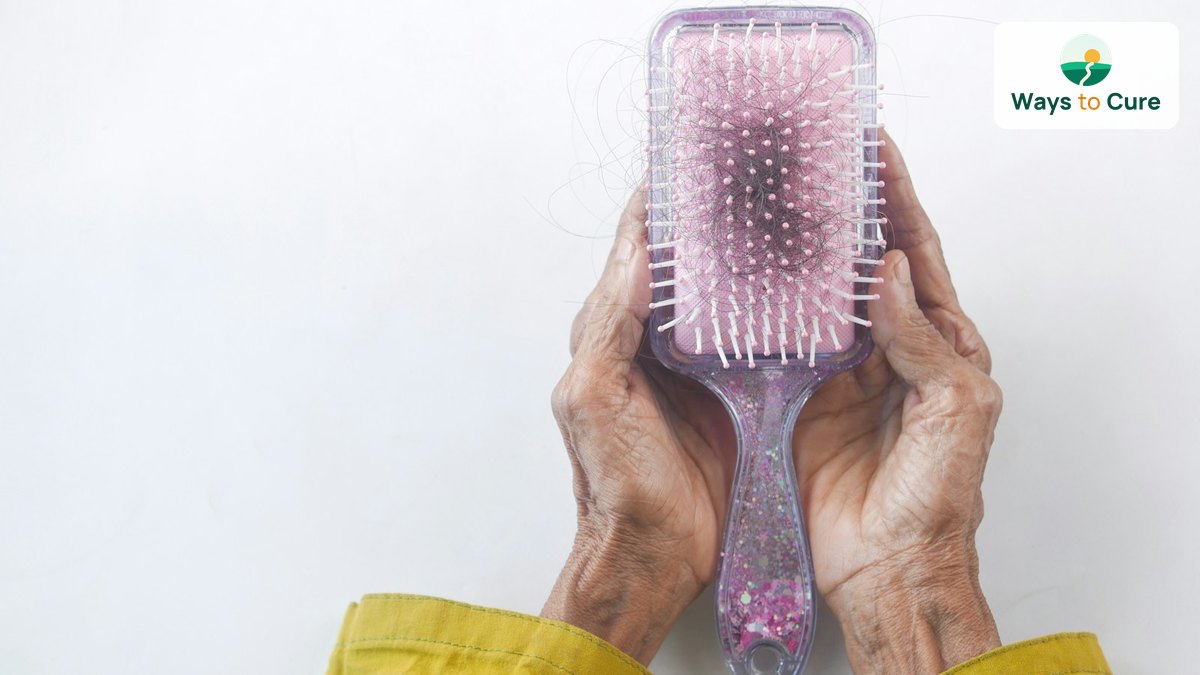
Losing 50 to 100 hairs a day is normal, according to the American Academy of Dermatology. If you’re finding noticeably more than that for weeks, with hair coming out easily from all over the scalp, it’s usually a temporary shedding phase called telogen effluvium, which often starts 2 to 3 months after a trigger such as illness, childbirth, crash dieting or severe stress.
That 50 to 100 figure sounds like a lot when you see it in a shower drain or on a hairbrush, which is why so many people worry. This guide helps you tell normal shedding from extra shedding and from true thinning, and shows when it’s worth a blood test or a doctor’s visit.
Normal daily shedding, in numbers
Every hair on your scalp cycles through a growing phase, a short transition phase and a resting (telogen) phase. At the end of the resting phase the hair falls out and a new one starts growing from the same follicle. That’s why some daily loss is built in.
- Normal: 50 to 100 hairs a day (AAD). Cleveland Clinic puts it at up to about 100.
- During telogen effluvium: Cleveland Clinic says losses can reach about 300 a day.
You’ll lose more on the days you wash or brush, because hairs that were already loose come out together. Someone who washes twice a week will see a bigger clump on wash day than someone who washes daily, even if their total is the same. Long hair also looks like more hair on the floor than short hair does.
A simple way to check at home
You don’t need to count every hair, but a rough check over a few days is more useful than one scary shower.
- Look at the hair you lose on a normal non-wash day: on your pillow, brush and clothes.
- Check a few strands. A hair shed from the resting phase usually has a tiny white bulb at the root end.
- Look at your parting and hairline in good light, and compare with photos from 6 to 12 months ago.
- Gently run your fingers through a section of hair. A doctor’s version of this is the “pull test” (below).
If your ponytail feels thinner, your parting looks wider, or hair is coming out in your hands every time you touch it, that’s worth taking seriously.
Shedding vs hair loss: the difference
The AAD separates two things that people often lump together:
| Excessive shedding (telogen effluvium) | Hair loss (stopped growth) | |
|---|---|---|
| What happens | More hairs than usual move into the resting phase and fall out | Something stops hair from growing |
| Pattern | Thinning all over the scalp, often noticed on top | Depends on cause: receding hairline, widening part, round bald patches |
| Typical causes | Childbirth, fever, surgery, big weight loss, stress, stopping the pill | Genetics, immune conditions, some drugs and treatments, tight hairstyles, harsh chemical treatments |
| Outlook | Usually temporary, regrows by itself | Often won’t regrow until the cause is treated, and some types are permanent |
You can have both at once. For example, a stressful year can trigger shedding on top of early pattern hair loss, which makes the thinning more visible.
What triggers extra shedding
Cleveland Clinic and the AAD list these common triggers for telogen effluvium:
- a high fever or severe infection
- giving birth
- major surgery
- losing 20 lb (about 9 kg) or more, or a protein-poor fad diet
- severe psychological stress
- an underactive or overactive thyroid
- stopping birth control pills
- some medicines, including retinoids, beta-blockers, calcium channel blockers, some antidepressants and NSAIDs
The timing is the confusing part. Cleveland Clinic says the shedding usually shows up about 2 to 3 months after the trigger. After childbirth, the AAD says it may begin around 2 months and peak around 4 months. So if your hair started falling in November, think back to August and September: an illness, a stressful event, a new medicine, a strict diet.
If you think a medicine is to blame, don’t stop it on your own. The AAD warns that stopping some drugs suddenly can cause serious side effects. Ask your doctor about alternatives.
Is there seasonal hair shedding?
There’s some evidence for it. A Swiss study of 823 healthy women who complained of hair loss found the highest proportion of resting (telogen) hairs in summer, a smaller peak in spring, and the lowest levels in late winter. Since resting hairs fall out over the following weeks and months, this fits with the extra shedding many people in the northern hemisphere notice in late summer and autumn.
Seasonal shedding should be mild and settle on its own. It shouldn’t cause visible patches or a clearly wider parting.
How long telogen effluvium lasts
This is the good news. According to Cleveland Clinic:
- acute telogen effluvium lasts fewer than 6 months and resolves in about 95% of cases
- most cases settle within 6 to 8 months after the cause is dealt with
- new hair typically appears after the 3 to 6 month shedding period
The AAD says hair often regains its normal fullness within 6 to 9 months. If the stress or other trigger carries on, the shedding can last longer. When it goes on for more than 6 months, doctors call it chronic telogen effluvium. Cleveland Clinic says this is more common in women aged 30 to 60, may have no clear cause, and does not lead to total baldness.
Regrowth shows up as short, fine hairs along the parting and hairline. They’re easy to mistake for breakage, but they’re a sign things are recovering.
Iron, thyroid and other medical causes
The AAD notes that not getting enough iron, protein, zinc or biotin can lead to noticeable hair loss, and that thinning from thyroid disease can reverse once the thyroid is treated. Taking large amounts of vitamin A or selenium can also cause hair loss, so more supplements are not always better.
MedlinePlus suggests seeing a provider if hair loss comes with weight gain, muscle weakness, feeling cold or tiredness, which can point to a thyroid problem. Acne, extra facial hair or irregular periods alongside hair thinning can point to a hormone problem worth checking.
Useful reading on this site:
- Underactive thyroid: symptoms, tests and treatment
- Overactive thyroid symptoms in women
- Iron-rich vegetarian foods and how to absorb more iron
A doctor will usually decide on tests based on your history. MedlinePlus says a history and scalp exam are often enough, and blood tests or a biopsy are only sometimes needed.
What helps while you wait for regrowth
- Deal with the trigger. Eat enough protein and calories, treat any thyroid or iron problem, and give stress management a real try.
- Be gentle. Avoid tight ponytails, braids and buns, which the AAD says can cause permanent hair loss over time (traction alopecia). Go easy on colouring, perms, relaxers and heat styling.
- Minoxidil. Over-the-counter minoxidil is one option Cleveland Clinic lists for telogen effluvium. The NHS notes that it only works while you keep using it and doesn’t work for everyone. It isn’t suitable in pregnancy or while breastfeeding.
- Check before you supplement. Iron tablets help if you’re low in iron. Ask for a blood test before starting them rather than guessing.
For more on everyday hair care and home remedies, see our articles on how to control hair fall and hair fall home remedies and what the evidence says.
When to see a doctor
Book an appointment with a GP, family doctor or dermatologist if you notice:
- heavy shedding that hasn’t slowed after about 6 months
- round or coin-shaped bald patches, or bald spots in your beard or eyebrows
- a receding hairline or widening part that keeps progressing
- scalp pain, burning, itching, redness, scaling or pus
- hair loss along with tiredness, weight change, feeling cold, acne, extra facial hair or irregular periods
- hair loss at a young age, or loss that started suddenly
- you’re worried, or it’s affecting your mood or confidence
The AAD says earlier treatment generally leads to better results. In the doctor’s office, a pull test involves gently tugging a bunch of about 40 to 60 hairs. Cleveland Clinic says normally only 2 or 3 come out, while 4 to 6 or more, with white bulbs at the roots, suggests telogen effluvium.
Frequently asked questions
Is losing 200 hairs a day normal?
Not as a daily pattern. It’s above the 50 to 100 range and fits with telogen effluvium, which can reach about 300 a day. It’s usually temporary, but think back 2 to 3 months for a trigger and see a doctor if it continues past 6 months.
Does washing your hair every day make it fall out more?
No. Washing removes hairs that were already loose and would have fallen anyway. If you wash less often, you’ll just see more at once.
Will hair lost from stress grow back?
Usually, yes. Stress-related shedding is temporary, and hair often regains its normal fullness within 6 to 9 months once the stress eases.
How can I tell if it’s genetic hair loss?
The AAD says in women the first sign is usually overall thinning or a widening part. In men it’s often a receding hairline or a bald spot on the crown. It tends to progress slowly, rather than coming out in handfuls.
Can a vitamin D or biotin supplement stop hair fall?
Only if you’re actually low in that nutrient. For most people with normal levels, supplements won’t change shedding, and too much of some, such as vitamin A or selenium, can make hair loss worse.
This article is for general information and is not a substitute for advice from a doctor. If you have symptoms or a health condition, please consult a qualified healthcare professional.