Toothpaste won’t heal a bruise any faster. There’s no research showing it helps, and the bruise is under the skin where a paste can’t reach. What does help is simple: cold and rest in the first day or two, then warmth, and patience, because most bruises fade on their own within about two weeks.
Here’s what’s going on under the skin, what you can do at home, which popular tricks to skip, and the kinds of bruising that deserve a blood test rather than a home remedy.
What a bruise is and why it changes colour
A bruise forms when a knock or squeeze breaks tiny blood vessels under the skin. Blood leaks into the surrounding tissue, but because the skin isn’t broken it has nowhere to go, so it pools and shows through. Cleveland Clinic explains that a new bruise usually looks red or purplish; on darker skin it may look purple, dark brown or black.
As your body breaks down and clears the trapped blood, the colour shifts to brown, green or yellow before fading. That rainbow is a sign of healing, not of something going wrong.
| Type of bruise | What it looks like | Usual time to fade |
|---|---|---|
| Ordinary bruise | Flat red, purple or dark patch, tender to touch | Most fade within 2 weeks |
| Severe bruise or haematoma | Raised, swollen, painful lump of pooled blood, often after a bad fall or accident | Can last a month or longer |
| Petechiae | Pinpoint red or purple dots, smaller than 2 mm | Depends on the cause; needs checking if unexplained |
| Purpura | Purple spots bigger than petechiae but smaller than a typical bruise | Depends on the cause; needs checking if unexplained |
The timings and definitions above come from Cleveland Clinic. Petechiae and purpura aren’t caused by a bump in the usual way, which is why unexplained ones need a doctor to look at them.
What helps in the first 48 hours
The aim early on is to limit how much blood leaks out. That’s where the familiar rest, ice and elevation advice comes in.
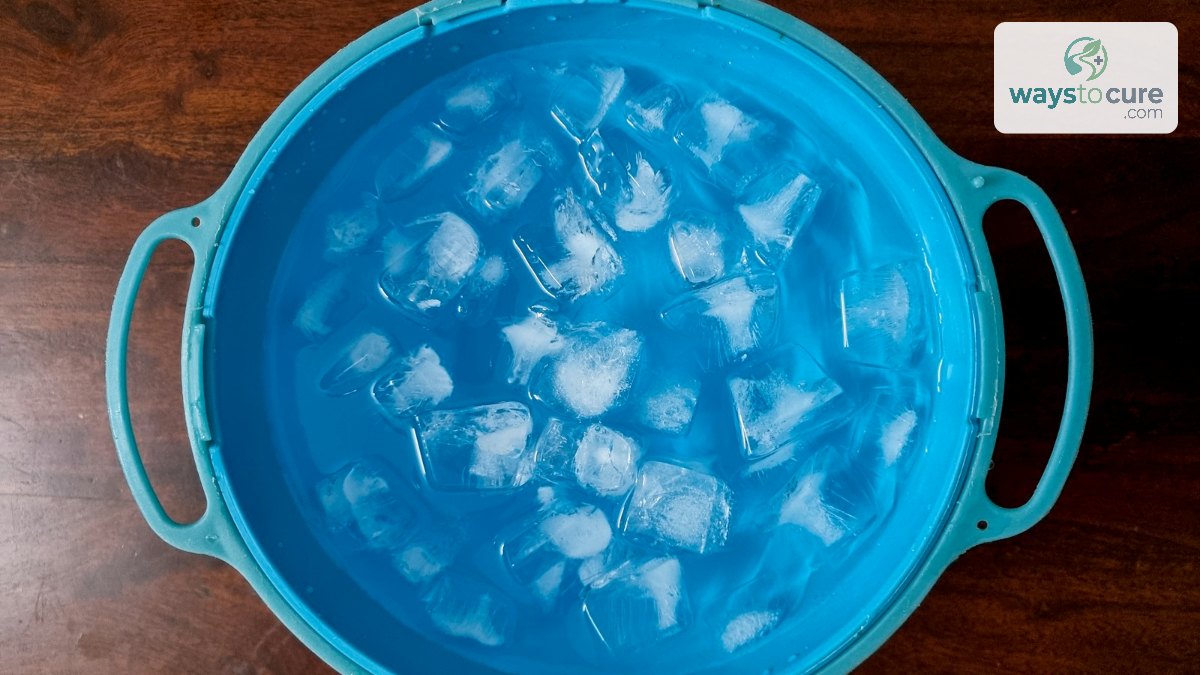
- Ice, wrapped. MedlinePlus advises putting ice wrapped in a towel on the bruise for up to 15 minutes each hour. Never put ice straight on skin. A packet of frozen peas from the freezer works well.
- Raise it. If you can, keep the bruised area above the level of your heart, which helps stop blood pooling there.
- Rest it. Avoid working the bruised muscles hard for a day or two. MedlinePlus says not to keep running, playing sport or using the injured part.
- Pain relief. Paracetamol can help if it hurts. Cleveland Clinic suggests checking with a doctor before using anti-inflammatory painkillers such as ibuprofen, since these can affect bleeding. Ask your doctor or pharmacist what’s right for you.
Cleveland Clinic recommends ice for the first 24 to 48 hours. After about two days, switch to warmth.
What helps after the first two days
Once the bleeding under the skin has stopped, gentle heat helps blood flow to the area so the body can clear the old blood. Cleveland Clinic suggests a warm compress or heating pad several times a day. A cloth soaked in warm water and wrung out is enough. Keep it warm, not hot, and check the skin often if you have diabetes or reduced feeling.
Beyond that, there isn’t much to do. Time is the main treatment.
Toothpaste and other bruise myths
Bruise hacks spread fast online. Few of them have been tested, and some can irritate the skin.
| Remedy | Verdict |
|---|---|
| Toothpaste | No evidence. The bruise is in the deeper skin layers, and toothpaste can irritate skin, especially if it’s left on. |
| Draining it with a needle | Don’t. MedlinePlus specifically warns against this. You risk infection and it doesn’t speed healing. |
| Arnica gel | Some evidence. In a 2010 trial, bruises made with a laser in healthy adults improved more with 20% arnica ointment than with plain petroleum jelly (British Journal of Dermatology). It wasn’t better than 5% vitamin K cream. Use it only on unbroken skin and never swallow it. |
| Vitamin K cream | Possible small benefit at 5% strength in the same trial; a weaker 1% vitamin K mix did worse than arnica. |
| Turmeric (haldi) paste | A traditional remedy with no good trial evidence for bruises. If you like using it, keep it on unbroken skin, and expect yellow stains on skin and clothes. |
Love bites are a type of bruise too. If that’s what you’re dealing with, our separate guide on how to get rid of a hickey faster covers it. For a bruise around the eye, see black eye relief, and remember any black eye with vision changes needs a doctor.
Why some people bruise easily
If you bruise from bumps you barely notice, it’s usually down to one of a few things. Cleveland Clinic lists:
- Ageing skin. As skin thins with age, smaller knocks are enough to leave a mark.
- Medicines. Blood thinners, aspirin and other antiplatelet drugs, steroids, and regular use of painkillers like ibuprofen or naproxen.
- Low vitamin C or vitamin K.
- Conditions that affect platelets or clotting. These include low platelet counts (thrombocytopenia), liver disease, haemophilia, von Willebrand disease, leukaemia and some other cancers.
- Family history of easy bruising.
In India, one infection is worth mentioning. Dengue can drop your platelet count, and new bruises, red pinpoint spots or bleeding gums during or after a fever are warning signs. Our guide to dengue platelet counts and when they’re dangerous explains what to watch.
Don’t stop a prescribed blood thinner because of bruises. Talk to the doctor who prescribed it.
When to see a doctor
Book an appointment if you notice any of these (based on Cleveland Clinic and MedlinePlus advice):
- a bruise that hasn’t faded after 2 weeks
- frequent, large or unexplained bruises, or bruises appearing without any injury
- bruising along with nosebleeds, bleeding gums, blood in urine or stool, or unusually heavy periods
- a firm lump in the bruise, or painful swelling that lasts for days
- a bruise that keeps coming back in the same place
- signs of infection: red streaks, pus or fever around the bruise
- a black eye with any change in vision
Get emergency help (call 112) if:
- a bruised limb feels extremely tight or under pressure, with severe pain. MedlinePlus warns this can be compartment syndrome, which can be life-threatening
- there’s bruising behind the ears or bleeding from the ears after a head injury, which the NHS lists as an emergency
- you have a high fever with new bruises or spots and feel very unwell
Also, if you take a blood thinner and hit your head, the NHS advises getting medical advice promptly rather than waiting to see what happens.
Frequently asked questions
Does toothpaste make a bruise go away faster?
No. There’s no evidence for it. Cold in the first 48 hours, then warm compresses, is what helps.
How long does a bruise take to heal?
Most bruises fade within about two weeks. Large bruises and haematomas can take a month or more.
Should I put ice or heat on a bruise?
Ice first, wrapped in a cloth, for up to 15 minutes at a time over the first 24 to 48 hours. After that, warm compresses several times a day.
Why do I keep getting bruises I can’t remember?
Common reasons are thinner skin with age, blood-thinning medicines, steroids and regular painkiller use. If they’re frequent, large or come with other bleeding, see a doctor for a blood test to check platelets and clotting.
Is arnica safe to use on a bruise?
Arnica gel has some small-trial evidence for bruises. Use it only on unbroken skin, don’t swallow it, and ask a pharmacist first if you’re pregnant or have sensitive skin.
This article is for general information and is not a substitute for advice from a doctor. If you have symptoms or a health condition, please consult a qualified healthcare professional.