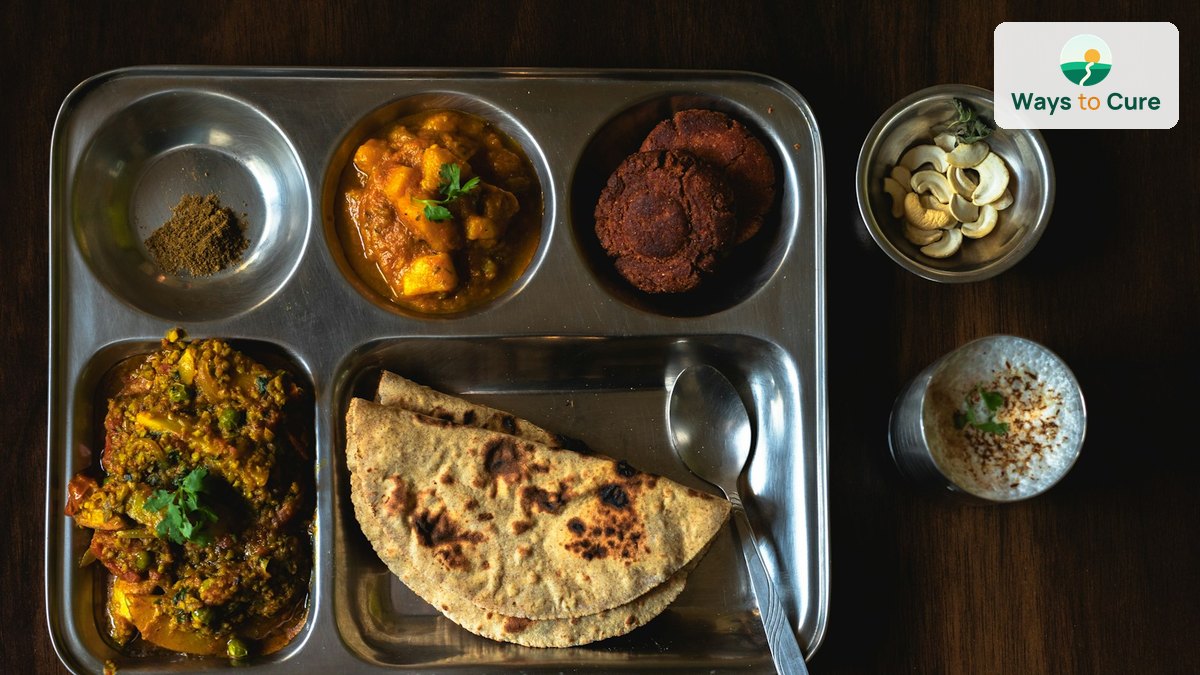
There’s no single “PCOS diet”, and the best eating plan for PCOS is a balanced one you can stick to: more vegetables, dal and protein, smaller portions of rice and roti, and fewer sweets and fried snacks. The international PCOS guideline found no evidence that any one diet type beats another, so a normal Indian thali, adjusted, works well.
That’s good news if you’ve been told to give up rice forever, go keto, or cut out dairy and gluten. You don’t need to. What helps is steady, sensible eating that keeps blood sugar from spiking, supports a healthy weight if you need to lose some, and fits into family meals. Below is a 7-day vegetarian-friendly plan, swaps for non-vegetarians, and the tests worth doing.
What does the evidence say about diet and PCOS?
PCOS is common. The WHO estimates 10 to 13% of women worldwide have PCOS, and up to 70% of them haven’t been diagnosed. It raises the risk of type 2 diabetes, high blood pressure, high cholesterol and heart disease. The WHO says healthy eating and physical activity matter for all women with PCOS, even if they don’t lead to weight loss.
The 2023 International Evidence-based Guideline for PCOS states there’s no evidence supporting any one type of diet composition over another. It advises against unduly restrictive and nutritionally unbalanced diets. For women who need to lose weight, it suggests a tailored calorie deficit based on your own needs and activity.
The US National Institute of Child Health and Human Development (NIH) says losing even a small amount of weight and being more active can ease many PCOS symptoms. Weight loss can help restore ovulation, make periods more regular, improve insulin and cholesterol levels, and reduce excess hair growth and acne for many women.
Why blood sugar matters in PCOS
Many women with PCOS have insulin resistance: the body makes insulin but doesn’t use it well. The CDC notes that more than half of women with PCOS develop type 2 diabetes by age 40. High insulin also pushes the ovaries to make more androgens, which drives acne, facial hair and irregular periods.
So the practical aim is meals that release sugar slowly. In an Indian kitchen, that means:
- Pairing carbs with protein and fibre. Rice with dal and sabzi behaves very differently from rice with just rasam or pickle.
- Choosing whole grains and millets (whole wheat atta, ragi, jowar, bajra, brown or hand-pounded rice) more often than maida and polished rice.
- Keeping sweets, sugary chai, packaged juices and biscuits occasional.
- Not skipping breakfast and then overeating at night.
How to build a PCOS-friendly Indian plate
Use this as your template for lunch and dinner:
- Half the plate: vegetables. Sabzi, salad, kosambari, raita with cucumber, a bowl of vegetable soup.
- A quarter: protein. Dal, rajma, chana, paneer, tofu, curd, eggs, fish or chicken.
- A quarter: grains. One or two rotis, or a small katori of rice, or millet roti.
- A little fat: a teaspoon of ghee or oil in cooking is fine. See our guide on how much ghee per day is healthy.
This lines up with the general advice in the ICMR-NIN healthy eating guidelines for Indians, just with a closer eye on the grain portion.
A 7-day Indian meal plan for PCOS
Adjust portions to your hunger, activity and weight goals. Everything here is regular home food.
| Day | Breakfast | Lunch | Evening snack | Dinner |
|---|---|---|---|---|
| Mon | Vegetable besan chilla with mint chutney | 2 rotis, palak dal, bhindi sabzi, salad | Roasted chana | Vegetable khichdi (more dal than rice), curd |
| Tue | Vegetable poha with peanuts, a boiled egg or curd | Brown rice, rajma, cucumber raita | Apple or guava | Paneer bhurji, 1 to 2 jowar rotis, mixed veg |
| Wed | 2 idlis with sambar (extra vegetables) | Ragi mudde or rotis, sambar, beans poriyal | Buttermilk and a handful of nuts | Moong dal soup, stir-fried vegetables, 1 roti |
| Thu | Overnight oats with curd, seeds and fruit | 2 rotis, chole, carrot-cabbage salad | Sprouts chaat | Fish curry or tofu curry, small rice, sabzi |
| Fri | Moong dal dosa with coconut chutney | Millet pulao with vegetables, dal, raita | Roasted makhana | Egg curry or paneer tikka, salad, 1 roti |
| Sat | Vegetable upma (with dalia or rava) and curd | Bajra roti, sarson ka saag or methi sabzi, dal | Orange or papaya | Chicken or soya stew, vegetables, small rice |
| Sun | Paneer or egg paratha (less oil) with curd | Rice, dal, two vegetables, salad | Chai without sugar, peanuts | Vegetable soup, chana salad, 1 roti |
If you need quick protein ideas for breakfast or lunch boxes, try these easy homemade protein recipes.
Foods to limit, and myths to ignore
Cut back on these, rather than banning them:
- Sugary drinks, packaged juice, sweetened chai and coffee.
- Maida items: white bread, biscuits, bakery puffs, noodles.
- Deep-fried snacks: samosa, pakoda, namkeen, chips.
- Mithai and desserts. Keep them for occasions and take a small piece.
And don’t worry about these common claims:
- “Rice is banned.” A small portion with dal and vegetables is fine.
- “Dairy and gluten cause PCOS.” There’s no good evidence for cutting them out unless you have a diagnosed intolerance or coeliac disease.
- “Keto is the only diet that works.” The guideline found no diet composition better than another, and very restrictive diets are hard to sustain.
- “Special PCOS teas or supplements fix hormones.” Talk to your doctor before taking anything, as some interact with medicines.
Exercise and sleep count as much as food
The 2023 guideline recommends at least 150 to 300 minutes of moderate activity a week for adults with PCOS, plus muscle-strengthening on two non-consecutive days a week. Brisk walking, cycling, dancing, swimming or a yoga class all count. Strength work at home (squats, lunges, push-ups against a wall) helps muscles use sugar better.
Poor sleep makes hunger and sugar cravings worse. Aim for a regular bedtime, and tell your doctor if you snore loudly or wake up tired, since sleep apnoea is more common in PCOS according to the WHO.
Tests worth doing if you have PCOS
Diet works best when you know your numbers. The guideline recommends checking blood sugar status in all adults with PCOS at diagnosis, and says the 75 g oral glucose tolerance test (OGTT) is the most accurate test. Your doctor may also check HbA1c, cholesterol and blood pressure. Our explainer on HbA1c vs fasting blood sugar covers what those reports mean.
The guideline also asks doctors to screen for depression and anxiety in women with PCOS, and to keep eating disorders in mind regardless of weight. If dieting has made you anxious around food, say so.
When to see a doctor
See a gynaecologist or endocrinologist if:
- Your cycles are shorter than 21 days or longer than 35 days, or you get fewer than 8 periods a year (the cut-offs the 2023 guideline uses for irregular cycles), and you’re not pregnant.
- You’ve noticed new facial or body hair, severe acne, or hair thinning on the scalp.
- You haven’t conceived after a year of trying. The NHS advises going sooner if you’re 36 or over, or already know you may have a fertility problem such as PCOS.
- You have very heavy or long periods.
- You have constant thirst, frequent urination, or dark velvety skin patches on the neck or armpits, which can point to high insulin or diabetes.
- You’re feeling persistently low or anxious. In India, Tele-MANAS (14416) offers free counselling.
Get urgent care (call 112) for sudden severe pelvic pain, especially with fainting, vomiting or fever.
Frequently asked questions
Can I eat rice if I have PCOS?
Yes. Keep the portion to about a quarter of your plate, and eat it with dal, vegetables and curd. Hand-pounded or brown rice adds fibre, but a small portion of white rice in a balanced meal is fine too.
Is fasting or intermittent fasting good for PCOS?
It may help some people eat less overall, but there’s no evidence it works better than other approaches. Long fasts followed by a large late meal can backfire. Choose a pattern you can keep up.
Do I need to lose weight if I have PCOS?
Not everyone with PCOS is overweight. If you are, the NIH says even a small amount of weight loss can improve periods, insulin levels, acne and hair growth. If you’re not, healthy eating and activity still help.
Which millets are best for PCOS?
Ragi, jowar, bajra, foxtail and little millet are all whole grains with more fibre than polished rice or maida. Rotate them. Portion size matters as much as the grain.
How long before diet changes affect PCOS symptoms?
It varies. Energy and cravings often improve within weeks. Changes in periods, acne and hair growth take months. Track your cycles and review with your doctor every few months.
This article is for general information and is not a substitute for advice from a doctor. If you have symptoms or a health condition, please consult a qualified healthcare professional.