Healthy eating for most Indians means less rice and roti, more dal, vegetables, fruit, nuts and milk, and a firm cap on oil, salt and sugar. That’s the core message of the 2024 Dietary Guidelines for Indians from ICMR’s National Institute of Nutrition (NIN), which also sets out how much to move and drink each day.
The guidelines estimate that 56.4% of India’s total disease burden is due to unhealthy diets. Here’s what they actually recommend, turned into things you can do in an ordinary Indian kitchen.
What does “My Plate for the Day” look like?
NIN’s model plate is built on about 2,000 kcal a day and draws from at least eight food groups. Vegetables, greens and fruit make up about half the plate. Cereals and millets take most of the rest, followed by pulses, nuts and oils. The NIN policy brief on My Plate gives these raw amounts for a day:
| Food group | Raw amount per day (2,000 kcal) | Everyday examples |
|---|---|---|
| Cereals and millets | 250 g | Atta, rice, jowar, bajra, ragi, oats |
| Pulses (or some egg, fish, meat) | 85 g | Moong, masoor, chana, rajma, lobia |
| Milk or curd | 300 ml | Milk, dahi, chaas, paneer |
| Vegetables and green leafy vegetables | 400 g | Palak, methi, lauki, bhindi, beans, carrots |
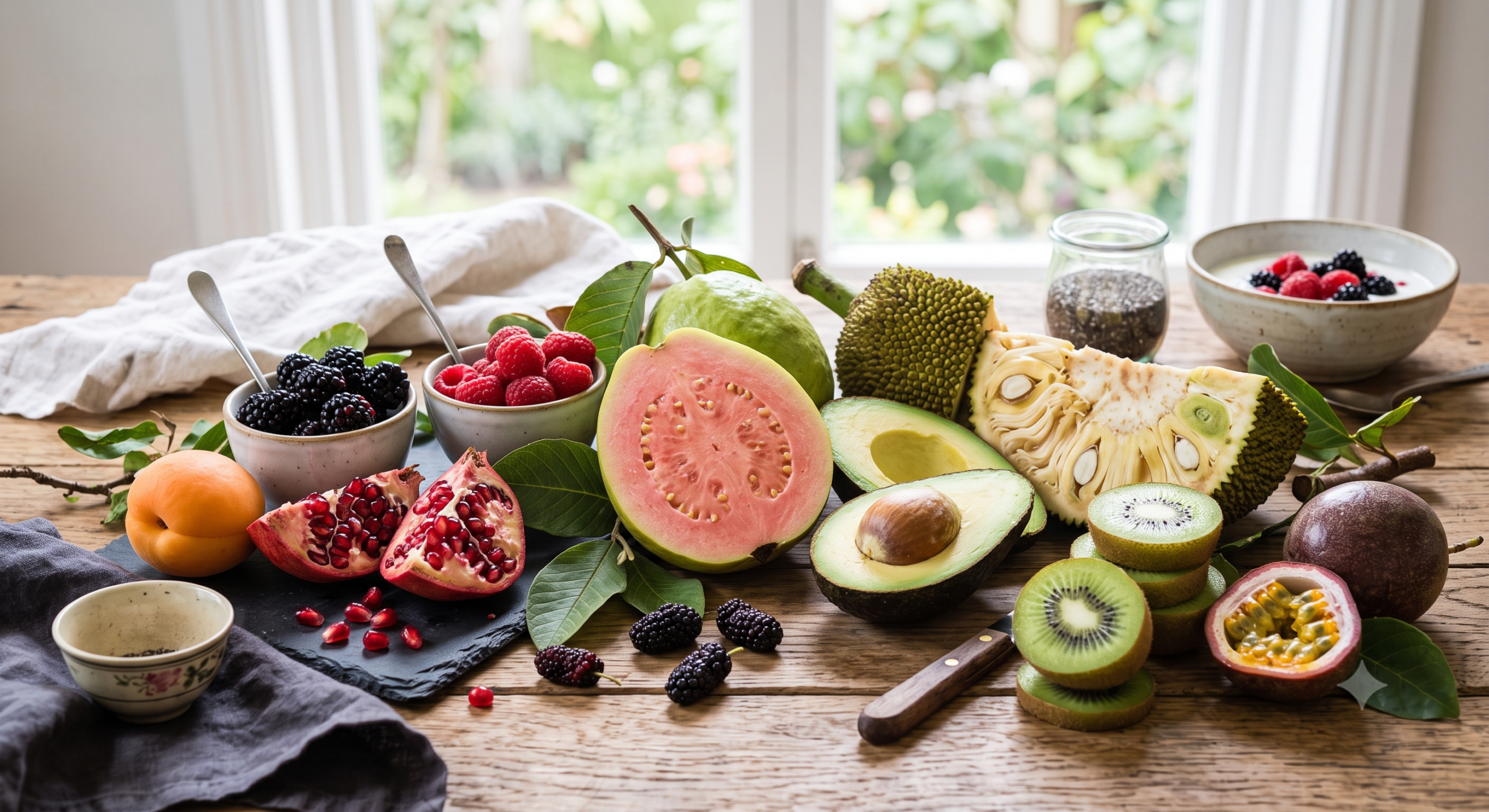
| Fruits | 100 g | Guava, papaya, banana, orange, seasonal fruit |
| Nuts and seeds | 35 g | Groundnuts, almonds, til, flaxseed |
| Fats and oils | 27 g | Cooking oil, ghee, butter |
The amounts of cereals and oil shift with your weight and how active you are, but the brief says the proportions of vegetables, fruit and milk stay the same. Potato doesn’t count towards the vegetable total, and fresh fruit is preferred over juice.
Eat fewer cereals and more of everything else
Most Indian meals are heavy on rice or roti with a small katori of dal and a spoon of sabzi. NIN’s surveys show many people eat far more cereals than recommended and get their nutrients from only four or five food groups a day.
Simple shifts that move your plate in the right direction:
- Swap half your grains for whole grains. The guidelines advise that at least half your cereals or millets be whole grain. Mix jowar or bajra into atta, or use brown rice or hand-pounded rice for some meals.
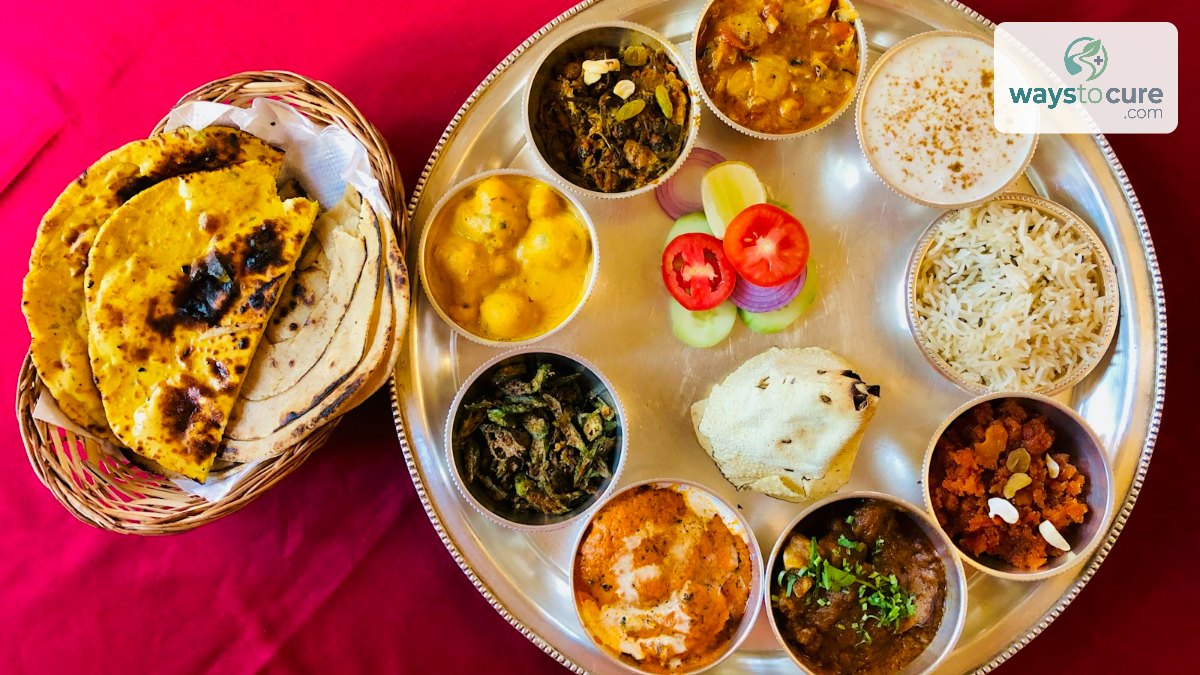
- Make dal and sabzi the bigger portions. Every meal should come with dal and vegetables. Two katoris of sabzi and one of dal, with one or two rotis, is closer to the model than four rotis and a spoon of sabzi.
- Add a leafy green daily. Palak, methi, amaranth, drumstick leaves or a green chutney all count.
- Eat whole fruit, not juice. The guidelines say fresh fruit is nutritionally better than freshly made juice.
- Keep a small handful of nuts or seeds. Roasted chana, groundnuts or til chikki (watch the sugar) can replace biscuits at tea time.
For more on choosing whole grains and millets over refined ones, see our guide to good and bad carbs.
Limits on oil, salt and sugar
These three are where most Indian diets go wrong. The 2024 guidelines set clear numbers:
- Cooking oil: restrict to 25 to 30 g a day per person, and use more than one kind of oil over the month.
- Salt: a maximum of 5 g of added salt a day, and it should be iodised. Pink salt and black salt have about the same sodium, so they’re no healthier. This matches the WHO’s limit of under 5 g of salt a day.
- Sugar: avoid it, or keep it to 20 to 25 g a day for adults. That includes the sugar in chai, sweets and packaged drinks.
Hidden salt and fat matter as much as what you add at the stove. The guidelines flag namkeen, papad, pickles, chips, sauces, biscuits and bakery items as high in salt, and advise cutting down on ultra-processed foods and foods high in fat, sugar and salt.
Practical ways to stay within the limits:
- Measure the day’s cooking oil into a small bowl each morning instead of pouring straight from the bottle.
- Pressure cook, steam or roast instead of deep-frying. The guidelines prefer pressure or steam cooking.
- Don’t reuse oil left over from frying pakoras or puris. The guidelines advise against reheating and reusing heated oil.
- Skip baking soda in dal and vegetables. It adds sodium, just like salt.
- Keep the pickle and papad for occasional meals, not daily ones.
- Cut sugar in chai gradually: half a spoon less each week is easier than going cold turkey.
If your cholesterol is already high, these same changes are part of what helps. Our article on lowering cholesterol explains when diet is enough and when you need medicine.
Protein without powders
The guidelines are blunt on this: get protein from a mix of foods, and avoid protein supplements to build muscle. They say that adding protein powder on top of a balanced diet does not build more muscle, and long-term use of excess protein can affect health.
Combining a cereal with a pulse (dal-chawal, rajma-roti, idli-sambar, khichdi) gives good-quality protein. Milk, curd, paneer, eggs, fish and chicken add more. Vegetarians and vegans who eat a variety of pulses, grains, nuts and seeds can meet their needs from food.
How much to move
The guidelines treat physical activity as part of healthy eating, not a separate topic. For adults aged 19 to 60, they recommend:
- At least 30 to 60 minutes of moderate activity (brisk walking, cycling, swimming) a day on at least five days a week, or
- 15 minutes of vigorous activity (running, fast cycling, skipping) a day on at least five days, or a mix of both
- Muscle-strengthening exercise for all major muscle groups on at least two days a week
Children and teenagers need at least 60 minutes of moderate to vigorous activity every day. If you’re starting from scratch, build up slowly. A 20-minute walk after dinner is a good first step, and our guide to walking after meals has a simple routine.
Water, sleep and your waistline
Water. The guidelines say a healthy person needs about eight glasses (roughly two litres) of water a day, including other drinks. Tender coconut water and lemon water count, though people with kidney or heart disease prone to high potassium should avoid coconut water.
Sleep. The guidelines link poor sleep and long screen time with weight gain. The US Centers for Disease Control and Prevention advises adults to get at least 7 hours of sleep a night, and teenagers 8 to 10 hours. If you regularly sleep past midnight, our post on the effects of sleeping late is worth a read.
Waist size. Belly fat is a better warning sign than weight alone. The guidelines say a waist over 90 cm in men or 80 cm in women is linked with higher risk of chronic disease. For Indians, a BMI of 23 to 27.5 counts as overweight and above 27.5 as obese, using Asian cut-offs.
A quick daily checklist
- Half my plate was vegetables, greens and fruit
- At least half my grains were whole grains or millets
- Dal, beans, egg, fish or meat at two meals
- Milk or curd during the day
- A small handful of nuts or seeds
- No more than 25 to 30 g of oil and 5 g of salt
- Little or no added sugar; whole fruit instead of juice
- 30 minutes or more of activity
- About eight glasses of fluid
- Seven or more hours of sleep
When to see a doctor or dietitian
General guidelines suit healthy adults. Get personal advice from a doctor or registered dietitian if:
- You have diabetes, kidney disease, heart disease or high blood pressure, since your limits on salt, protein, potassium or carbohydrate may be different
- You’re pregnant or breastfeeding
- You’ve lost weight without trying, or feel constantly tired or breathless
- Your waist is above 90 cm (men) or 80 cm (women), or your BMI is 23 or more
- You have an eating disorder, or eating has become a source of anxiety
Call 112 straight away for chest pain, sudden weakness on one side of the body, or severe breathlessness. Those aren’t diet questions.
Frequently asked questions
Is ghee bad for health?
Ghee counts towards your daily 25 to 30 g of visible fat. A little is fine within that limit, but the guidelines group ghee and butter with saturated fats and advise limiting them, and avoiding vanaspati altogether.
Are millets better than rice and wheat?
Millets such as ragi, jowar and bajra are usually eaten as whole grains, which the guidelines favour (minimally polished) for nutrients and fibre. They recommend a variety of cereals and millets each day rather than relying on one.
How much fruit should I eat a day?
The My Plate model includes about 100 g of fruit on top of 400 g of vegetables and greens. Choose whole seasonal fruit over juice.
Is jaggery healthier than sugar?
The guidelines list jaggery, honey and glucose as added sugars, alongside table sugar. So gur in your chai counts towards the same 20 to 25 g daily limit.
Do I need to count calories?
Most people don’t. Getting the proportions right on your plate, limiting oil, salt and sugar, and staying active usually does more than counting.
This article is for general information and is not a substitute for advice from a doctor. If you have symptoms or a health condition, please consult a qualified healthcare professional.