Norovirus is contagious from the moment you feel ill, and you’re most infectious while you’re vomiting and have diarrhoea. The tricky part is the tail: the US Centers for Disease Control and Prevention says you can still spread norovirus for 2 weeks or more after you feel better, which is why a whole household often goes down one person at a time.
So “I feel fine now” doesn’t mean “I can’t pass it on”. Here’s how the timeline works, how long to stay home, and how to clean up so the rest of the house stays well.
The norovirus timeline, day by day
Norovirus is the bug most people call “stomach flu” or the “winter vomiting bug”, although it has nothing to do with influenza. The CDC says symptoms usually start 12 to 48 hours after you’re exposed, and most people get better within 1 to 3 days. The NHS gives a similar picture: it usually gets better in about 2 days.
| Stage | Typical timing | Can you spread it? |
|---|---|---|
| Incubation (no symptoms yet) | 12 to 48 hours after exposure | Possible, but you won’t know you have it |
| Sick: vomiting, diarrhoea, nausea | Usually 1 to 3 days | Yes, this is the most contagious stage |
| First 48 hours after symptoms stop | 2 days | Yes. Stay off work, school and nursery |
| Recovery tail | Up to 2 weeks or more | Yes, through stool. Handwashing matters most here |
How long to stay off work or school
The rule used in both the UK and the US is the same: wait 2 days (48 hours) after your last episode of vomiting or diarrhoea.
- The NHS says to stay off school, nursery or work until you haven’t been sick or had diarrhoea for 2 days, and not to visit hospitals or care homes during that time either.
- The CDC says people who work in restaurants, schools, daycares or long-term care homes should wait at least 2 days (48 hours) after symptoms stop before going back.
The clock starts from the last symptom, not the first. If your child vomited on Monday night and had loose stools until Wednesday morning, the earliest they should go back is Friday morning.
Even after 48 hours, keep washing hands carefully for the next couple of weeks, especially before handling food for other people.
Why norovirus spreads so easily
The virus leaves the body in vomit and stool, and it gets into the next person’s mouth. The CDC lists three main routes: close contact with someone who’s ill (caring for them, sharing food or utensils), eating or drinking something contaminated, and touching a contaminated surface and then your mouth.
A few things make it worse than most bugs:
- People keep shedding the virus after they feel well.
- Alcohol hand gel doesn’t deal with it well (more on that below).
It’s also very common. The CDC estimates 19 to 21 million illnesses in the US each year, with about 109,000 hospital stays and around 900 deaths, mostly in adults aged 65 and over. Outbreaks are most common from November to April, so we’re entering peak season now in the northern hemisphere.
Does hand sanitiser kill norovirus?
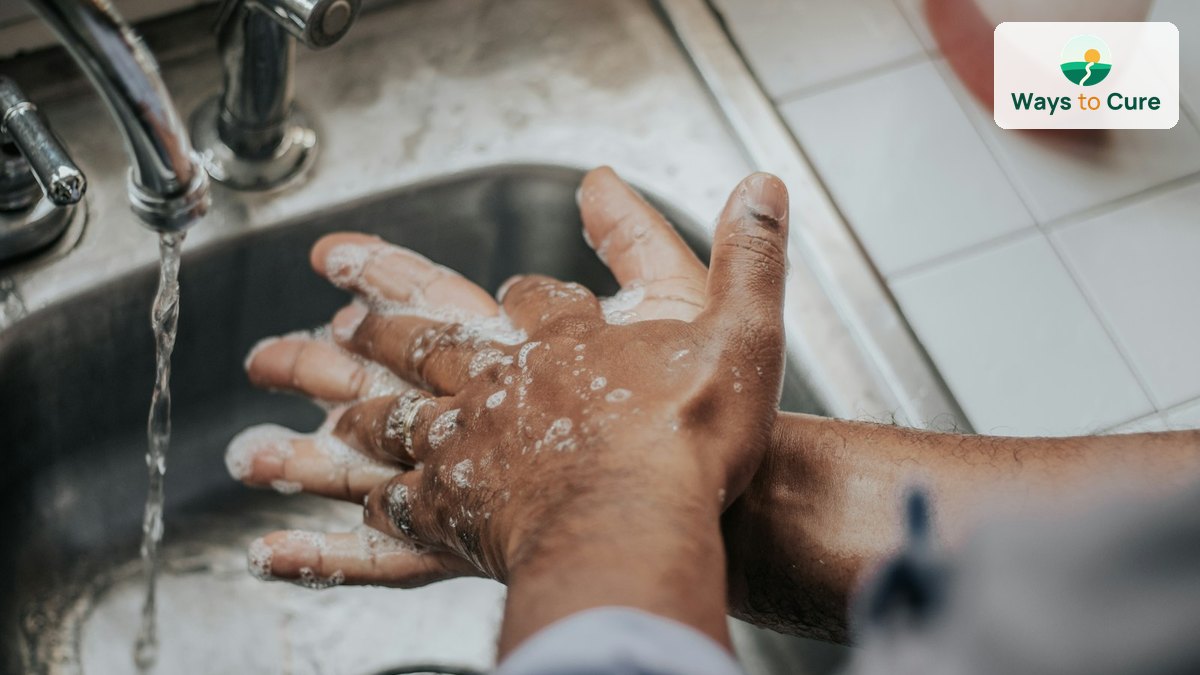
Not reliably. The CDC says hand sanitiser “does not work well against norovirus”, and the NHS says plainly that alcohol hand gels do not kill it. Use soap and running water instead, and scrub for at least 20 seconds. The rubbing and rinsing physically removes the virus.
Wash your hands:
- after using the toilet or changing a nappy (diaper)
- after cleaning up vomit or diarrhoea, even if you wore gloves
- before preparing, serving or eating food
Gel is fine as an extra step when you’ve already washed, but it shouldn’t replace the sink.
How to clean up after norovirus at home
Ordinary kitchen sprays often aren’t enough. The CDC recommends a chlorine bleach solution at 1,000 to 5,000 ppm, which works out to 5 to 25 tablespoons of household bleach (5% to 8%) per US gallon of water (a US gallon is about 3.8 litres). Leave it on the surface for at least 5 minutes before wiping. In the US you can also use a product registered by the EPA as effective against norovirus.
A practical checklist for a vomiting or diarrhoea accident:
- Put on disposable gloves (and a mask or apron if you have one).
- Soak up the mess with paper towels and bin them in a sealed plastic bag.
- Apply the bleach solution to the area and a generous margin around it. Leave it for at least 5 minutes.
- Wipe, then rinse surfaces that touch food with clean water.
- Disinfect “high-touch” spots: toilet flush, taps, door handles, light switches, remote controls, phones.
- Take off gloves and wash your hands with soap and water.
Always test bleach on a hidden patch of fabric or carpet first, never mix it with other cleaners (especially ammonia or acids), and open a window.
Laundry
Handle soiled clothes and bedding gently and don’t shake them, since that can spread the virus into the air. The CDC advises washing them at the maximum available cycle length and machine drying at the highest heat setting. Wear gloves and wash your hands afterwards.
Keeping the rest of the household well
- Keep the sick person out of the kitchen. They shouldn’t cook for anyone until 48 hours after symptoms stop.
- Use a separate bathroom if you have one. If not, disinfect the toilet seat, flush and taps after each use.
- Don’t share towels. Give the sick person their own, and wash them hot.
- Wash fruit and vegetables well, and cook oysters and other shellfish to at least 63°C (145°F), as the CDC advises.
Children under 5, older adults and people with weakened immune systems are more likely to get seriously ill, so take extra care around them. If you’ve got a vomiting toddler and a newborn in the same house, put most of your effort into handwashing between nappy changes and feeds.
How to look after yourself while it runs its course
There’s no medicine that kills norovirus, and antibiotics don’t work on viruses. Treatment is about replacing fluids. The NHS suggests:
- Small, frequent sips of water or dilute squash if you feel sick. Oral rehydration solution from a pharmacy helps if you’re getting dehydrated.
- Avoiding fruit juice and fizzy drinks, which can make diarrhoea worse.
- Eating when you feel able. Plain foods are easiest; skip fatty or spicy meals for a day or two.
- Paracetamol (acetaminophen) for aches or fever, following the dose on the pack.
- Keeping babies on breast milk or formula, with smaller and more frequent feeds. Don’t dilute formula.
Don’t give anti-diarrhoea medicine to children under 12, and never give aspirin to anyone under 16. For more on settling an upset stomach, see our guides to easing nausea and managing diarrhoea in children.
Norovirus, food poisoning or flu?
Sudden vomiting and diarrhoea that spreads through a household, school or cruise ship within a day or two points strongly to norovirus. Food poisoning from bacteria tends to follow a specific meal, and a few types cause bloody diarrhoea or last longer. Our overview of common causes of diarrhoea covers the main differences.
Seasonal flu is mainly a chest and body illness: fever, cough, sore throat and aches. Vomiting and diarrhoea can happen with flu, but they’re more common in children than adults. If cough and fever lead the way, read our 2026 flu symptoms guide instead.
When to see a doctor
Most people don’t need a doctor for norovirus. Get medical advice (your GP, a pharmacist, NHS 111 in the UK, or your local urgent care) if:
- a baby under 12 months has symptoms and you’re worried
- a child under 5 shows signs of dehydration, such as fewer wet nappies
- you can’t keep any fluids down
- symptoms continue even after using oral rehydration sachets
- diarrhoea lasts more than 7 days or vomiting lasts more than 2 days
- there’s blood in the diarrhoea or bleeding from the bottom
- the person is an older adult, or has a weakened immune system or another long-term illness
Get emergency help if…
Call your local emergency number (911 in the US, 999 in the UK, 112 in the EU and India) or go to an emergency department if someone:
- vomits blood, or vomit that looks like ground coffee
- has green vomit (adults), or yellow-green or green vomit (children)
- has a stiff neck and pain looking at bright lights
- has a sudden, severe headache or tummy pain
- has blue, grey, pale or blotchy skin, lips or tongue
- is confused, very drowsy or not responding normally
- is struggling to breathe
Frequently asked questions
How long is norovirus contagious after vomiting stops?
You’re still contagious. Stay off work, school and nursery for 48 hours after the last vomiting or diarrhoea, and keep washing hands carefully for about 2 weeks, because the CDC says the virus can spread for 2 weeks or more after you feel better.
Can I go to work after 24 hours if I feel fine?
Health services in the UK and US both say no. The standard advice is 48 hours symptom-free, and that matters most if you handle food or work with children, older people or patients.
Can you catch norovirus twice?
Yes. The CDC says there are many different types of norovirus, and infection with one type may not protect you against the others. That’s why people catch it more than once in their lives.
Does washing at 40°C kill norovirus on clothes?
The CDC’s advice is to use the longest wash cycle available and dry on the highest heat setting. If the fabric allows, a hot wash is safer than a cool one.
Is it safe to visit a relative in a care home after norovirus?
Wait at least 2 days after your symptoms stop, as the NHS advises, and wash your hands with soap and water on arrival. Many care homes ask for longer during an outbreak, so check with them first.
This article is for general information and is not a substitute for advice from a doctor. If you have symptoms or a health condition, please consult a qualified healthcare professional.